A winter blackout can turn an ordinary apartment into a cold little cave fast. The thermostat goes blank, the elevator stops, and your phone battery suddenly feels like a tiny glowing treasure chest.
The safest answer to how to heat an apartment during a blackout is to hold onto the heat you have, wear layers, use battery-powered tools wisely, and leave before indoor conditions become unsafe. Never use an oven, grill, camp stove, candles, fuel-burning heater, or generator indoors for warmth.
A rental-friendly plan doesn’t require rewiring the building or buying a generator the size of a lawn mower. It starts with a few calm moves in the first minutes.
Key Takeaways for a Cold-Weather Outage
- Keep people warm with dry layers, blankets, hats, socks, and one smaller closed-off room.
- Use flashlights and LED lanterns, not candles or open flames.
- Never run a generator, propane heater, charcoal grill, camp stove, or oven inside an apartment, balcony, hallway, garage, or carport.
- Save phone power for alerts, maps, short texts, and emergency calls.
- Move to a warming center or safe home early if temperatures keep falling or someone is at higher risk.
Start by Keeping the Warmth You Already Have
First, confirm whether the outage affects your unit, building, or neighborhood. Look outside from a safe window, then report a wider outage through your utility’s official channel. If only your apartment is dark, use a flashlight to check whether a breaker has tripped. Never touch a wet panel, damaged outlet, or exposed wire.
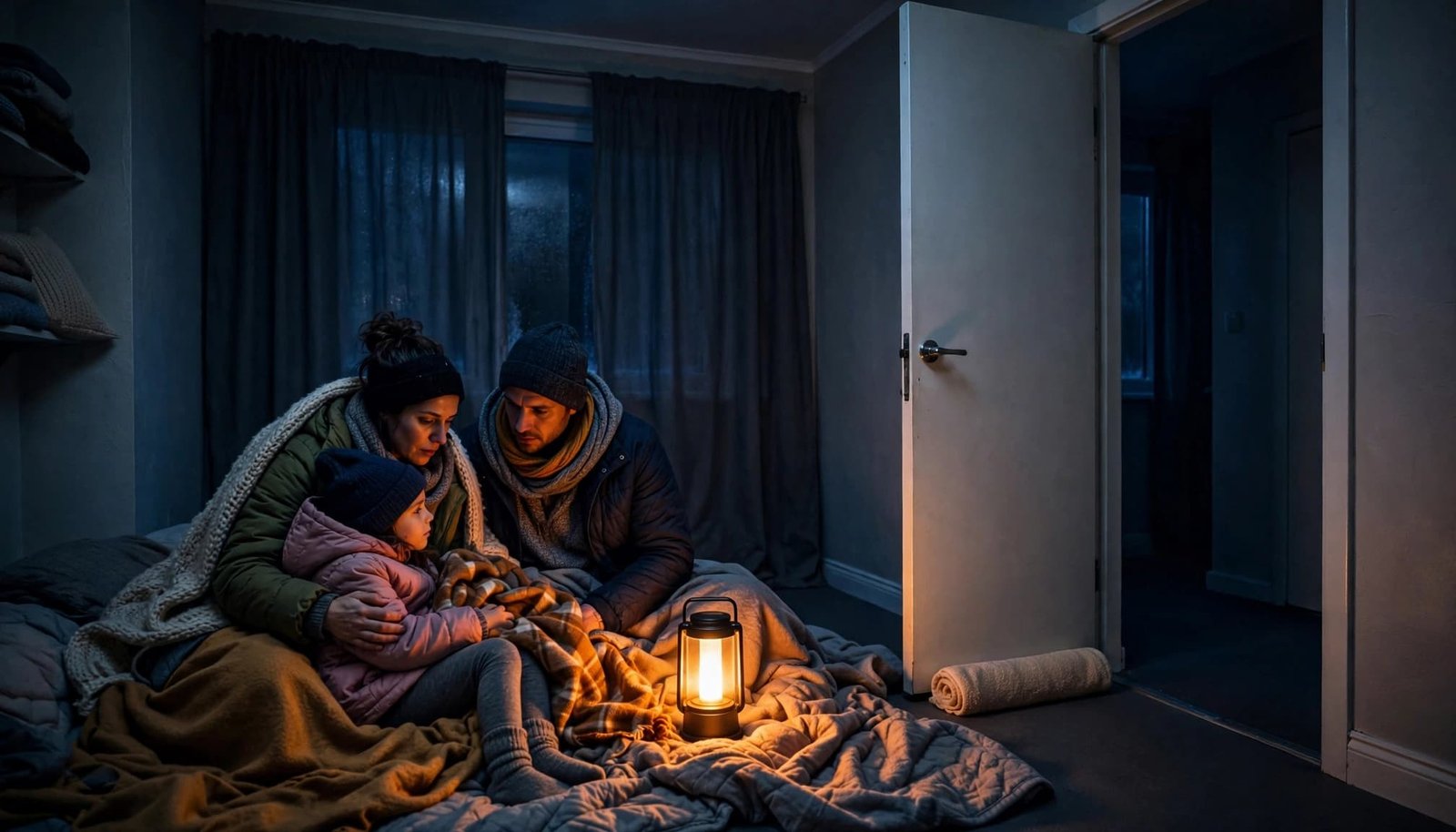
Put on warm, dry layers right away. Close doors to unused rooms, shut windows tightly, draw curtains, and press rolled towels along drafty door gaps. Gather blankets, sleeping bags, water, phone chargers, and people in the room that holds heat best.
Use LED lanterns or flashlights instead of candles. A dark apartment already has enough ways to surprise your shins without adding an unattended flame to the plot.
Create One Warm Room Without Blocking Exits
Choose a small interior room with fewer windows, if possible. Close interior doors to trap warmth, lay rugs or blankets over cold floors, and add hats, thick socks, and extra bedding before anyone starts shivering.
Keep a clear path to the apartment entrance and do not block doors needed for evacuation. Also, don’t cover vents, crowd electrical outlets, or run cords under rugs. Sharing one room can conserve warmth for a while, but body heat is not a substitute for relocating when the apartment gets dangerously cold.
Check People, Pets, and Building Services
Check on children, older adults, neighbors, pets, and anyone who depends on powered medical equipment. For essential devices, follow the backup plan from the medical provider or equipment supplier. Call emergency services if someone’s health is in immediate danger.
Keep your property manager’s emergency number on paper, not only in a phone that may become a glossy pocket brick. Ask how the building handles heat, hallway lighting, water pressure, elevators, electronic locks, garage doors, and resident alerts during outages.
How to Heat an Apartment During a Blackout Without Creating a Fire Risk
The short version is blunt because it needs to be: do not burn fuel indoors. Generators, propane heaters, camp stoves, charcoal grills, gasoline equipment, and ovens can cause carbon monoxide poisoning or fire.
Carbon monoxide has no smell, color, or warning label floating in the air. A cracked window, open balcony door, or partly raised garage door does not make combustion equipment safe. The CDC’s power outage safety guidance warns against running generators or gasoline-powered engines inside homes.
Never use a generator in an apartment, hallway, basement, garage, carport, or balcony. Don’t backfeed a generator through a wall outlet either. That dangerous shortcut can energize utility lines and endanger repair crews.
A balcony is not an outdoor generator location. Carbon monoxide can drift back through open windows or into nearby units.
Leave immediately and call emergency services for smoke, sparks, a burning-plastic smell, a downed power line, or suspected carbon monoxide exposure. Headache, dizziness, weakness, nausea, chest pain, and confusion are warning signs that need urgent attention.
Use Electric Warmth Only When the Equipment Is Approved
Battery-powered heated blankets, heated clothing, and low-watt heating pads can provide limited comfort when the product is designed for that use. Read the instructions, inspect cables for damage, and stop using anything that gets unusually hot.
Portable power stations usually make more sense for lights, phones, routers, and small electronics than for space heaters. A heater can draw a large amount of power, drain a battery quickly, and create a fire risk if used carelessly.
If you consider running a heater from a battery station, check the heater’s wattage, startup demand, the station’s continuous and peak output, estimated runtime, ventilation needs, building rules, and lease terms. Never improvise with damaged cords, wet outlets, overloaded power strips, or mystery extension cords from the back of a closet.
Keep Combustion Equipment Far Away
Federal safety warnings are not being dramatic for sport. The CPSC’s winter outage safety notice says portable generators must never operate inside homes, garages, basements, crawl spaces, sheds, or similar enclosed areas.
A fuel-burning generator belongs outdoors, far from doors, windows, vents, and attached garages. Apartment residents generally don’t have a safe location for one, which is why personal generators are a poor fit for most rentals.
Choose Backup Power That Fits a Rental
A power bank is small, portable, and built for phones, lights, e-readers, and other low-demand gear. A portable battery power station stores more energy and may support a router, laptop, LED lamp, or certain approved warming products.
Compare power stations by watt-hours, continuous output, peak output, weight, recharge time, outlet types, and charging methods. Reputable equipment should include protections against overcharging, short circuits, and excessive temperatures.
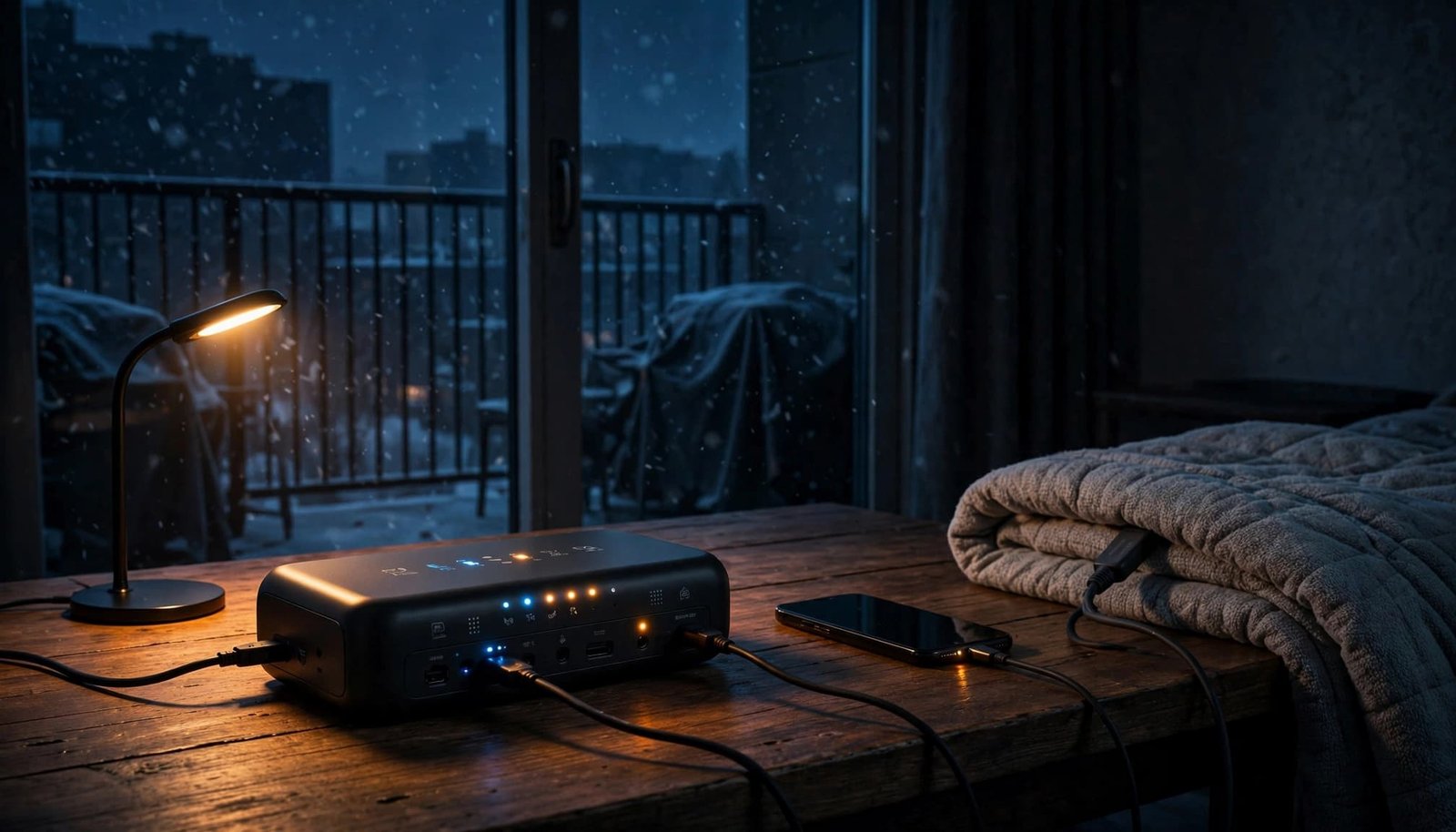
Keep battery equipment dry and give it airflow. Use the supplied cables, avoid charging it near water or piles of fabric, and stop immediately if the unit swells, smells odd, becomes unusually hot, or shows damage.
Match the Battery to Small Essentials
Start with realistic loads. A phone, LED lantern, weather radio, and router sip power compared with a space heater, hair dryer, kettle, or electric stove. Those high-watt appliances can empty stored power with the enthusiasm of a raccoon at an open trash can.
Check each device label before plugging it in. A battery station’s advertised capacity does not guarantee it can safely run every appliance you own. Ask property management in advance which battery systems, charging methods, and extension cords the building permits.
Protect Your Emergency Power Reserve
Charge power banks before storms arrive, then keep the correct cable with each household phone. During an outage, turn on Battery Saver, lower screen brightness, close unused apps, and send short texts instead of long calls when possible.
Keep one reserve for communication. Maps, emergency alerts, medical contacts, and family check-ins matter more than a streaming marathon when the outage drags on.
Plan for a Long Apartment Outage, Not Just a Cold First Hour
A longer outage can interrupt water pressure, internet, cell service, elevators, electronic locks, garage doors, and stores. Keep refrigerator and freezer doors closed while you decide what to do. Dinner can wait; cold storage has a stricter timetable.
Store an accessible kit with blankets, thermal layers, water, shelf-stable food, medication, pet supplies, a manual can opener, flashlights, spare batteries, a battery radio, and paper contacts. A practical baseline is at least one gallon of water per person per day, plus extra for pets and medical needs.
Keep Supplies Where You Can Reach Them
Put essentials in a dry, easy-to-reach closet, pantry, or under-bed bin. A kit hidden behind seven winter coats is mostly a scavenger hunt with poor lighting.
Include foods that require no cooking, such as canned goods, nut butter, protein bars, shelf-stable milk, and ready-to-eat meals. Add prescription information, spare glasses, hearing-aid batteries, and supplies for babies, pets, or mobility needs.
Know When to Leave for a Warming Center or Safer Home
Relocation is often the safest way to heat an apartment during a blackout. Identify a nearby warming center, shelter, friend, family member, or building-approved common area before severe weather arrives.
Leave early if indoor temperatures continue dropping, pipes may freeze, access becomes unsafe, or someone develops confusion, severe shivering, weakness, or other concerning symptoms. Infants, older adults, people with disabilities, pets, and residents using medical equipment may need to leave sooner.
Do not enter a stalled elevator after the power returns. Wait until building staff or elevator technicians confirm it is safe.
Restore Power Carefully and Make the Next Blackout Easier
When electricity returns, give it a minute to settle. Reconnect sensitive electronics one at a time, especially computers, televisions, routers, and charging stations. Use surge protectors where appropriate, and don’t plug anything into wet or damaged outlets.
Test smoke and carbon monoxide alarms. Check smart-home routines too, because a smart speaker deciding that 3 a.m. is party time helps nobody.
Photograph damage, save receipts for spoiled food or damaged belongings, and report leaks, sparking outlets, or building failures to management. Contact renters insurance if your policy may cover the loss.
Before the next storm, take a few small steps:
- Replace flashlight batteries and recharge power banks.
- Rotate food, water, medications, and pet supplies.
- Confirm nearby warming center locations and emergency contacts.
- Ask property management about approved backup power and building procedures.
A Safer Way Through the Next Blackout
Warmth during a blackout comes from retaining heat, layering up, using battery-powered tools carefully, and avoiding combustion indoors. An apartment is never the place for a grill, oven, camp stove, propane heater, or generator.
Tonight, put a flashlight, warm layers, blankets, and a charged power bank in one easy-to-reach spot. That small setup can turn a cold, dark interruption into a problem you can handle safely.