At 12:34 a.m., the apartment goes dark. Your phone is at 18%, the router has gone silent, and the only lamp nearby has chosen betrayal. A portable power station can keep a phone, LED light, router, and laptop running without combustion exhaust during normal battery use, which makes it far safer indoors than a gasoline or propane generator.
Still, portable power station safety is more than owning a large battery with a cheerful display. Safe indoor use depends on placement, approved charging equipment, clear vents, modest loads, and fast action when something seems wrong. Battery stations do not produce carbon monoxide while operating normally, unlike fuel-burning generators, as explained in this overview of portable power stations and carbon monoxide.
Your owner’s manual has the final say. Features, clearance needs, charging rules, and indoor-use guidance vary by model.
How to Use a Portable Power Station Safely Indoors: Portable Power Station Safety
Start with the boring basics before the blackout turns your living room into a cable maze. Before using portable power stations, inspect each case, port, screen, cord, and plug. If anything looks cracked, swollen, scorched, or loose, leave the unit off.
Set the station on a hard, stable, nonflammable surface, such as ceramic tile, metal, or a clear countertop. Keep its display and controls visible. Heavy models belong low enough that they cannot topple, but never where a pet, child, or passing knee can knock them over.
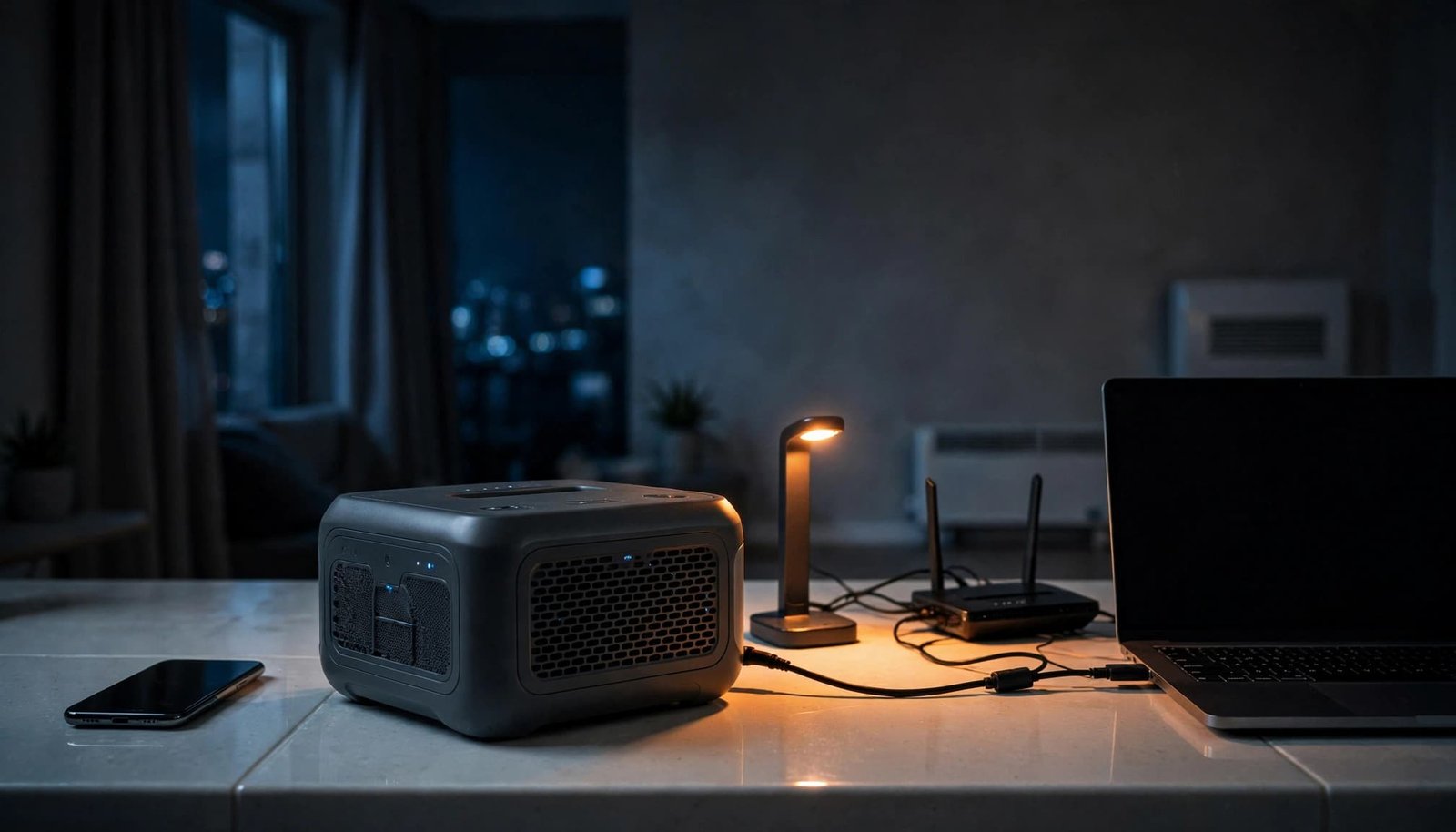
Normal room airflow is usually enough during battery operation when the manual allows indoor use. However, vents must stay open. A power station is not a sweater. Don’t cover it, tuck it under furniture, or nestle it beside piles of paper.
Choose a Safe Indoor Location Before Plugging Anything In
Pick a dry, level spot with clear air around it and no flammable clutter nearby. Follow the clearance distance in your manual rather than guessing at a universal number.
Keep the unit away from curtains, bedding, rugs, sofas, heaters, direct sun, sinks, tubs, and weather-exposed balconies. Avoid enclosed shelves, sealed cabinets, and crowded closets. A hallway, doorway, stairwell, or exit path is also a poor choice, even if the floor space looks tempting.
A battery station doesn’t need the outdoor-only placement required by a fuel-burning generator. It still must not block your route out if smoke, fire, or another emergency sends everyone moving fast.
When comparing models, look for recognized safety certifications and safety features such as temperature, overload, or short-circuit safeguards. These are helpful screening criteria, but they don’t replace the owner’s manual or safe placement.
Match the Station to Small, Essential Loads
Watt-hours indicate battery capacity and help estimate how long modest loads can run. Continuous power output must cover the running load, while startup surge must cover brief motor or compressor demands.
Phones, LED lamps, a router, modem, laptop, small fan, and selected medical equipment are sensible indoor loads. For a cpap machine, verify its running wattage, startup needs, inverter compatibility, and manufacturer-approved backup guidance. Sensitive electronics may require a pure sine wave inverter.
Read appliance labels and calculate the total appliance load before plugging in several devices. Some motor-driven or electronic loads may require a particular inverter waveform, such as pure sine wave. Space heaters, electric kettles, hair dryers, air conditioners, and electric stoves can overload a station, while several connected devices can exceed its capability during startup surge.
Portable Power Station Safety Starts With Proper Charging
Charging deserves more attention than most people give it. The station may sit still and look harmless, but charging adds heat and puts cables, plugs, and battery controls to work.
Use the charger included with the unit or a replacement the manufacturer approves. Match the stated input limits for wall, vehicle, or solar charging. A random adapter that “fits” is not a compatibility certificate.
Some models advertise overload protection and short circuit protection. Those safeguards aren’t permission to use a damaged cord, blocked vent, or incompatible charger.
Charge on a hard, clear surface where you can see the station. Keep vents uncovered and route the cord away from walkways, doors, and exits. Beds, couches, carpets, blankets, and closed cabinets are awful charging locations. They trap heat and make a small problem harder to spot.
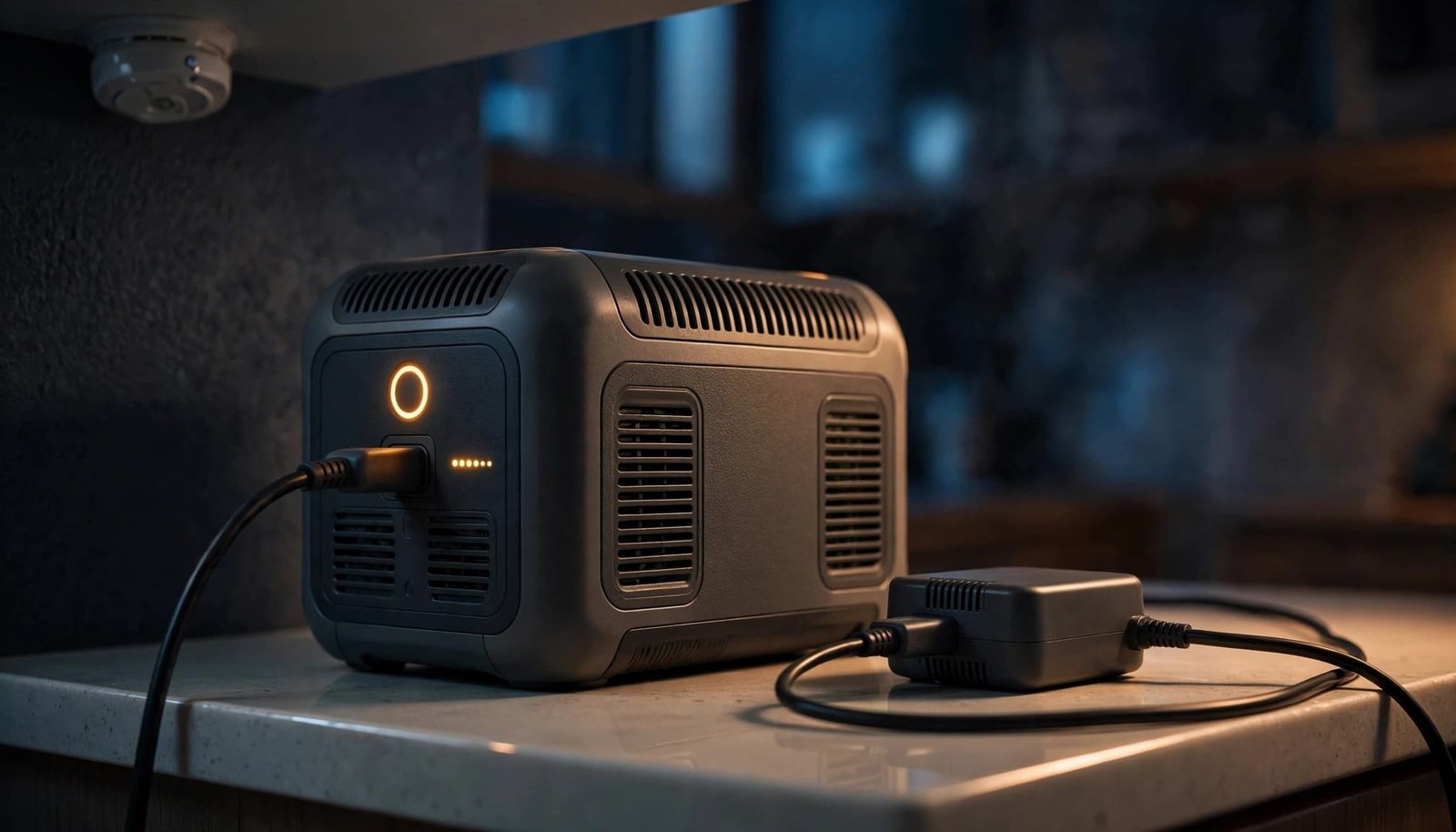
Solar panels and car charging can extend your options, especially during a long outage. Some battery-based portable power stations are marketed as a solar generator, but that label changes nothing about safe charging. Use compatible cables, follow input limits, and complete the manufacturer’s charging sequence. Improvised wiring belongs in the same mental drawer as juggling knives.
Charge While You Can See the Unit
Stay awake and nearby during the initial charging cycles, especially when using unfamiliar equipment. This makes unusual heat, odors, noises, or error messages easier to catch.
Overnight use should happen only when the manufacturer permits it. Keep the station on a hard, clear, visible surface with open vents. Otherwise, charge while you’re awake and nearby.
If the manual recommends disconnecting at full charge, do that. A full battery is not a hall pass for ignoring unusual heat, odor, noises, or error messages.
Keep cables out from under rugs and never pinch them in a door. Check plugs for looseness or discoloration before each charge. If a plug feels hot, stop using it and inspect the setup after it cools.
Know When a Power Station Should Stay Off
Stop using the station if you notice swelling, cracks, leakage, deformation, hissing, smoke, repeated error messages, unusual heat, a damaged cable, or a strong chemical smell. Rapid heat buildup, hissing, smoke, leakage, or a strong chemical odor can indicate serious battery failure and possible thermal runaway.
Do not open, puncture, repair, or continue charging a suspect lithium-ion battery. The CPSC’s lithium-ion battery warning language is blunt for good reason: these enclosures have no user-serviceable parts.
If the unit is smoking or heating rapidly, leave the area and call emergency services if needed. If moving the unit would put you at risk, leave it alone and keep people away. A damaged battery needs specialized disposal, not household trash, curbside recycling, or a standard battery-drop box. Review lithium-ion battery warning signs and disposal guidance and contact the manufacturer or local household hazardous-waste program.
Build a Safer Indoor Backup Power Plan for an Apartment
A battery station works best as an emergency backup for communication, lighting, medical needs, and limited work loads. It shouldn’t try to impersonate the electric grid.
A rough runtime estimate is simple: divide usable watt-hours by the device’s watt draw. Usable watt-hours, conversion losses, and battery capacity all affect the result. Real runtime will be lower because AC conversion uses some energy. A 500 Wh station won’t deliver a perfect 500 Wh to every plugged-in gadget. Physics keeps the receipt.
Use this priority order during an outage:
- Keep one phone charged for calls, alerts, maps, and planned check-ins.
- Run LED lighting instead of candles.
- Power a router or hotspot only if internet service still works.
- Charge a laptop for urgent work, updates, or weather information.
- Add comfort devices only if capacity allows.
Turn off unused AC outlets, displays, and accessories. Put your phone in Low Power Mode, lower its brightness, and send short status texts early if service seems weak. Keep emergency contacts, building management numbers, and a meeting plan on paper.
For overnight use, stick to a manufacturer-approved setup with clear vents, a visible unit, and modest loads. Don’t leave a station buried under bedding, clothing, or other clutter.
Use the Right Backup Device for the Job
A small power bank is best for phones, e-readers, and USB lights. It is light, simple, and easy to keep near the bed or emergency kit.
Portable power stations support more devices than power banks, while a UPS gives a router, modem, desktop computer, or home phone a short bridge through a brief interruption. A solar generator commonly means a battery-based station paired with solar input, not a fuel-burning generator.
For sensitive electronics or medical equipment, check whether a pure sine wave output is recommended by the device or station manual. A UPS buys time to save work or maintain a connection, not a full-day power marathon.
A portable power station supports larger but still modest loads. Refrigerator backup depends on continuous wattage, startup surge, inverter compatibility, battery capacity, and recharge options. Check whether the refrigerator or station manual recommends a pure sine wave output for motor-driven appliances.
Treat refrigerator backup as a tested setup, not an automatic promise. Test it on a calm weekend, record compressor startup surge behavior, and write down which devices can run together.
Protect the Battery and the Rest of the Room
Keep the station dry, cool, stable, and clear of clutter while it runs. Don’t daisy-chain power strips unless the manual expressly allows it. Never exceed the total output or outlet rating.
Some stations use LiFePO4 batteries, while others use different lithium-ion chemistries. LiFePO4 is a form of lithium iron phosphate chemistry. A battery management system may include overload protection, short circuit protection, and overheat protection.
These safety features can reduce certain electrical risks, but they don’t replace open vents, sound cords, safe placement, or respect for output limits. They also don’t eliminate battery fire or charging risks.
No combustion exhaust doesn’t mean no risk. Indoor battery power still needs clear paths, working smoke alarms, and a quick exit plan.
Portable Power Station Safety Mistakes and Emergency Steps
The biggest mistake is treating gas generators and battery stations as interchangeable. They aren’t cousins who can borrow each other’s rules.
A dual fuel generator still burns fuel and must remain outdoors. By contrast, a solar generator is usually a battery-based product label, not permission to run a fuel-burning generator indoors.
Gasoline, propane, and diesel generators must never run in an apartment, garage, hallway, carport, porch, basement, or balcony. FEMA says portable generators belong outdoors, at least 20 feet from doors, windows, vents, and attached garages. Review FEMA’s generator safety guidance before using any fuel-burning backup equipment.
Never plug a generator into a wall outlet. Backfeeding can energize utility lines, injure repair crews, and start a fire. A balcony is also not a clever loophole for a dual fuel generator. Exhaust can drift toward your unit or a neighbor’s window.
Avoid These Indoor Backup Power Shortcuts
A few shortcuts create a fire hazard or hide serious electrical problems:
- Blocking vents with blankets, bags, furniture, paper stacks, or flammable clutter.
- Charging on bedding, carpet, a sofa, or inside a closed cabinet. Avoid overnight use unless the manufacturer permits it and the visible, ventilated setup remains safe.
- Using an unapproved charger, damaged cable, or loose plug.
- Connecting more wattage than the station’s continuous or peak rating allows. Motor startup surge can briefly require more power than the running wattage.
- Relying on a station for refrigerator backup without checking continuous watts, startup surge, battery capacity, and the manufacturer’s approved use.
- Assuming sensitive electronics and motor-driven appliances will work properly without checking the inverter output. Verify whether the station’s pure sine wave output matches the device manual.
- Storing the unit beside a heater or in direct sun.
- Leaving it in a hallway, doorway, or other escape route.
- Assuming every power station has identical indoor-use rules.
Fuel generators create carbon monoxide, which has no color or smell. Battery stations produce no carbon monoxide during normal operation, but overheating and electrical faults still require care.
Act Fast When You Notice Heat, Smoke, or Odor
If the station becomes unusually hot, swells, leaks, hisses, smokes, or smells chemical, warn others and move away. These signs may indicate thermal runaway or another serious battery failure. Unplug it only if that is clearly safe.
A listed overheat protection feature can’t make a visibly damaged or rapidly heating unit safe to touch or reuse.
For smoke or fire, evacuate, close the door if possible without delaying your exit, call 911, and follow your building’s evacuation procedures. Do not touch, move, puncture, or pour water on a burning or rapidly heating battery unless emergency responders direct you.
If the unit is merely warmer than expected and shows no urgent signs, stop the load, disconnect power if safe, keep people away, and contact the manufacturer. Do not reuse it until it has been inspected or replaced. A nearby smoke alarm helps, but it cannot supervise a charging battery or clear a blocked hallway for you.
Key Takeaways for Indoor Backup Power
- Use an approved charger on a hard, clear surface with vents open.
- Reserve stored power for phones, LED lighting, communication gear, and other modest loads. Verify pure sine wave output for sensitive electronics or medical devices.
- Keep the station visible, dry, and out of walkways.
- Treat swelling, smoke, chemical odor, or damaged cords as immediate stop-use warnings.
- Keep fuel-burning generators outdoors and follow FEMA’s printable generator-safety guidance.
Frequently Asked Questions
Can I use a portable power station indoors?
Usually, yes, when the manufacturer permits indoor use and the station is operating normally. Keep it on a hard, stable, nonflammable surface with open vents, clear space around it, and no blocked exits nearby.
Do portable power stations produce carbon monoxide?
No. Battery stations do not produce carbon monoxide during normal operation because they do not burn gasoline, propane, or diesel. They can still overheat, short-circuit, or develop a battery fault, so smoke alarms and safe placement still matter.
Can I leave a portable power station charging overnight?
Only if the manufacturer’s instructions allow it. Otherwise, charge while you are awake and nearby, using the approved charger on a hard, visible surface with the vents uncovered.
What should I do if a power station smells strange or gets very hot?
Stop using it and disconnect the power only if doing so is clearly safe. Move away, keep others out of the area, and call emergency services for smoke, rapid heating, hissing, leakage, or fire; never open, puncture, or reuse a damaged battery.
A Safer Way Through the Next Blackout
A portable power station can keep essential devices alive without the exhaust, noise, and carbon monoxide danger of a fuel generator. The winning formula is pleasantly unglamorous: an approved charger, hard clear surface, open vents, modest loads, visible charging, and no damaged equipment.
Read your model’s manual now, before the lights flicker. Choose a safe charging spot, test the station with an LED lamp and phone, and write down your building manager’s emergency number. Future midnight-you will be grateful, even if the router still acts a little dramatic.