When a heatwave knocks out power, your apartment can keep collecting sunshine long after the air conditioner quits. In hot weather, these cooling tips start with shade, body cooling, and knowing when to leave for a cooler place.
Blackout curtains can block out light and offer some thermal insulation. Their insulating properties can’t keep an apartment safe through a prolonged outage. Check indoor conditions and the people who’ll need help if the heat worsens.
Key Takeaways
- Blackout curtains can block sunlight and may offer some insulation, but they can’t keep an apartment safe through a prolonged power outage.
- Close sun-facing curtains before direct sunlight reaches the windows, and open windows only when outdoor air is cooler and safe to breathe.
- Check indoor temperature and use battery fans only within their safety limits; CDC advises against fan use when indoor temperatures are above 90°F.
- Check on vulnerable people, recognize heat illness, and confirm a cooler place to go before the heat becomes dangerous.
Start with these blackout cooling tips
Check people before troubleshooting
Check on children, older adults, pets, and anyone with medical needs. If someone depends on powered medical equipment, follow their outage plan immediately rather than waiting for a restoration estimate.
Next, find a battery light, preserve your phone battery, and check official utility alerts. Ready.gov’s extreme heat guidance recommends planning for air-conditioned locations when home cooling isn’t available.
Use a thermometer near your sitting or sleeping area, away from direct sunlight, to measure indoor ambient temperature. That room temperature matters more than the outdoor forecast, which won’t tell you how hot your upstairs bedroom has become.
Pick the coolest usable space
Move into the room with the least direct sun and the lowest measured temperature. Avoid unnecessary trips up stairs or other exertion during peak heat.
Meanwhile, contact a trusted neighbor or relative and agree on check-ins. People living alone may need someone to notice when they’re struggling.
Keep your shoes, keys, medications, and exit bag accessible. Leaving becomes harder when you’re overheated and searching for the one sandal that has apparently moved out.
Block sunlight before it heats your bedroom
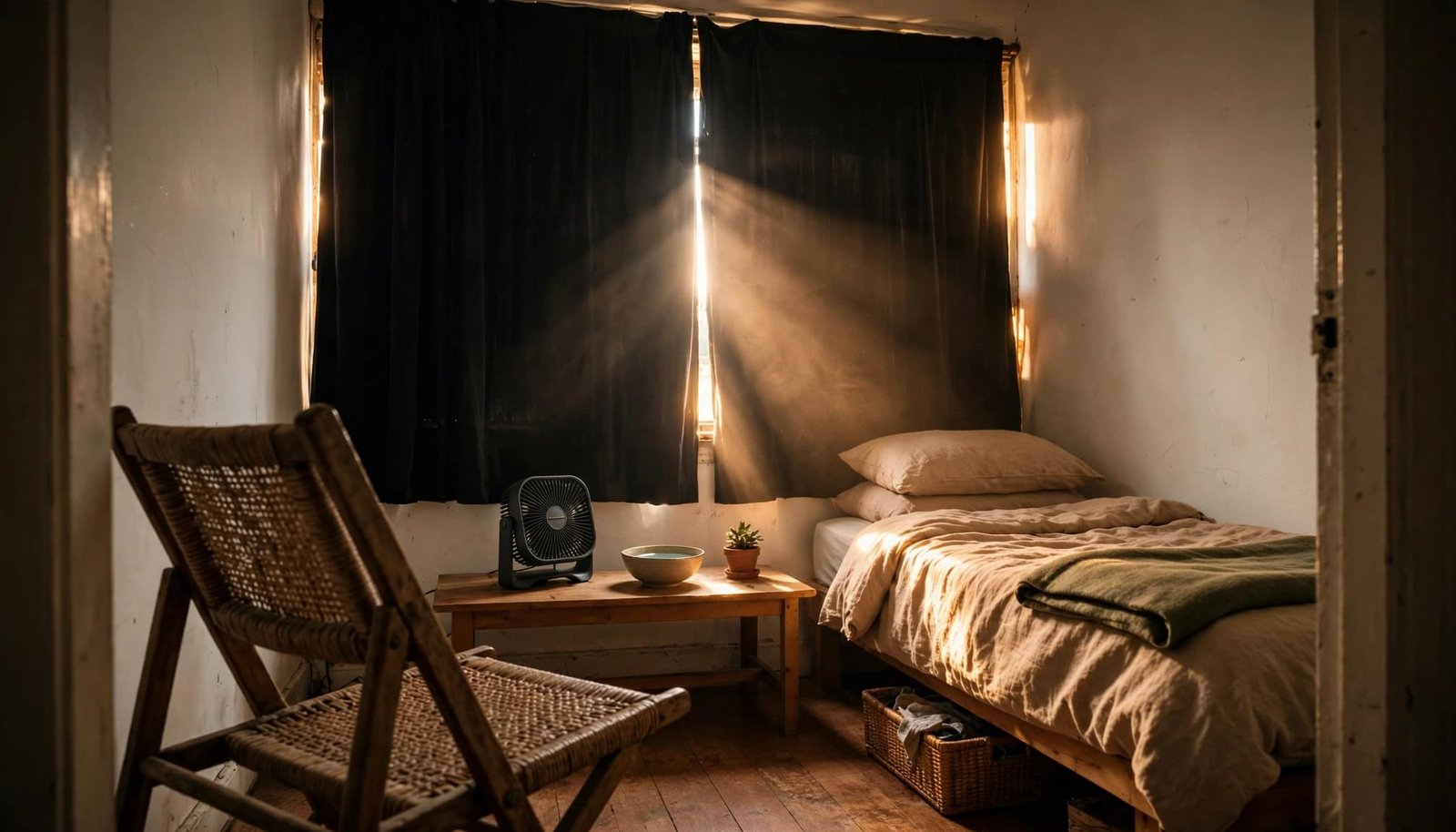
Close sun-facing window coverings early
Close curtains or blinds before direct sunlight reaches the glass. South- and west-facing windows often need attention during summer, though your building’s orientation and nearby shade matter. These window treatments can limit solar heat gain and support energy efficiency.
Existing coverings are a useful first step. You don’t need an emergency shopping expedition while the apartment heats up. Making the most of existing window treatments can help with energy efficiency.
External blinds and awnings can reduce solar heat gain before sunlight passes through the window. However, renters should get permission before installing anything outside. Don’t improvise attachments that could fall onto neighbors or obstruct an exit.
Choose thermal curtains for fit, not promises
Blackout curtains block out light, while thermal curtains may slow heat transfer when they fit well and have suitable backing. Some products do both, but a “blackout” label alone doesn’t establish insulating properties.
For a bedroom, thermal curtains should provide full window coverage, overlapping panels, and a light-colored or reflective backing. DOE recommends medium-colored draperies with white plastic backing to reduce summer heat gain and improve energy efficiency.
Hang them close to the window where practical, without covering required ventilation or creating hazards. A close fit may improve their insulating properties, though results vary.
Thermal curtains can also help limit heat loss during winter, but their thermal insulation and insulating properties depend on fit and materials. A window blockout curtain may block out light, but that alone doesn’t guarantee lower energy costs. There’s no guaranteed temperature drop in summer. Coverage, sunlight, window condition, and outdoor heat all affect the result. Curtains buy breathing room, not an unlimited safe stay.
Open windows only when outside air helps
In hot weather, opening every window can invite more heat inside. Compare outdoor air with your room temperature first to support energy efficiency and avoid unnecessary energy costs.
When outdoor air becomes cooler, open safe windows to let cool air move through and carry accumulated heat out. If your layout allows, openings on opposite sides can create cross-ventilation. Interior doors may help that airflow reach your bedroom.
However, nighttime isn’t automatically cool enough. During a heatwave, outside air can stay hot well after sunset. Check conditions instead of trusting the clock.
Keep windows closed if wildfire smoke, poor air quality, or other hazards make outdoor air unsuitable. People with asthma or COPD need particular care around smoke and pollution.
Also consider security and child safety. Keep children away from open windows, and remember that insect screens don’t prevent falls.
In a single-window apartment, natural ventilation may be limited. Avoid forcing a cross-breeze by propping open fire doors or building entrance doors. Shared safety systems don’t become optional because your bedroom feels like a baked potato.
Use battery fans within their safety limits
Watch the indoor temperature
Fans move air across your skin; they don’t lower room temperature. A battery fan can improve comfort in suitable conditions, but it’s only a cooling aid, not a replacement for air conditioning during dangerous heat.
CDC advises using fans only when indoor temperatures are below 90°F. Above that level, fan use can increase body temperature. Below 90°F also isn’t a guarantee of safety, especially for vulnerable people or during high humidity.
The American Red Cross’s heat safety advice likewise warns against relying only on fans during extreme heat.
A working fan can make you feel more comfortable without making the room safe enough to remain in.
Skip elaborate fan-and-ice projects
A bowl of ice beside a fan isn’t a dependable room-cooling system. Neither ice-and-salt bowls nor damp towels provide a reliable way to make an overheated apartment safe.
Instead, keep the fan unobstructed and use its available speeds to balance comfort with battery life. Turn it off when nobody benefits.
Keep water away from motors, charging ports, and cables. A cool damp cloth belongs on your skin, not draped over electrical equipment.
If a fan shares a power bank with your phone, protect enough capacity for alerts, calls, and your route to cooling.
Cool your body and simplify bedtime
Drink water and use cool water safely
Drink water regularly during hot weather rather than waiting until you’re thirsty. If a clinician has restricted your fluids, follow their guidance and ask about a heat-specific plan.
The CDC’s extreme heat recommendations include cool showers or baths and time in air-conditioned spaces.
If water service remains available, a cool shower can provide relief. Otherwise, use a cool damp washcloth on your skin. Avoid slippery floors and don’t leave someone with mobility difficulties unattended in a bath.
High humidity reduces sweat evaporation, so damp skin and moving air may provide less relief than you expect.
Make sleeping easier without ignoring danger
Choose loose clothing and light bedding. Move to a cooler room if one is available to improve your sleep environment, and reduce evening activity.
Night shift workers may use a well-fitted window blockout curtain to block out light during daytime rest. A dark environment may support rest, but it won’t make a dangerously hot room safe.
Use battery lighting and no-cook meals to avoid adding unnecessary heat. Keep refrigerator and freezer doors closed rather than repeatedly checking for something cold.
Declining sleep quality can warn that your bedroom needs a different plan. If sleep quality keeps worsening, don’t treat an increasingly hot room as a bedtime problem you must somehow outwit.
For families, agree on where everyone will sleep and who’ll check vulnerable household members. If the room stays dangerously hot, arrange a cooler overnight location rather than trying another pillow configuration.
Recognize heat illness before it becomes an emergency
During extreme heat, watch for signs of heat exhaustion, including heavy sweating, headache, weakness, nausea, dizziness, or fainting. Move the person somewhere cooler, loosen unnecessary clothing, and cool their skin.
If they’re fully alert and can swallow, offer small sips of water. Get medical help if symptoms worsen, vomiting occurs, or recovery doesn’t happen promptly.
Confusion, collapse, seizures, or loss of consciousness can indicate heat stroke. Call 911 immediately. Begin cooling while you wait, following the dispatcher’s instructions. Don’t give fluids to someone who isn’t fully alert.
A person with heat stroke may still be sweating. Dry skin isn’t required for a medical emergency.
Watch behavior as well as the thermometer. An older neighbor who seems unusually confused needs attention, even if they insist they’re fine.
Caregivers should also monitor themselves. You’re more useful to everyone when you’re drinking water, resting, and asking for help before exhaustion takes over.
Find a cooling center before you need one
Confirm the location and what’s available
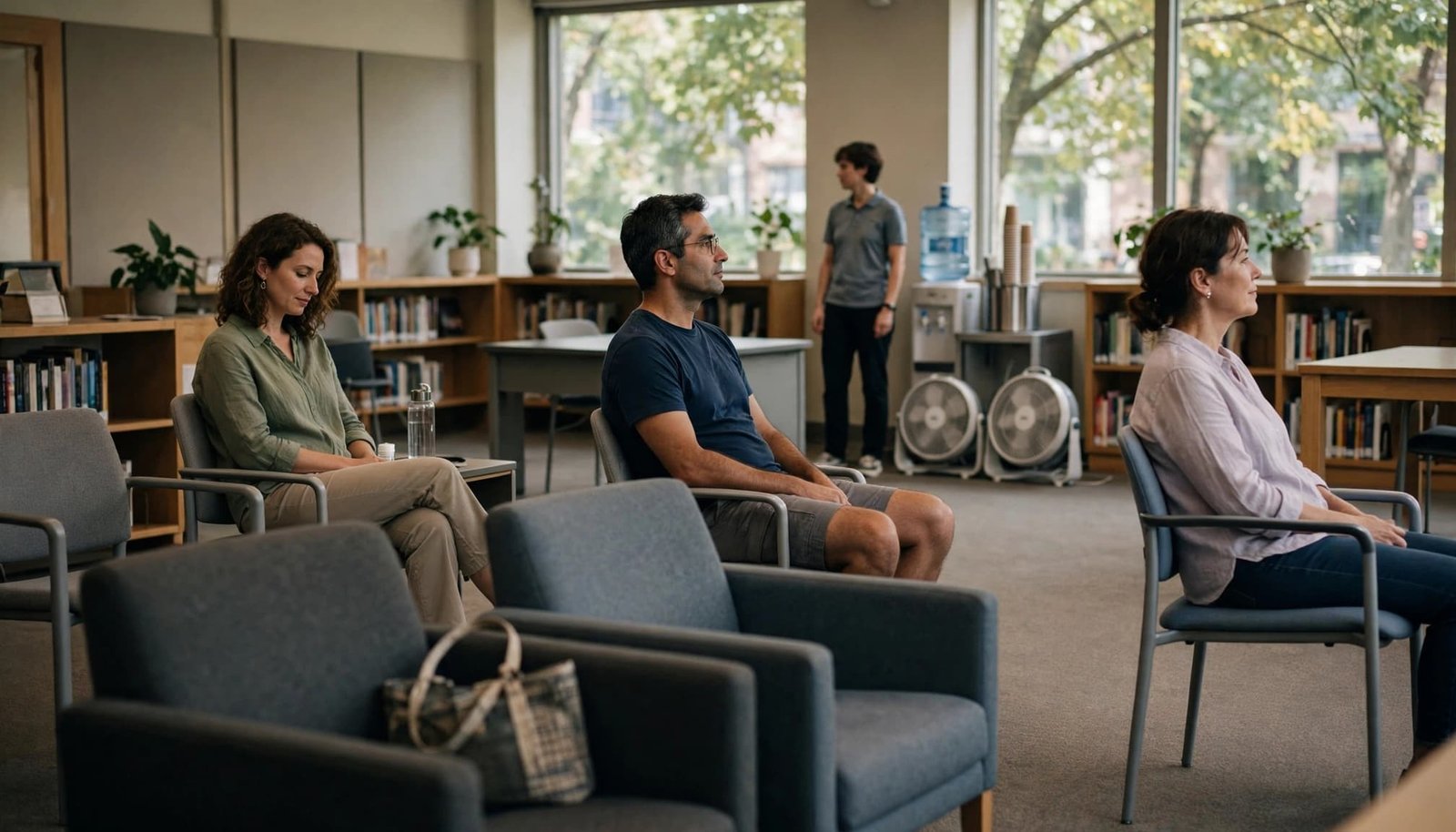
Cooling centers, libraries, community centers, and malls can provide air-conditioned relief. The EPA’s heat and outage planning advice recommends identifying these options beforehand.
In the United States, try 2-1-1, your local health department, or emergency-management office for current information.
Before leaving in hot weather, confirm the destination is operating and can provide cool air. Check its hours, accessibility, and transportation options. Ask whether pets are accepted, charging is available, and overnight stays are permitted.
A cooling center may offer daytime relief without being an overnight shelter. Check both options if your apartment won’t cool down by bedtime.
Plan around stairs and building access
High-rise outages can affect elevators, water pressure, hallway lights, electronic locks, and garage doors. Ask management which systems have backup power and how residents should exit.
If you need help with stairs, arrange it early. Don’t wait until you’re overheated or your helper’s phone battery dies.
Bring water, essential medication, a charging cable, identification, and any necessary mobility or medical supplies. Keep the bag light enough to carry safely.
Never use a parked car as a waiting room for children or pets. If transportation falls through, call for help finding another safe option.
Build a compact summer cooling kit
A small-space setup should support cooling, communication, and a safe departure during hot weather. Start with items you’ll use, not a collection of impressive-looking emergency gadgets.
Keep these together where everyone can reach them:
- Store at least one gallon of water per person per day, with extra for pets and medical needs.
- Include a thermometer, battery fan, compatible spare batteries or charging cable, and lightweight washcloths.
- Keep a charged power bank and LED light available, and prioritize phone charging.
- Write down management’s emergency number, cooling locations, medical contacts, and your household’s check-in plan.
- Keep a small go-bag ready in case you need to leave.
Test the fan before summer and check how it charges. A USB cable with nowhere to plug it in is a decorative string.
Ask management about permitted backup batteries and building outage procedures. A portable air conditioner needs electricity, so don’t assume a small power station can run one.
Use stored power for essentials first to support energy efficiency, but don’t assume it will lower energy costs.
Never operate a fuel-burning generator indoors, in a garage, or on an apartment balcony. Generators need a suitable outdoor location at least 20 feet from building openings.
Finally, review the kit after each outage. Recharge batteries and update cooling-center information while the details are fresh.
Frequently Asked Questions
Do blackout curtains keep an apartment cool during a power outage?
They can block out light and limit some solar heat gain, especially when they cover the window well. They don’t guarantee a temperature drop or make an overheated apartment safe to stay in.
Should I open my windows at night during a heatwave?
Open safe windows when outdoor air is cooler than the air inside and the air quality is suitable. Nighttime alone doesn’t mean it’s cool enough, so check conditions first.
Can I use a battery fan when the power is out?
A fan moves air across your skin but doesn’t lower the room temperature. CDC advises using fans only when indoor temperatures are below 90°F; even then, a fan isn’t a substitute for air conditioning during dangerous heat.
When should I leave my apartment for a cooler place?
Leave if the apartment keeps heating up or someone is struggling with the heat, and confirm the destination is open and accessible. Confusion, collapse, seizures, or loss of consciousness can indicate heat stroke—call 911 immediately and begin cooling while you wait.
Keep cooling plans flexible
Curtains and safe fan use can help, but a room that keeps heating up may still disrupt your sleep environment. It can also affect sleep quality. Access to a cooler location matters when heat keeps building.
Choose your coolest room, check on vulnerable people, and confirm where you can go before travel becomes difficult.
Your apartment doesn’t have to win a staring contest with a heatwave. Leaving early is a sensible part of staying safe.