A blackout can turn a familiar apartment into a confusing hazard within seconds. During an apartment power outage, your first job isn’t finding a fuse box. It is checking for fire, electrical shock, medical, and building-safety risks.
Once immediate danger is ruled out, you can determine the outage’s scope, protect food and electronics, and contact the right party. A calm response prevents small problems from becoming expensive or dangerous ones.
What to Do During an Apartment Power Outage
Start by checking whether lights work in another room and whether your building’s hallways, elevators, or exterior lights are out. Then look outside from a safe window. Nearby dark homes often point to a neighborhood outage, while power loss limited to your unit may involve a tripped breaker or apartment wiring.
Do not touch electrical panels with wet hands. If you smell burning plastic, see sparks, notice smoke, find exposed wires, or have water near outlets, leave the area and call 911. Notify building management immediately.
Use light safely and protect electronics
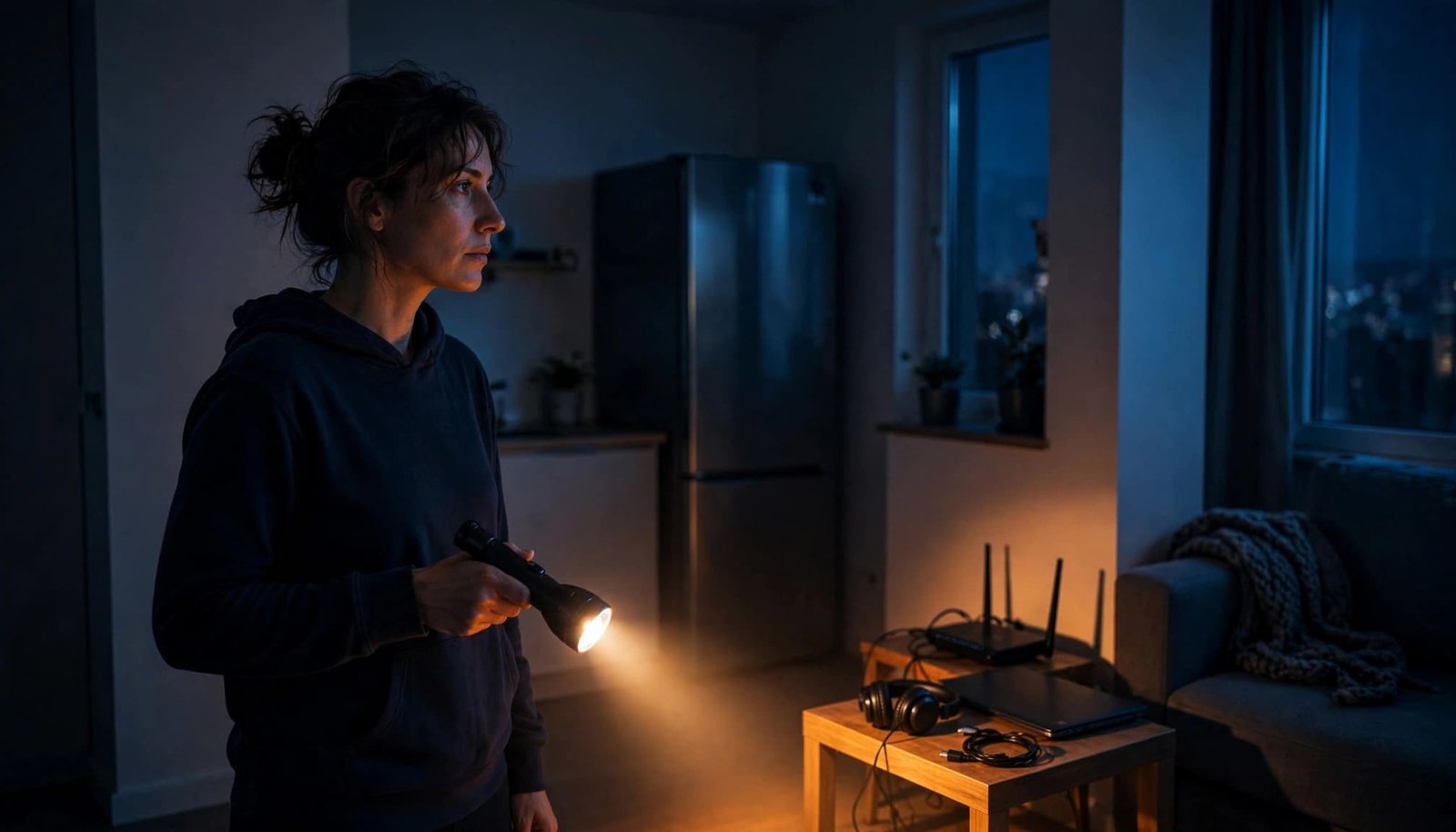
Use battery flashlights or LED lanterns instead of candles. An open flame is a serious risk in a dark apartment, especially around pets, curtains, or crowded surfaces.
Next, unplug computers, televisions, gaming consoles, and other sensitive devices. A surge can occur when service returns. Leave one lamp switched on so you know when power is restored, but turn off appliances that could restart unattended, such as a stove, space heater, or hair tool.
Keep cold food cold
Avoid opening the refrigerator and freezer unless necessary. A closed refrigerator keeps food cold for about four hours. A full freezer can hold a safe temperature for about 48 hours, while a half-full freezer lasts about 24 hours, according to the CDC’s food safety guidance.
If the outage may last, move refrigerated medications or baby formula only when you have a safe cooler and ice packs ready. Do not taste food to decide whether it is safe.
Food that has warmed into the danger zone can look and smell normal, so time and temperature matter more than appearance.
Why an Apartment Power Outage Happens and Who to Contact
Power can fail at several points. A storm, vehicle crash, equipment failure, or utility repair may cut electricity across a neighborhood. A problem in the building’s main electrical equipment can darken every unit. Meanwhile, a tripped breaker, failed outlet, or damaged appliance may affect only one apartment.
You can gather clues without taking anything apart. Ask a neighbor whether they have power, check your utility’s outage map, and note whether shared areas have lighting. Never remove an outlet cover or attempt to repair wiring yourself.
Contact the party responsible for the failure
Call your electric utility when the outage affects the surrounding area or the utility reports a service interruption. Report the issue even if neighbors have already called, because your address helps confirm the outage boundary.
Contact the property manager or landlord when common areas, multiple apartments, or only your unit have lost electricity. Building owners typically handle shared electrical systems and fixed wiring. However, a tenant may be responsible for damage caused by an unauthorized alteration or a personal appliance, depending on the lease and local rules.
Give a clear report: your unit number, when power failed, which rooms are affected, and any signs of danger. Keep screenshots, photos, and written messages if the outage damages property or forces you to discard food.
How Long Can an Apartment Be Without Power?
There is no reliable universal timeline. A brief utility switch can restore power in minutes, while fallen lines, flooded equipment, or severe weather can keep a building dark for days. Crews also need safe access to damaged areas before repairs begin.
Ask the utility or property manager for an estimated restoration time, but treat it as a working estimate. Check official outage updates rather than relying on neighborhood rumors or social media posts.
Plan around the clock, not a promise
Track the time the power went out. That record helps you make food decisions, arrange medication storage, and document losses. The FDA’s power outage food guidance recommends keeping refrigerator temperatures at 40 F or below and freezer temperatures at 0 F or below.
If you depend on powered medical equipment, contact your medical provider, equipment supplier, or local emergency services early. Do not wait for an uncertain repair estimate to become a health emergency.
How to Prepare Your Apartment for the Next Blackout
An apartment emergency kit does not need a closet full of gear. Store a flashlight, spare batteries, LED lantern, power bank, battery radio, first-aid supplies, bottled water, shelf-stable food, and a manual can opener in one easy-to-reach bin.
Keep your phone charged when storms are forecast. Save your utility’s outage number, property manager’s after-hours contact, and an out-of-area family contact on paper as well as on your phone.
Choose backup power that is safe indoors
Use battery-powered lights and approved power banks inside the apartment. Never run a gasoline, propane, or charcoal generator indoors, in a hallway, or on a balcony. Carbon monoxide can enter living spaces quickly, even through open windows.
Review your lease before installing backup equipment or altering outlets. A renter power outage checklist can help you organize small-space supplies without creating fire risks or violating building rules.
Also photograph valuable electronics and keep renters insurance information accessible. Documentation makes a claim easier if a surge or prolonged outage causes covered damage.
Stay Safe Until Power Returns
A safe response to an apartment power outage starts with danger checks, then moves to scope, communication, and preservation. Protect your food, unplug sensitive electronics, and record what happened.
Renters should never attempt electrical repairs. Smoke, water near electricity, exposed wiring, fire, or a medical risk requires professional help or emergency services without delay.