The lights go out, and a smoke alarm starts chirping. Check for danger first, then find the unit making the sound. A short chirp from the fire alarm can mean its backup battery needs attention, but the blackout alone doesn’t explain the sound.
You can usually make a safe first check with a flashlight and the alarm’s instructions. Leave wiring and uncertain alarm signals to the people equipped to handle them.
First, make sure the sound isn’t an emergency
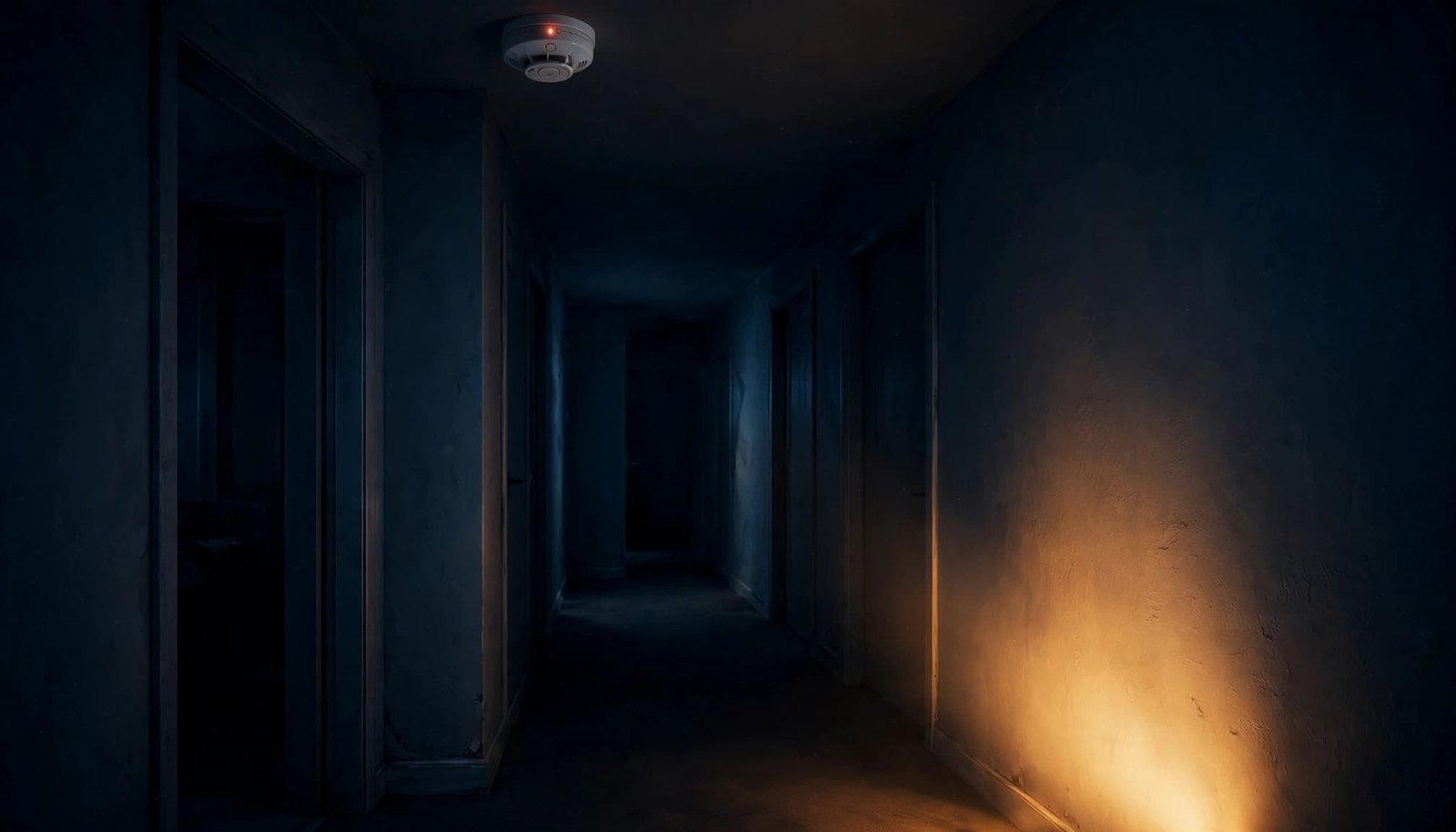
Listen for a chirp or a sustained alarm
Brief smoke detector beeping that repeats after a pause often points to a maintenance alert, such as a low battery warning. This intermittent beeping isn’t the same as a fire alarm. A loud alarm that keeps sounding needs a different response, so don’t dismiss it as one of many false alarms. Sound patterns vary by model, especially for combination smoke and carbon monoxide units, so don’t diagnose an emergency by counting beeps alone.
Use the pattern as a starting point, not a verdict.
| What you hear | What to do first |
|---|---|
| A brief chirp with long pauses | Check for hazards, then identify the unit and consult its instructions. |
| A loud, sustained or repeating alarm | Treat it as a possible fire alarm. Leave promptly if fire or carbon monoxide may be present, and call emergency services from outside. |
| An unfamiliar pattern | Treat it as a possible fire alarm until you’ve identified the alarm and checked its manual. |
A chirp may invite troubleshooting. A full alarm calls for safety decisions before battery decisions.
Check for hazards before touching the unit
Look and smell for smoke, flames, sparks, or a burning-plastic odor. If you notice any of them, leave and call emergency services from outside; that’s the safest emergency response. Carbon monoxide has no smell, so never use your nose to dismiss a CO alarm. If you smell gas, leave without operating switches or electrical equipment.
Use a flashlight or LED lantern while you check. Candles add an open flame to a situation that may already involve a fire warning. Also check on anyone whose essential medical equipment lost power, following their established backup plan.
Why a hardwired alarm may chirp when power goes out
The backup battery still has a job
Many hardwired smoke detectors rely on household electricity and a battery backup during outages, helping keep the apartment’s fire alarm protection active. That backup might be replaceable or sealed inside the unit. NFPA’s guide to smoke alarm types explains these arrangements and recommends monthly testing.
If a backup battery is weak, a power cut can bring the problem to your attention. Still, don’t assume every chirp means the blackout caused it or signals a problem with the apartment’s fire alarm protection. The warning could have started earlier, gone unnoticed, or come from a different device. A battery-only alarm, for example, doesn’t depend on the building’s power at all.
Power returning can make another sound
A brief sound as the lights come back doesn’t necessarily mean false alarms are occurring; some hardwired models make a short noise when power returns. That’s different from a chirp that continues every minute. If the sound persists, check the unit instead of waiting for the electrical supply to settle it.
Likewise, don’t assume a dark apartment means every circuit is off. A partial outage may leave some equipment powered. If you suspect a wiring fault affecting the apartment’s fire alarm, or see damage around an outlet or alarm, step back and contact building maintenance or a qualified electrician.
Find the alarm that’s making the noise
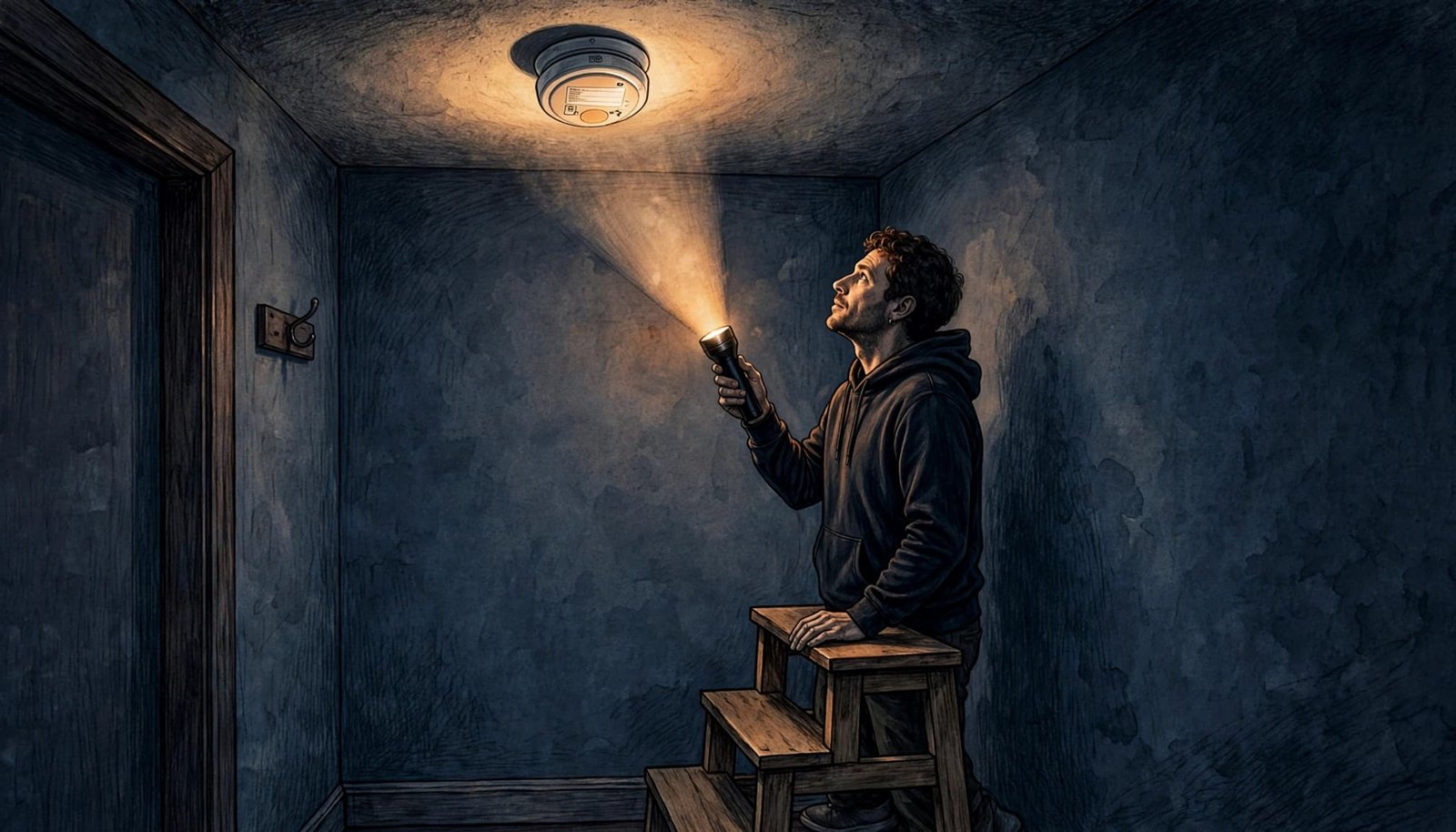
Check nearby devices before climbing up
A chirp can bounce around a hallway, making smoke detector chirping seem to come from somewhere else. Listen through two or three cycles before choosing a unit. Check smoke alarms, combination smoke and CO alarms, carbon monoxide detectors, and other battery-powered devices. Smoke detector beeping could also come from a backup power device.
Use a stable step stool on a dry, clear floor if you need to read an alarm. Keep a flashlight handy and ask someone to steady the stool if possible. Don’t climb onto furniture in a dark room. The label or manual should identify the model, battery type, manufacture date, and meaning of its warning sounds. Dust buildup or a sensor malfunction may be possible, but don’t assume either is causing the chirp. Check the model instructions.
Interconnected alarms can complicate the hunt
In an interconnected system, one alarm detecting danger may cause other units in the fire alarm system to sound. A single unit’s maintenance chirp, however, may come only from that unit. Behavior depends on the system, so don’t remove alarms one by one to test a guess.
If several units sound loudly, follow the emergency response first. For an isolated chirp, pause beside each device and locate the source before opening a battery compartment.
Replace a weak backup battery safely
If the instructions identify a low battery warning, replacing a battery is a reasonable first fix. Have the specified fresh batteries ready before opening the unit. An old battery from a drawer may give you another chirp for your trouble.
- Read the model’s battery instructions, then open only its intended battery compartment. Don’t expose or handle household wiring.
- Remove the old battery and check its marked orientation. Insert the specified replacement and close the compartment fully.
- Follow the manufacturer’s test procedure. Stay nearby long enough to hear whether the warning returns.
An incompletely closed drawer or incorrectly seated battery can keep an alarm chirping. If the model calls for a reset after replacement, follow its instructions rather than trying a generic button-holding trick.
Never leave an alarm without its required battery to buy yourself a quiet night or silence a fire alarm. For alarms with non-replaceable sealed batteries, opening the housing isn’t the fix. A persistent low-battery or end-of-life warning may mean replacing the whole unit. Tell your landlord promptly if replacement is their responsibility.
When a new battery doesn’t stop the chirping
Check the age and the model’s warning code
A fresh battery solves only a battery problem. As part of smoke detector troubleshooting, check the model’s warning code. For example, Kidde says a chirp every 30 seconds can indicate end of life on certain sealed-battery models. Another model may use a similar interval for a different warning, so match the sound to the exact model.
Look for the manufacture date on the alarm. NFPA’s smoke alarm maintenance guidance says to replace smoke alarms when they’re 10 years old. Check the instructions for your particular smoke or combination alarm, too. A combination unit’s CO sensor may have a separate service life and warning.
A new battery can’t extend an expired fire alarm’s smoke detector lifespan. If the model reports end of life, replace the unit.
Rule out simple installation problems
Check that any battery pull-tab is gone, the contacts aren’t visibly damaged, and the compartment closes as designed. For dust buildup, follow the manufacturer’s instructions for cleaning the unit, often with a vacuum’s soft brush attachment. Don’t let liquids or sprays enter the sensor.
Steam or cooking particles can trigger false alarms, but they don’t explain a short maintenance chirp. If the sound continues after the recommended checks, a sensor malfunction is one possible reason to arrange an inspection of the fire alarm or replace it. Don’t keep pressing silence until the warning disappears.
What renters should report, and what to check afterward
A renter can identify the unit, replace an accessible battery if permitted, and report what happened. Tell management the model, location, sound pattern, and whether smoke detector chirping began during the outage or after power returned; mention dust buildup only if the manufacturer’s instructions say how to address it.
Leave hardwired connections, damaged units, and uncertain interconnected systems to building maintenance. Don’t disconnect wiring or shut off a breaker to silence a fire alarm, even to prevent false alarms. If you can’t restore a working alarm promptly, contact your landlord’s emergency maintenance line and ask how to maintain fire alarm protection while repairs are pending. Follow building safety guidance about occupying the affected area.
Once power returns, test affected smoke and CO alarms according to their instructions. Report continued chirping, a failed test, or signs of electrical damage. Keep spare batteries of the specified type with your flashlight, and save management’s emergency number somewhere accessible without Wi-Fi. Next time the lights go out, you won’t have to search the internet by flashlight.
Key Takeaways
- Treat a loud or unfamiliar fire alarm as a possible emergency; check for hazards before troubleshooting.
- Find the chirping unit and its model before addressing a low battery warning.
- Use the specified fresh batteries, close the compartment, and test the alarm.
- Replace an expired or sealed-battery unit when its instructions call for it.
- Renters should report persistent warnings and leave wiring repairs to building maintenance.
FAQ: Smoke alarm chirping during a blackout
Why does my smoke alarm chirp every 30 to 60 seconds?
Smoke detector beeping at that interval often indicates a maintenance warning, such as a weak battery, but it isn’t a universal code. On some models, it signals that the alarm has reached the end of life, meaning its service life is over. Kidde’s combination alarm guidance describes a 60-second chirp associated with insufficient battery power on certain units. Identify your model and check its instructions before choosing a fix.
Will a hardwired smoke alarm work during an outage?
Hardwired smoke detectors with a functioning battery backup are designed to keep protecting you when household power fails. However, backup arrangements differ, and a missing, weak, or expired battery may prevent proper operation. Check the model’s instructions for the smoke and carbon monoxide detectors, and test each as directed. Don’t treat a status light or the absence of chirping as proof that everything works.
Why do I notice the chirping only at night?
A dark, quiet home makes a brief chirp much easier to hear. The timing alone can’t identify the fault, especially during a blackout when other household sounds stop. Listen for a full cycle, locate the unit, and note whether the chirp continues after power returns. That record will help if maintenance needs to inspect it.
Can shower steam make a smoke detector chirp?
Steam can trigger false alarms on some units. A single periodic chirp usually points toward the unit’s maintenance codes instead. First check for danger, then compare what you heard with the model’s instructions. If shower steam regularly triggers a full alarm, ask management about the unit’s condition and placement rather than disabling it.
How often should I replace a hardwired alarm’s backup battery?
For a replaceable backup battery, NFPA recommends replacement at least once a year, and sooner if the alarm warns that it’s low. A sealed-backup model has no routine battery swap, so follow its replacement instructions instead. Test the fire alarm monthly, including after an outage that raises doubts about its operation.
What if the chirping continues after I install a new battery?
Confirm the battery type, orientation, and battery compartment closure. Then check the manufacture date and model-specific warning codes. A continued chirp may call for a manufacturer-directed reset, cleaning, inspection, or replacement. If it’s a hardwired rental unit, give building maintenance the details rather than opening its electrical connections.
A quiet alarm should also be a working alarm
During a blackout, a chirp is worth your attention, but it doesn’t require guesswork. Check for danger, identify the unit, and follow its instructions for the warning you hear. If a new battery doesn’t solve it, age or a fault may be the reason.
The job is finished when the fire alarm tests properly, not merely when the apartment gets quiet again.