Your bedroom goes dark, but the kitchen light is still on. A power outage in one room usually points to a local circuit problem, though the wiring may reach farther than the room’s walls.
A partial power outage can leave the rest of the unit powered despite power loss in one room. Start with a flashlight, a quick check of what’s affected, and one careful look at the electrical panel. If you notice heat, sparks, or a burning smell, skip the detective work and get help.
Check what actually lost power
A room can look completely dark because one light fixture stopped working. Before heading to the electrical panel, check a few things using a working lamp. Try a wall outlet on each side of the room, then check nearby rooms and the hallway. Plug the lamp only into outlets that look dry and undamaged.
Notice the pattern, which can help narrow down where power loss occurred:
- If the wall outlets work but the ceiling light doesn’t, the bulb, fixture, light switch, or loose connections may be involved. Report a suspected fault rather than inspecting or repairing it.
- If lights and outlets are both dead, a breaker or another device supplying that area may have shut off, causing a partial power outage.
- If some outlets work and others don’t, note exactly which ones. That detail will help whoever investigates the circuit.
In an apartment, check whether your unit’s other rooms and the building hallway have normal lighting. Hallway emergency lights can remain on during a wider outage, so they aren’t a perfect test. If neighboring units also lost power, contact building management or the utility rather than treating it as one bad bedroom outlet.
Reset a tripped circuit breaker once
A tripped breaker is a sensible first check, but appearances can be sneaky. The circuit breaker handle may sit between ON and OFF instead of clearly pointing to OFF.
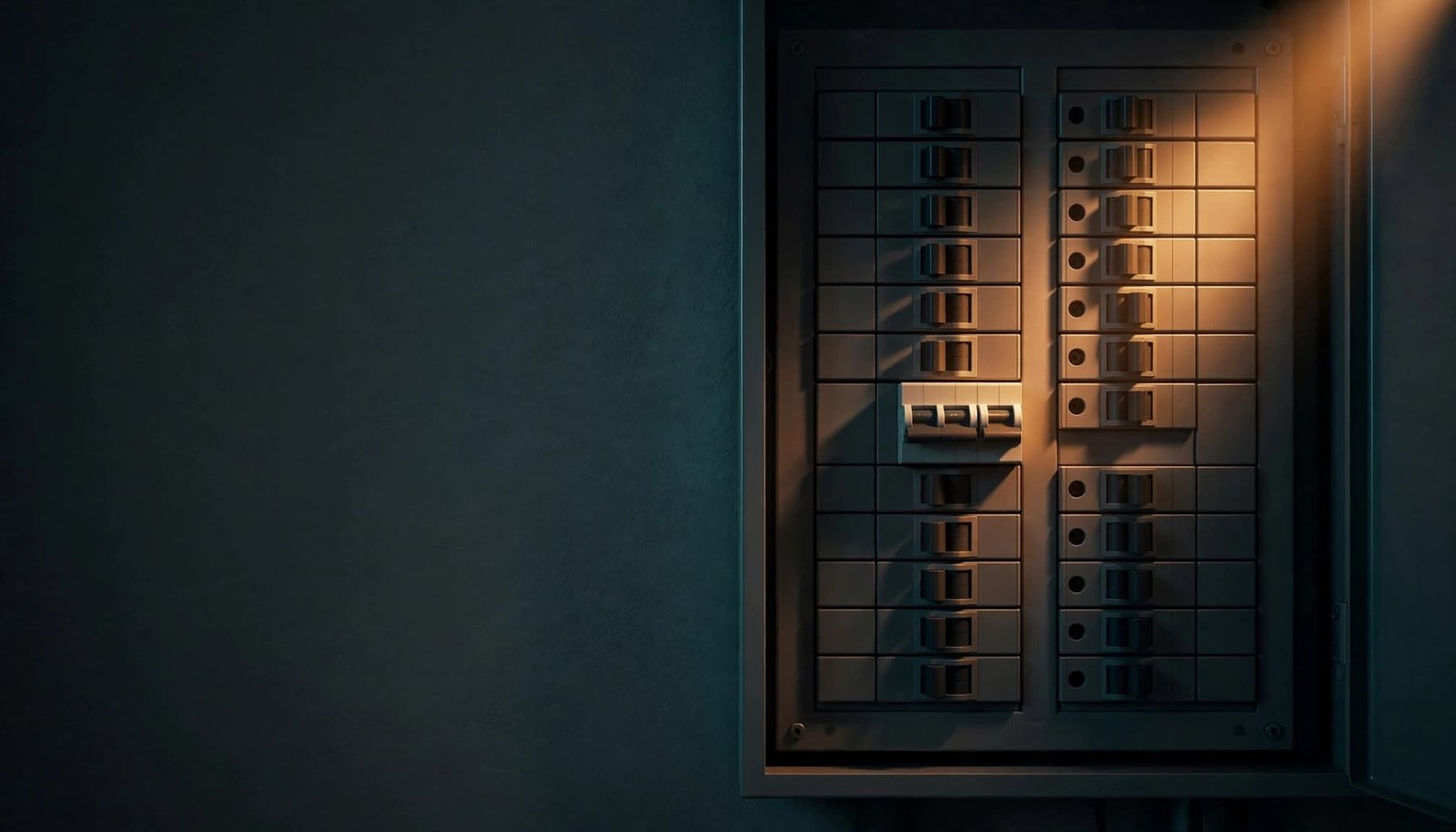
Before touching the panel
Use a flashlight to read the electrical panel labels without guessing, and follow basic safety precautions. Keep your hands and the floor dry. If the panel is wet, damaged, unusually warm, buzzing, or smells burnt, leave it alone and report the electrical hazards.
Unplug a recently used heater, hair dryer, or other high-draw appliance in the affected area if its plug and outlet are safe to touch. This can reduce the load if an overloaded circuit is the cause. Don’t remove the panel cover or touch anything except the breaker handle.
Move the handle fully off, then on
Identify the breaker for the affected area if it’s labeled. Reset the circuit breaker only once: move it firmly to OFF, then back to ON. The CPSC home electrical safety checklist gives the same off-then-on reset sequence.
A label might say “bedroom,” yet outlets in the hall may share that circuit. If you’re unsure which breaker applies, don’t switch random circuits without considering equipment that could lose power, including medical devices.
If the breaker trips again, stop troubleshooting and leave it off. An overloaded circuit or loose connections may need professional diagnosis, not a renter repair. Call your landlord, building maintenance, or a qualified electrician. Repeated trips call for a diagnosis, not a contest of wills.
Look for a GFCI outlet outside the room
A GFCI is an outlet or breaker that shuts off power when it detects a ground fault. This protection helps reduce the risk of electric shock, as the CPSC GFCI fact sheet explains. A tripped GFCI outlet may cut power to other receptacles it protects, even when it’s located elsewhere.
Check the likely locations
Look for outlets with TEST and RESET buttons in bathrooms, kitchens, laundry areas, garages, and nearby rooms. A bathroom GFCI, for example, may protect another receptacle beyond that bathroom. The boundaries don’t always match your floor plan.
Check only accessible outlets. Don’t move heavy appliances, reach behind damaged fixtures, or touch an outlet with signs of water or heat. If you find a tripped GFCI, unplug devices connected to the affected outlets if you can do so safely. Then press the reset button firmly and test the room again with your lamp.
Notice what happens after the reset
If power returns, reconnect devices one at a time. When a GFCI trips again as soon as you plug something in, stop using that device and report the issue. If it won’t reset with connected devices unplugged, leave the affected outlets unused and arrange an inspection.
Avoid repeatedly pressing TEST and RESET in hopes that the outlet will change its mind. The buttons help identify what happened; they can’t repair a fault.
Map the dead outlets without opening anything
If the breaker and GFCI checks don’t restore power, the pattern of working and dead devices becomes useful evidence. You can record it without removing an outlet cover or touching a wire.
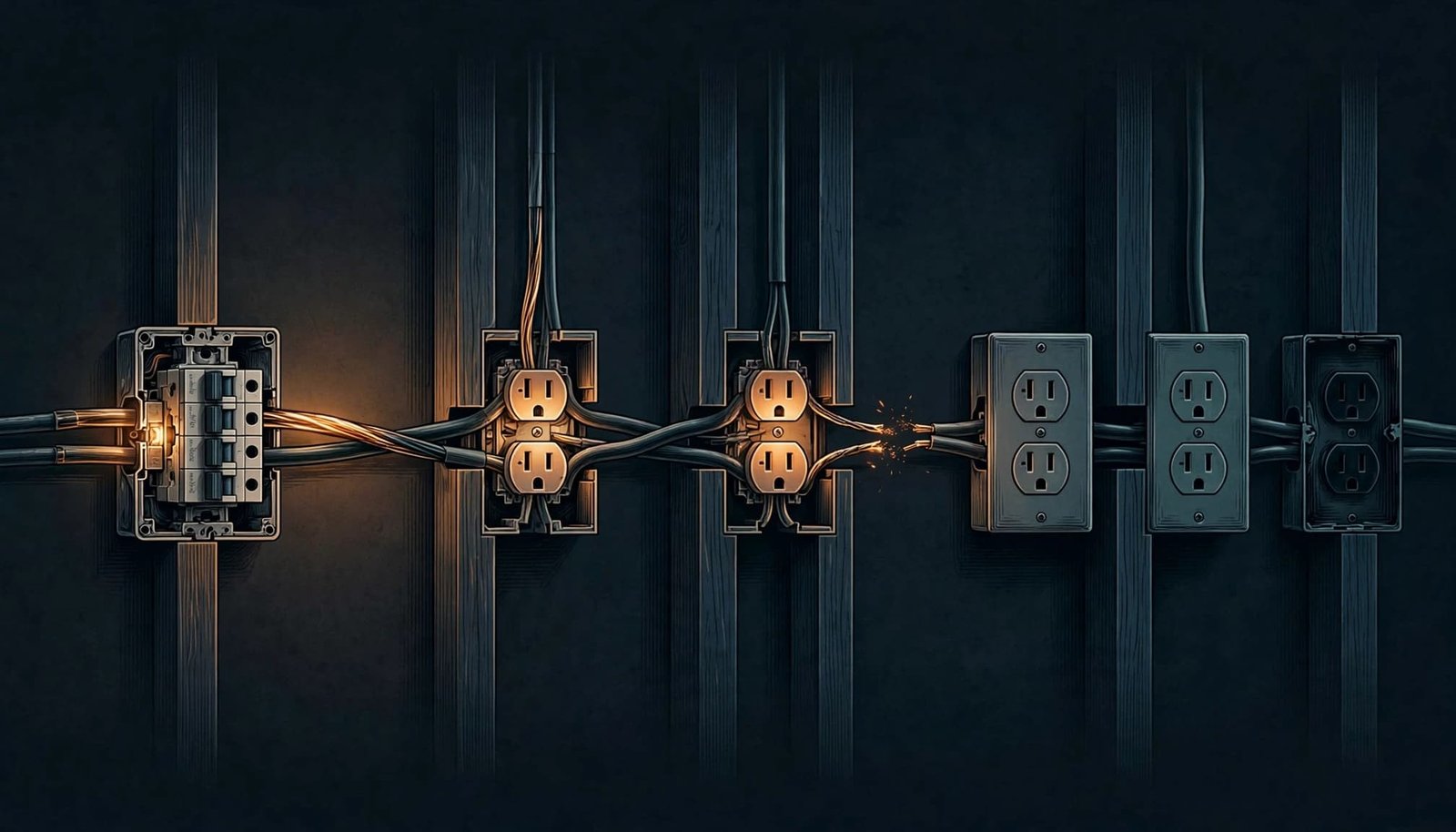
Use one known-working lamp
First, verify your lamp works in a live outlet. Then try it at each accessible outlet in and around the affected room. Write down which outlets work, which don’t, and whether lights or switches behave differently.
A small plug-in outlet tester can provide information at a live receptacle, but it won’t pinpoint a hidden fault. A non-contact voltage tester also has limits. Neither tool makes it safe to open an outlet or assume a wire is dead. For most readers, the lamp and a clear list are enough.
Note where the pattern changes
Some household circuits supply multiple receptacles along a route. A pattern may suggest loose connections, but it can’t show where the fault is. A problem at one point can affect devices farther along that route, so the first dead outlet you find isn’t necessarily where the fault sits.
Likewise, a working ceiling light doesn’t prove every outlet in that room has power. The two may be supplied differently. If you can tell maintenance that three outlets failed while the overhead light and hallway outlet still work, you’ve given them more than “the room is broken.” This record can help maintenance investigate the power loss. Don’t guess at a wiring route or faulty wiring from outlet positions or a basic tester alone.
Know what the simple checks can’t fix
A breaker that won’t stay on, a GFCI that won’t reset, or several dead outlets with no obvious trip may point to a failed device, faulty wiring, or loose connections. A faulty switch can affect a light fixture, while loose connections or other wiring issues may affect more than one receptacle. Visible symptoms alone can’t establish which part needs repair.
That’s where a licensed electrician’s training and tools matter when diagnosing the home electrical system. Electricians may use a voltage tester, multimeters, and other diagnostic equipment to locate a fault. These checks can involve live parts and require knowing how to isolate power correctly.
Don’t remove faceplates, tighten terminals, replace a circuit breaker, or probe an outlet with a voltage tester. Opening equipment can expose you to electrical hazards; leave electrical repairs to a qualified professional. Even a switch marked OFF may leave wiring energized. In a rental, report electrical issues to the landlord or maintenance team, and ask a qualified person to assess a suspected blown fuse in a fuse box.
Stop troubleshooting when there are danger signs
Some clues call for distance, not another reset. The CPSC guide to home wiring hazards focuses on spotting electrical hazards before they cause a fire or electric shock. For electrical safety, treat visible damage and unusual heat as reasons to stop using the affected circuit.
Leave damaged equipment alone
Don’t touch an outlet or panel that’s wet, scorched, sparking, or unusually hot. A burning-plastic smell, smoke, or persistent buzzing also needs prompt attention. If you see smoke or fire, leave the area and call emergency services. For a hazardous but non-emergency electrical problem, contact building management or a qualified electrician promptly.
Take basic safety precautions: keep children and pets away from the affected area. Use a flashlight or LED lantern for light instead of candles. A dark room already offers plenty of opportunities to meet the furniture with your shins.
Don’t use a voltage tester to check damaged or suspect equipment yourself.
Don’t force power back on
Repeated breaker trips or a GFCI that won’t stay reset may mean a fault remains, such as loose connections. Leave the circuit off or the affected outlets unused until someone qualified checks them.
Also avoid running an extension cord under a rug or through a doorway as a long-term substitute. If you need light or phone charging while you wait, use a charged power bank and a battery-powered lamp.
Make the handoff easier for maintenance
For renters, a good report includes more than “no power.” Tell management when the power loss began, which lights and outlets failed, whether other rooms work, and whether you found a tripped breaker or GFCI. Also mention recent appliance use and any observed electrical issues, such as a smell, sound, heat, or visible damage.
Photograph visible damage only from a safe distance. Describe what you observed rather than using a voltage tester to diagnose the fault or presenting loose connections as fact. Ask management to arrange a qualified electrical inspection and any needed electrical repairs. Save the property manager’s emergency number somewhere you can find it without Wi-Fi. If essential medical equipment has lost power, follow its established backup plan and seek emergency help when someone’s health is at immediate risk.
Once power returns and the problem is resolved, reconnect sensitive electronics gradually. Check outlets and cords before use, and test smoke and carbon monoxide alarms if they were affected by the interruption.
Key Takeaways
- Check several lights and outlets first; a dark room doesn’t always mean its entire circuit is off.
- Reset a tripped breaker once, moving it fully OFF before turning it ON.
- Look for a tripped GFCI in nearby bathrooms, kitchens, laundry areas, and garages.
- Write down the pattern of dead outlets, but leave covers and wiring to a qualified electrician.
- Stop immediately for smoke, sparks, burning smells, unusual heat, or repeated trips.
FAQ
Why is there a power outage in one room when no breaker looks tripped?
The breaker may be sitting near ON even though it tripped, or a GFCI may have shut off the affected outlets. A failed device or connection is another possibility. Check the breaker handle and accessible GFCIs once, then report an unresolved outage.
Can a bathroom GFCI shut off a bedroom outlet?
It can if the bedroom outlet is among the receptacles that GFCI protects. The outlet’s location won’t tell you for certain how it was wired. Checking accessible GFCIs is safer than assuming the fault must be inside the dark room.
Could one bad light switch cut power to the whole room?
A failed switch commonly affects the fixture it controls, but a wiring problem associated with a switch box could have wider effects. You can’t confirm that from the switch’s appearance. If multiple outlets are dead, give an electrician or maintenance worker the full pattern.
Should I keep the breaker on if the lights briefly return?
If it trips again, leave it off. Unplugging an appliance may remove a possible overload, but repeated resets aren’t a safe way to test the circuit. Have the cause checked before you rely on those outlets again.
The safest next step
When one room goes dark, focus on the pattern, not on taking anything apart. Check accessible outlets, reset a tripped breaker once, and look for a GFCI that may protect the area.
If those checks don’t restore reliable power, leave the affected circuit alone and report what you found so the needed electrical repairs can be made. Keep troubleshooting to the checks already described; a precise report helps get the right repair without turning a small outage into a bigger problem.