A sump pump power outage can leave water rising in the pit if lost electrical power stops your primary pump. If heavy rain is still falling, you need a backup system, not a hurried trip into a wet basement.
Start by checking for electrical hazards from a dry spot. Then work out whether a backup is already running, how fast the water is rising, and who to call if you can’t stop it.
Your sump pump power outage plan starts with safety

Look before you go downstairs
Use a flashlight and check the basement from a dry landing. If you see standing water near outlets, cords, appliances, or the electrical panel, stay out. Don’t wade in to reach the pump or unplug it. Keep children and pets away, too. During basement flooding, don’t enter water to inspect equipment.
The EPA’s flooded-home guidance says to make sure electricity is off and wait for professionals to confirm a flooded home is safe to enter. Turning off a breaker isn’t a DIY step when reaching the panel means crossing water.
Get help when the danger is beyond the pump
Call your electric utility or a licensed electrician if water may have reached electrical equipment. If there’s an immediate threat, such as sparks, smoke, or rapidly rising water that puts people at risk, leave the area and call emergency services.
If you’re in a rental or shared building, alert property management promptly. The pump and electrical equipment may belong to the building, even when the water is headed toward your belongings. Photograph damage only from a safe location.
What to do during the outage
Once you’ve ruled out an immediate hazard, focus on the water level and any backup equipment you already have. A storm isn’t the time to improvise wiring.
Check for an operating backup from a dry spot
Some homes have a separate battery-powered pump that starts when water rises above the primary pump’s float switch. Others have an alarm that sounds when the pit reaches a high-water level. Check the controller or alarm only if you can reach it without entering water or touching wet equipment.
Watch to see whether the water keeps rising. If the pit is nearing overflow and you have no safe way to remove water, call a plumber or water-damage professional. Move portable valuables upstairs if the route is dry. Don’t risk your safety to save a cardboard box.
Remove water only after electrical safety is confirmed
A wet-dry vacuum or transfer pump may help with a limited amount of water, but electrical safety comes first. The CDC’s flooded-home safety guidelines say to use powered water-removal equipment only after an electrician determines it’s safe to turn electricity on.
Don’t run extension cords through wet areas. If water is already spreading across the floor, professional help is safer than trying to keep pace with it using household equipment.
When power returns, find out why the pump stopped
Restored electricity should bring the primary pump back, but don’t assume the problem is solved. If it stays silent, a separate sump pump failure may be to blame.
Check the system without reaching into the pit
From a dry, safe area, listen for the motor and watch whether the pit level falls. If the pump runs continuously without lowering the water, shut it off only if the control is safely accessible, then call a plumber. Running without moving water won’t rescue the basement.
A stuck float switch, obstructed intake, or blocked discharge pipe can also stop water removal. Don’t reach into the basin or handle electrical connections while the equipment is energized. Have a qualified professional assess anything you can’t inspect safely, including the check valve.
Protect the next restart
Tell the plumber if the pump trips its breaker, hums without pumping, or cycles repeatedly. Those details help distinguish an electrical problem from a drainage problem.
If floodwater touched the outlet, cord, controller, or pump motor, have the equipment inspected before using it again. A dry-looking outlet isn’t proof that it’s safe inside.
Choose a backup that fits your home
A useful backup must work with your pit, drainage setup, and expected water inflow. Compare how each option starts and what it needs to keep operating.
| Backup approach | What to verify before relying on it |
|---|---|
| Battery backup for a compatible primary pump | Confirm the pump, inverter or controller, battery, and charger are approved to work together. |
| Separate backup sump pump | Check pit space, discharge arrangement, battery requirements, and how its float activates. |
| Water powered sump pump | Confirm dependable household water pressure and ask a plumber about local plumbing rules. |
| Standby generator | Check the pump’s starting load, approved connection method, automatic transfer switch compatibility, fuel plan, and safe outdoor operation. |
The right choice depends on your equipment and home. A specification sheet and an installer visit will tell you more than a generic runtime claim.
Fit varies by location. A crawl space may have different pit dimensions and access than a basement, so ask an installer to check clearances.
Battery systems need a real pump plan
A battery by itself won’t run an ordinary AC pump. A compatible battery system needs the right power electronics, while a separate backup sump pump has its own motor and controls. Ask an installer which arrangement fits your existing pump and sump pit.
Some systems specify a particular deep-cycle or marine battery. Follow the manufacturer’s battery and charging instructions rather than swapping in whatever battery happens to fit on the shelf. If the equipment is in a crawl space, confirm there’s room to install and service it.
Water-powered pumps depend on the water supply
A water-powered backup uses household water pressure to help remove water from the pit. That makes pressure and plumbing suitability the first questions for a plumber. A home whose well pump loses power may also lose the pressure this option needs.
Ask how the system connects to your water supply and discharge piping, and whether local rules permit the proposed installation. It still needs testing before a storm.
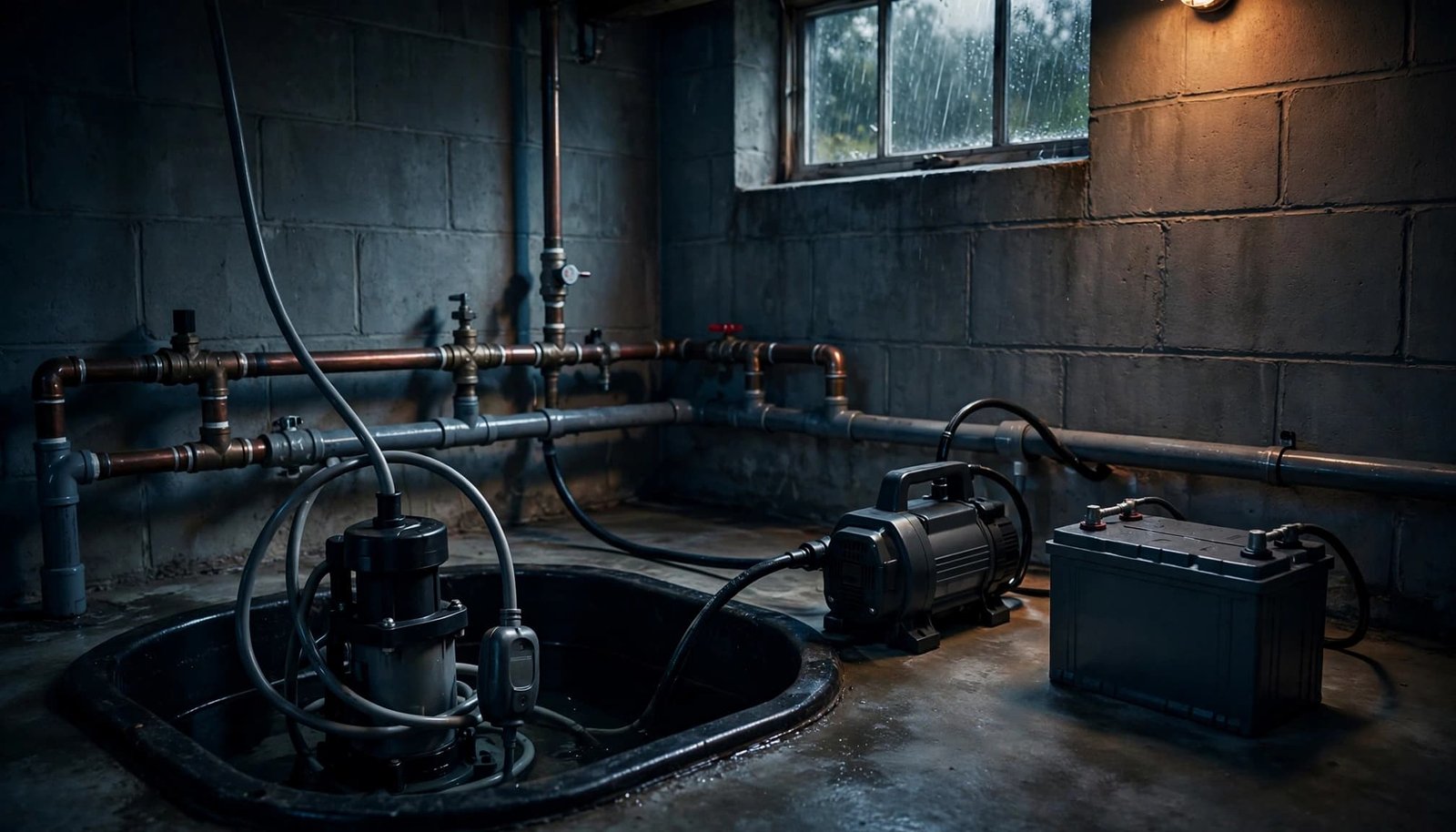
Using a generator without adding a new emergency
Generators can provide power during an outage, but a wet basement and a rushed electrical hookup are a lousy combination. Alliant Energy’s flood-safety advice emphasizes the shock risk around basement flooding.
Match the generator to the pump
Find the pump’s voltage and its running and starting power requirements in the owner’s manual or on its equipment label. Motor startup can demand more power than steady operation. A generator that handles a few lights may still fail to start the pump.
Before severe weather, check that your generator can meet the pump’s starting requirements. For a whole-home connection, ask a licensed electrician about a permanently installed standby generator and an automatic transfer switch. Never connect a generator to a wall outlet to feed household wiring. Keep the utility grid isolated from your backup source.
Keep combustion outdoors
Run a fuel-burning generator outdoors according to its instructions, well away from doors, windows, and vents. Never place one in a basement, garage, or apartment balcony. Keep working carbon monoxide alarms in the home; the CPSC’s generator safety warning also calls for checking smoke alarms and reviewing generator instructions before storms.
If the pump’s outlet or connection area is wet, don’t try to power it with a generator. Get the electrical hazard assessed first.
Test the pump and make warnings hard to miss
A sump pump power outage plan works best when it doesn’t depend on someone waking to hear rain during severe weather at 2 a.m. Check the system before storm season, while the basement is dry.
Test pumping, not merely the alarm sound
Follow the manufacturer’s instructions for testing the primary pump and any backup. Verify that the float moves freely, water leaves the pit, and the discharge outlet outside is clear. A motor that makes noise without moving water hasn’t passed the test.
For a battery system, check the controller’s status and maintenance instructions. Ask the installer how to test backup operation safely and when the battery needs inspection or replacement. Keep the pit cover secure after testing.
Set an alert you can receive
A high-water alarm warns that the pit is filling; a power failure alarm warns that electricity has stopped reaching monitored equipment. Some alerts sound locally, while others can notify a phone if their communication path still works. Test what the power failure alarm detects and whether its notification reaches you.
If you’ll be away during storms, give a trusted local contact your plumber’s number and a way to reach the property. An alert only helps if someone is available to act on it.
Key takeaways
- Stay out of basement water when electrical safety is uncertain. Call for help rather than reaching for a wet pump.
- Check backup equipment from a dry spot and watch for rising water. Move valuables only if you can do so safely to limit property damage.
- Compare backup equipment against your actual pump, pit, water supply, and electrical setup. Don’t buy based on a promised runtime alone.
- Test the pump, backup, and alarms before severe weather, when repairs are easier to arrange.
FAQ: Sump pumps during a power outage
Can a computer UPS run my standard sump pump?
Don’t assume it can. Check the pump’s starting and running requirements against the UPS’s output, battery capacity, and manufacturer-approved uses. A computer UPS may be designed to keep electronics running briefly, while a pump motor has a starting load. Ask the equipment manufacturers or a qualified installer before relying on that setup.
How long will a battery backup keep pumping?
There isn’t a reliable universal runtime. It depends on the battery, the backup equipment, and how often the pump must run as groundwater enters the pit. Compare manufacturer specifications under conditions close to yours, then ask how the system signals a low battery during a long outage.
Can I add a battery backup to an existing sump pump?
Ask an installer to check your pump model, available pit space, discharge piping, and electrical setup. Depending on the equipment, the solution may power a compatible pump or add a separate backup sump pump. Verify the complete setup before purchasing parts.
Why do outages cause sump pump failures during storms?
A standard AC-powered pump stops when it loses electricity, but rain and groundwater don’t pause with it. Storms can also cause clogs or mechanical trouble, so don’t assume a silent or overflowing pump has only a power problem. A sump pump failure can have more than one cause.
A safer basement starts before the next storm
When the lights go out, check for electrical danger first. Then monitor the water from a dry place and use only backup equipment you already know is safe and suitable.
The strongest protection is a tested backup, a working alert, and a clear plan for calling help if the water keeps rising.