The lights go out, the heat stops, and the bathroom faucet suddenly deserves your full attention. To prevent frozen pipes during a winter blackout, focus on plumbing exposed to cold, find out who controls the water, and act before the building loses too much heat.
You don’t need a basement or a generator to make a useful plan. In an apartment, a written phone number and a clear answer about the building’s water system may matter more.
Key Takeaways
- Find your unit’s water shutoff, if it has one, and ask who can shut off shared supply lines.
- Identify pipes near exterior walls, in unheated spaces, or beside drafty openings before a storm.
- During an outage, retain indoor heat and watch for changes in water flow or signs of a leak.
- If water escapes, avoid wet electrical equipment and contact property management or a plumber for help.
- Keep drinking water stored separately. A running tap is useful, but it isn’t a dependable blackout plan.
Why a power outage changes the pipe problem
A winter storm can interrupt heat for hours while cold weather keeps outdoor temperatures below freezing. Water pipes near exterior walls or in unheated areas may cool faster than pipes surrounded by warm rooms. The risk depends on the building, pipe location, and outage duration. No single outdoor temperature guarantees every pipe is safe.
A blackout can also affect water pressure. Some homes rely on electric well pumps, while apartment buildings may use powered equipment to move water to upper floors. A dry tap doesn’t automatically mean a pipe is frozen. It could be a building-wide supply problem.
Check your utility’s outage updates and building notices, but plan for conditions to change. FEMA’s winter-storm preparation guidance recognizes that freezing weather can disrupt power and communications. Keep the information you need available without a working phone.
Prepare your apartment plumbing before the lights go out
Before winter weather arrives, take a short plumbing tour while the heat is on and the floor is dry. You’ll want answers to two questions: Which water pipes might get cold, and who can stop the water if one leaks?
Find the pipes and the shutoff valve
Look beneath sinks, beside exterior walls, and along water supply lines in accessible garages, attics, basements, or crawl spaces. Note plumbing near garage doors or in unheated areas, but don’t enter restricted shared spaces or operate shared equipment. In a rental, stay within areas you’re allowed to inspect. You don’t need to open a wall to see where kitchen sink lines enter its cabinet.
Then locate the shutoff valve for your unit, if one exists. Some apartments have an accessible valve; others depend on building staff to reach shared equipment. Don’t turn an unidentified valve to see what happens. Ask management to show you the correct one, and keep their emergency number on paper.
Ask how the building handles an outage
Property management can tell you whether backup power supports heat, water pumps, hallway lighting, and resident alerts. Ask how to report a leak after hours and whether residents should take any action if water pressure drops.
If you own your home, make sure everyone knows where the main water shutoff is and how to reach it with a flashlight. An emergency isn’t a great moment to discover that the valve lives behind a tower of holiday decorations.
Protect cold-space plumbing without depending on electricity
Some preparation lasts through an outage. Other measures stop working when the power does, so know the difference before a storm arrives.
Check insulation in exposed areas
Pipe insulation can slow heat loss, but it can’t keep water above freezing indefinitely if the surrounding space stays cold. The U.S. Department of Energy’s cold-climate remodeling guidance recommends insulation for plumbing in vented crawl spaces. If you find bare pipes in a cold area, arrange a repair or ask your building manager to inspect them.
Don’t treat an R-value listed for a water heater or hot-water efficiency as a universal freeze-protection rating for pipes. Placement, exposure, and outage length all matter. Renters should get permission before making changes to building plumbing.
Check outdoor and powered systems early
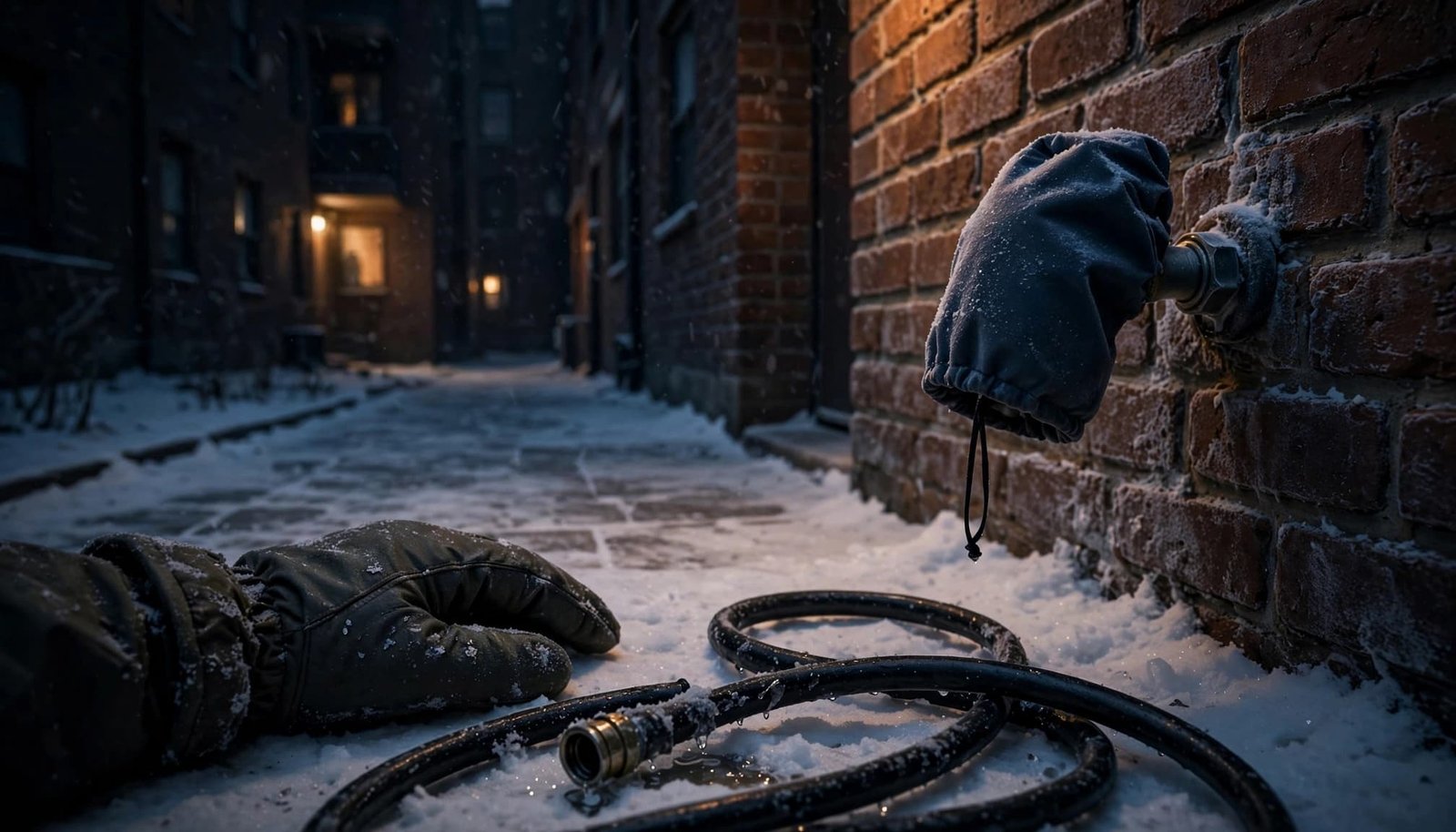
Before freezing weather, ask who maintains outdoor faucets, hose connections, irrigation lines, and any pool supply lines on the property. In a shared building, that work may belong to staff rather than residents. Report an exposed or damaged connection instead of guessing which shared valve controls it.
Some properties use powered equipment, such as heat tape, to protect pipes. Consider it only if building management or a qualified professional approves and maintains the system. It isn’t a blackout-proof fix. Ask who maintains it and what happens when electricity stops. Renters shouldn’t improvise wiring or use extension cords near plumbing, especially where a leak could wet the floor.
What to do while the heat is off
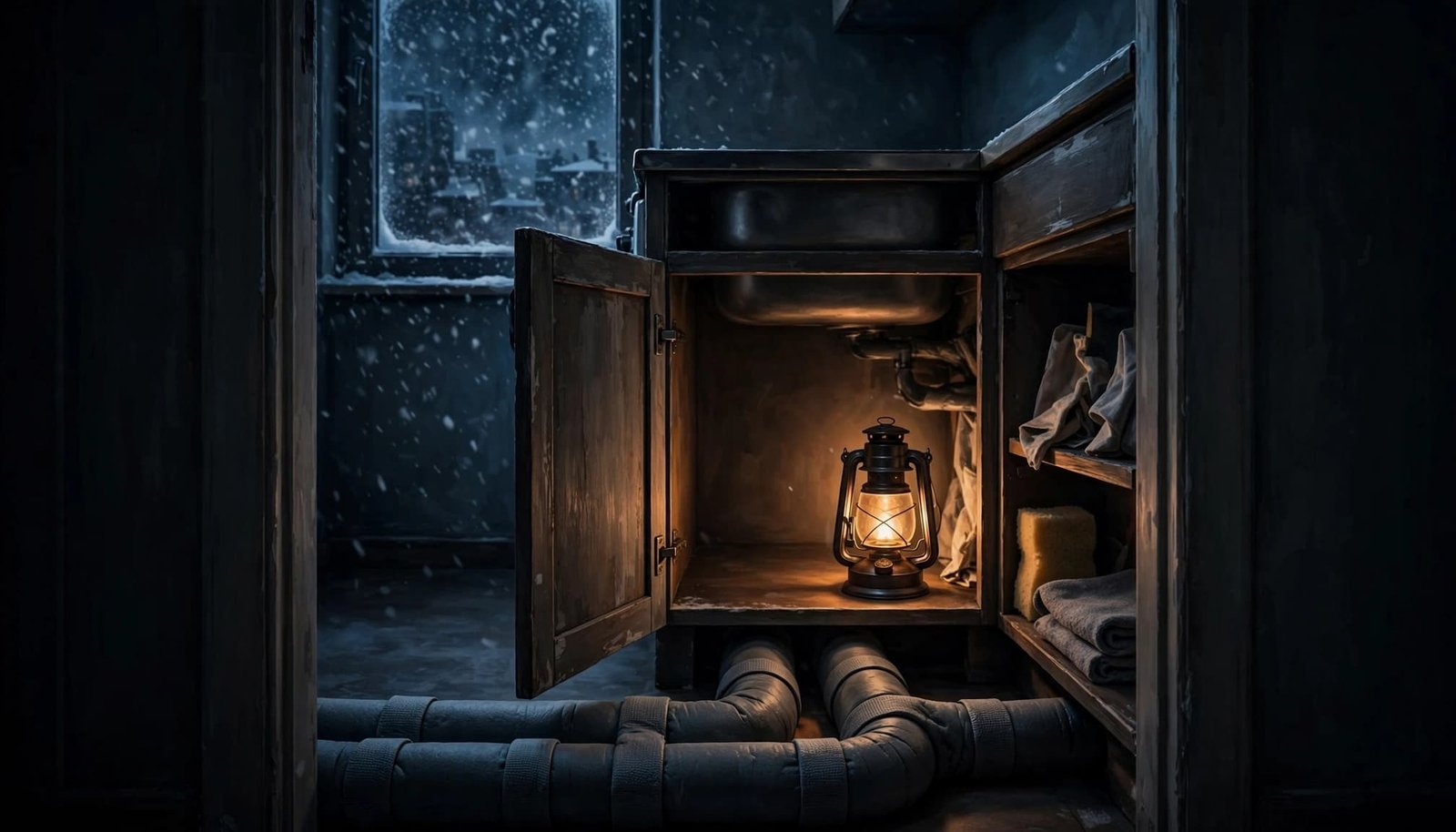
Start with the people in the home. Put on dry layers, close windows, draw curtains, and gather in a room that holds heat well. Open under-sink cabinet doors so room heat can reach accessible plumbing, and keep routes to exits clear. An indoor temperature reading can help you notice a downward trend, but it can’t tell you the temperature of a pipe inside a wall.
Keep warmth safely inside
Use flashlights or battery lanterns to check plumbing and move around. Never use open flames, an oven, grill, camp stove, generator, or other fuel-burning device to heat an apartment. Ready.gov’s winter-weather guidance also recommends smoke alarms and carbon monoxide detectors with battery backups.
If the home keeps getting colder, prioritize a warm place to stay, especially for children, older adults, and anyone with medical needs. Tell management about concerns before leaving. You can’t personally warm every hidden pipe, and staying in unsafe conditions won’t protect them.
Watch the water you still have
If water service remains steady, note whether water from an individual faucet slows or changes. A slow drip through a vulnerable line is a commonly recommended precaution when water is available, as reflected in Wicomico Health’s frozen-pipe advice. It isn’t a promise against freezing, and it won’t help a line with no available flow. In a rental, follow any building instructions about water use.
Keep stored drinking water for drinking, cooking, medications, and pets. If the tap stops, check building updates before assuming ice is blocking your unit’s plumbing. A pump outage and a frozen line affect available flow for different reasons, even though both can leave a tap silent.
If water pressure drops or a pipe seems frozen
A tap with little or no water while other taps still work may signal a frozen line. Check water pressure at another tap only if it’s safe; visible frost or a bulge also warrants attention. Plumbing behind a wall may show no obvious signs.
Check without making the situation worse
Compare another tap if you can do so safely, and ask a neighbor or property manager whether they have water. Don’t force a stuck valve or open a wall. Report a suspected freeze to management. A widespread loss of water needs a report to the water provider or building staff; an isolated problem needs closer assessment.
The Red Cross guide to frozen pipes covers prevention and thawing. For thawing frozen pipes, follow management’s guidance and work only on an exposed pipe in a dry, electrically safe area. Gradually warm it with warm towels or a hair dryer, but use a hair dryer only when power is available and keep it away from water. Keep the affected tap open if advised, so melting water can flow. During an outage, don’t depend on unavailable outlets. Never use an open flame, torch, or fuel-burning heater. Renters shouldn’t open walls or thaw concealed plumbing themselves.
Treat escaping water as the immediate problem
A frozen line can split, so pipe bursts may not become apparent until the ice thaws. If a pipe bursts or leaks as it thaws, contact building management promptly. Use only a known, accessible unit shutoff, and don’t enter standing water to reach it. In a house, the main shutoff may be the right control, but don’t cross a wet electrical area to reach it.
Move people away from wet outlets, cords, or equipment to prevent electrical danger and water damage. If water may have reached electrical equipment, call the utility or a licensed electrician. Leave an area with sparks, smoke, or another immediate threat, and call emergency services. Photograph damage only from a safe place. The pipe can wait for a professional; electrical danger cannot.
When power and heat return
Restored electricity doesn’t automatically settle the plumbing question. Listen for running water where no tap is open, look for damp surfaces, and check accessible areas for leaks. Report any new signs of damage promptly. If you turned off a known water valve, coordinate with the person responsible for repairs before restoring service.
Let the building’s heat and water equipment return under its normal procedures. Don’t plug devices into wet outlets, and reconnect sensitive electronics once power is stable. If you left for a warmer place, check building notices before returning; access and water service may take longer than the lights.
Frequently Asked Questions
What thermostat setting helps prevent frozen pipes during a blackout?
No thermostat setting can maintain heat when the heating system has lost the power it needs to run. Before an outage, use your heat as directed by your building or heating-system guidance. During one, monitor how cold the home is getting and follow the building’s instructions.
Does a dripping faucet protect every pipe?
No. A drip depends on available water pressure and only affects the line feeding that tap. It won’t protect unrelated plumbing elsewhere in the building. If water stops flowing or management gives different instructions, report the change rather than relying on the drip.
Should renters shut off the building’s water?
Renters should use only a clearly identified shutoff they’re permitted to operate. Shared valves may affect neighbors or building equipment. If you don’t know which valve is yours, call property management and keep yourself away from any wet electrical area.
How can I tell freezing from a building-wide water outage?
Check whether other faucets work, then look for a building notice or ask management about water service. Those checks can narrow the possibilities, but they won’t diagnose a hidden pipe. Report an isolated loss of flow or any leak for assessment.
Keep the plan simple and within reach
A winter blackout gives you enough to manage without playing detective inside the walls. Know the exposed areas, know who controls the water, and keep a safe way to report trouble.
Prepare those details before the next storm. If the heat fails, protect people first, watch the water you can access, and leave hazardous plumbing or electrical repairs to the right professionals.
Pingback: Blackout Survival Plan: Keep Calm When the Lights Go Out