The lights go out, the refrigerator stops humming, and suddenly your familiar apartment feels unfamiliar. A blackout survival plan should cover your nerves alongside your phone battery and frozen food.
You don’t need to become perfectly calm before handling an outage. A few manageable next steps can make the hours less overwhelming, even in a small condo without backup power.
Start by sorting uncertainty into things you can check and things you can handle.
Why a blackout can make your brain feel on edge
Darkness removes familiar visual cues. Meanwhile, unusual silence, interrupted routines, and an unanswered restoration estimate can leave you more alert than usual. If you’re alone, every hallway noise may attract attention.
These are understandable reactions to disruption, not automatic signs of a mental health problem. However, if distress stays intense after the outage or disrupts daily life, consider professional support.
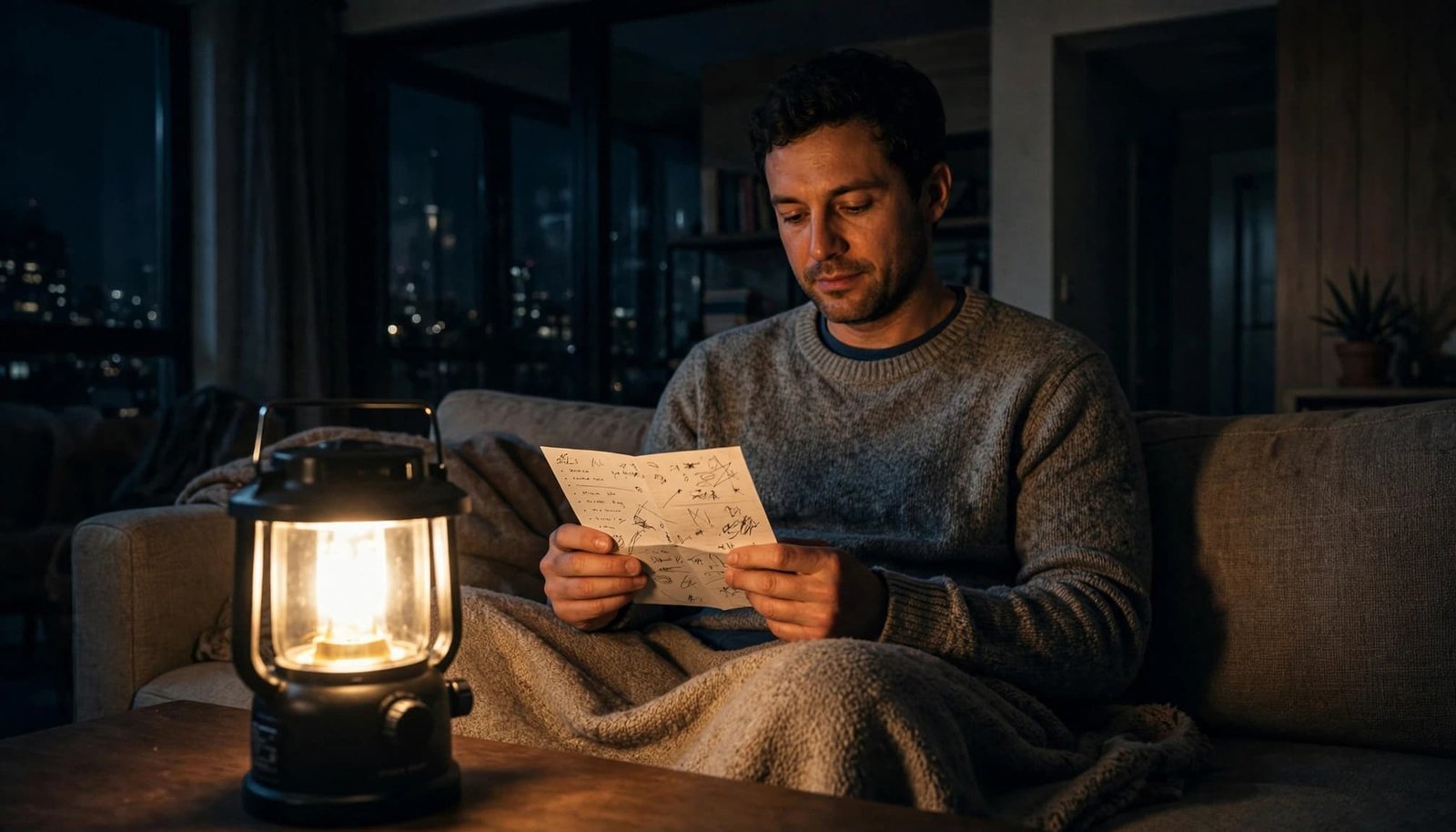
Separate what you know from what you fear
Check your utility’s official outage information and building notices. Use Ready.gov’s power outage guidance for general safety decisions rather than relying on neighborhood rumors.
Then write down confirmed facts and your next practical step. A restoration estimate is an estimate, so leave room for changes. Unless conditions require closer monitoring, choose a reasonable update interval, such as once an hour.
Building access, elevators, or water pressure may also change. Ask management about actual conditions instead of filling every information gap with a worst-case scenario.
Stay connected without spending all night on your phone
Send a brief status text to family, a neighbor, or a trusted friend. Agree on your next check-in time so neither person feels obliged to monitor the conversation constantly.
Turn on Low Power Mode or Battery Saver, lower screen brightness, and favor short texts over scrolling. If your household has several phones, designate one for alerts and preserve another as a backup. Keep important numbers on paper, too.
Your freezer isn’t the only thing that needs a survival plan. Your brain does too
Make the darkness feel less oppressive with safe lighting
Use a flashlight, headlamp, or LED lantern to illuminate your main sitting area and bathroom route. Clear cords, shoes, and bags from that path before moving around.
A small pool of light makes the room easier to use without exhausting every battery. Keep it away from glare at eye level.
Skip candles. Be Ready Utah’s lighting guidance identifies flashlights as safer than candles or oil lamps. Your coffee table already presents enough navigation challenges without hosting an open flame.
Add simple activities to your blackout survival plan
Give your attention a modest job: play cards, read a paperback, complete a paper puzzle, or journal. A small organizing task can also help, provided you stay within a safely lit area.
Choose a few options beforehand and store them near your lantern. Otherwise, entertainment may depend on the same phone you need for emergency alerts.
You don’t have to stay productive. Familiar activities simply give the waiting hours some shape.

If you are alone, a familiar voice can help
If solitude makes the outage harder, call someone you trust when service and battery allow. Tell them what’s happening and what you’ve already done.
Keep the conversation short if power is limited. Discuss an ordinary topic for a few minutes, then agree on another check-in. Connection doesn’t require an all-night call.
If networks are congested, send a text instead. A neighbor may also welcome a brief check-in when shared areas are safe.
Build a temporary routine until the lights come back
An outage removes ordinary time markers, including dinner preparation and evening television. A flexible routine gives you something more useful than watching the battery percentage shrink.
However, safety comes before the schedule. Adapt your plans to temperature, building conditions, medications, children, pets, and mobility needs.
Set simple times for meals, chores, and updates
Choose a few anchors: eat ready-to-eat food, complete one useful task, check official updates, and take a break. You can clear a walkway or gather tomorrow’s supplies without turning the evening into a preparedness marathon.
Keep refrigerator and freezer doors closed. According to FoodSafety.gov’s outage food safety guidance, a closed refrigerator keeps food safe for up to four hours. A closed, full freezer holds a safe temperature for approximately 48 hours; a half-full freezer lasts about 24 hours.
Repeated inspections won’t improve those timelines. Choose pantry food when possible and save cold-storage decisions for a planned check.
Sleep when you can, even when the night feels strange
Without familiar light and background sound, bedtime can feel oddly unfinished. Keep an LED light within reach, leave the bathroom route clear, and settle into your usual comfortable position.
In cold weather, add clothing layers and blankets. During heat, drink water and monitor indoor conditions. If your home becomes unsafe, arrange a safe move to a cooling center, warming center, or another suitable location.
Don’t use an oven or fuel-burning equipment to heat an apartment. Meanwhile, let rest count even if sleep arrives in shorter stretches. A blackout doesn’t require a perfect bedtime performance.
Give yourself fewer decisions next time
Protect your phone battery, use safe lighting, and keep a loose routine. Reach out when company would help, and change plans when conditions demand it.
Before the next outage, place a few offline activities beside your emergency supplies and agree on check-in times. Your blackout survival plan should leave you with fewer decisions in the dark, not another standard you’re supposed to meet perfectly.
Taking care of your mental well being during an outage can be just as important as knowing how to prevent freezing pipes.