A dry faucet can turn an ordinary Tuesday into a plumbing puzzle. During an apartment water outage, electricity and some household systems may keep working, but toilets, showers, and water-fed appliances have limits.
Your first priorities are a safe water reserve, a clear report to management, and avoiding equipment that needs running water. Start by checking how far the problem reaches, without volunteering yourself as the building’s emergency plumber.
Key Takeaways
- Electricity, refrigerators, and many electronic devices can keep working if power remains available.
- A tank toilet may have one flush left, but continued flushing needs water and a working sewer system.
- Stop water-fed appliances, report the outage, and follow utility instructions before drinking restored tap water.
First, Check Whether the Problem Is Local
Compare faucets and ask a neighbor
Briefly check another cold-water tap, then compare hot water and cold flow. One failing fixture suggests a different problem than every faucet going silent.
In an apartment complex, ask a neighbor and check building notices or your water utility’s outage updates. A water main break can affect a neighborhood. Meanwhile, a closed supply valve, damaged pipe, or failed building pump can affect fewer apartments.
Upper floors may lose service when electrically powered booster pumps stop, reducing water pressure. Working lights don’t prove the building’s water equipment is working.
Close taps after checking, unless management gives other instructions. Otherwise, returning water could start an unattended indoor waterfall.
Treat leaks and freezing as separate hazards
In cold weather, an isolated loss of flow deserves prompt attention. However, a dry tap alone doesn’t diagnose frozen pipes.
Report frost, bulging pipes, damp walls, or water escaping. Don’t open walls, use a torch, or turn unidentified shared valves.
Use only a clearly identified shutoff you’re permitted to operate, and only if you can reach it safely. Stay away from wet outlets and electrical equipment. Leave an area with sparks, smoke, or rapidly rising water, and call emergency services.
What Still Works During an Apartment Water Outage
The water supply and electrical service are separate systems, although buildings sometimes depend on both.
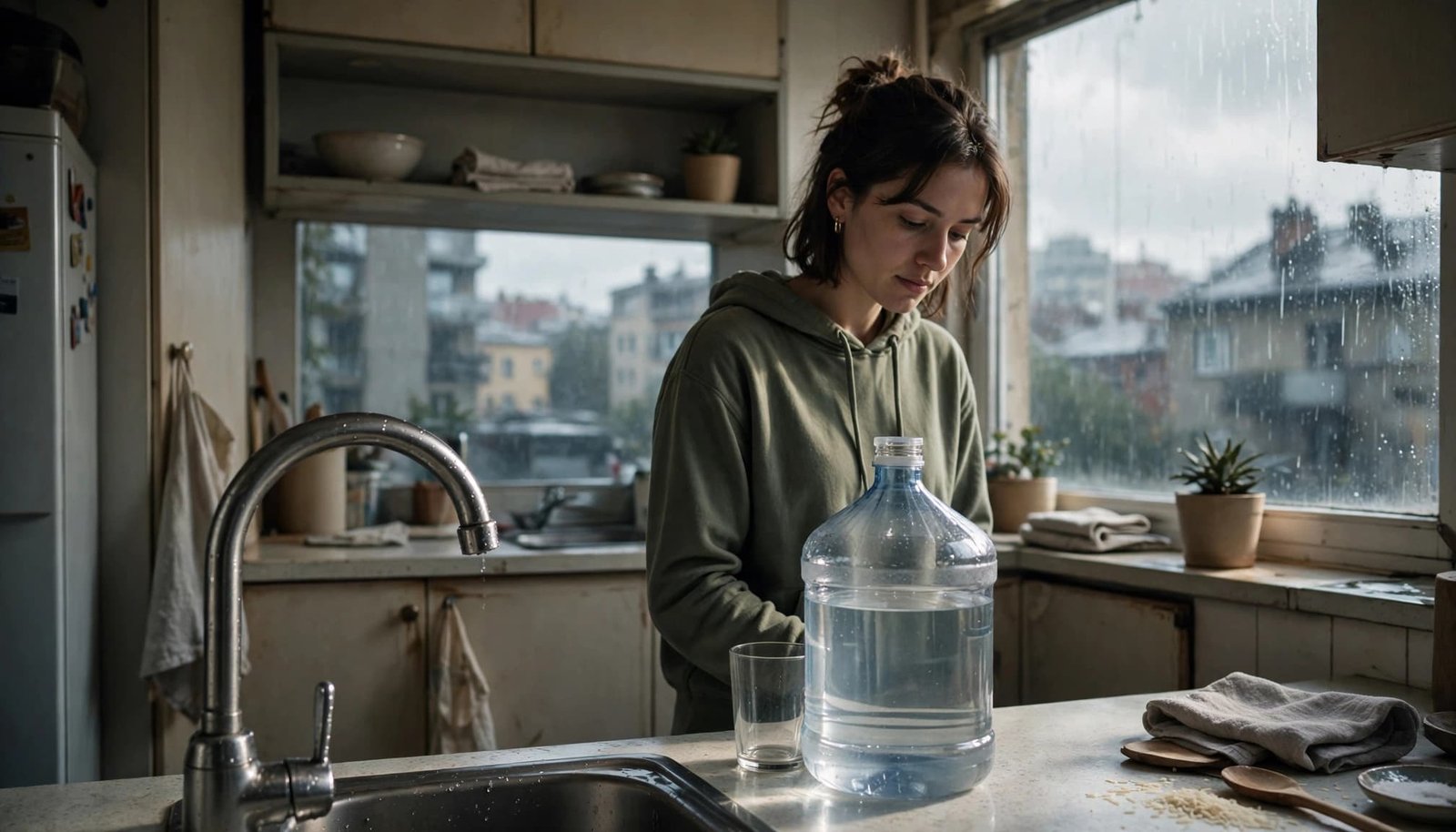
Here’s the practical split when electricity remains on.
| System or fixture | What to expect | What to do |
|---|---|---|
| Lights, outlets, Wi-Fi | Usually work if power and internet service remain available | Use normally unless leaks create electrical hazards |
| Refrigerator and freezer | Cooling usually continues | Disable automatic ice-making; avoid the water dispenser |
| Electric stove and microwave | Usually work | Choose meals that need little water |
| Sinks and showers | Stop or lose pressure | Close taps and use stored safe water |
| Dishwasher and washer | Can’t complete normal cycles without supply | Stop them using their normal controls |
| Heating and air conditioning | Depends on the building’s equipment | Ask management rather than assuming |
The main distinction is water-fed versus power-fed equipment. A working appliance display doesn’t mean its wash cycle can run.
A typical refrigerator doesn’t need incoming water to keep food cold. Its ice maker does, so switch that feature off according to the manual.
Hot water may also depend on shared building equipment, so its availability can vary during an outage.
Also, avoid assuming that all cooling systems are independent of water. Some buildings use shared water-based cooling or heating equipment.
Fire sprinklers may have separate supplies or pumps. A dry kitchen tap neither confirms nor rules out a fire-protection problem. Ask management about any impairment, and never test sprinklers yourself.
Toilets and Drains Have Different Limits
A tank toilet may still flush once
A conventional gravity toilet can usually flush using the water already in its tank. Afterward, the tank won’t refill during a supply interruption.
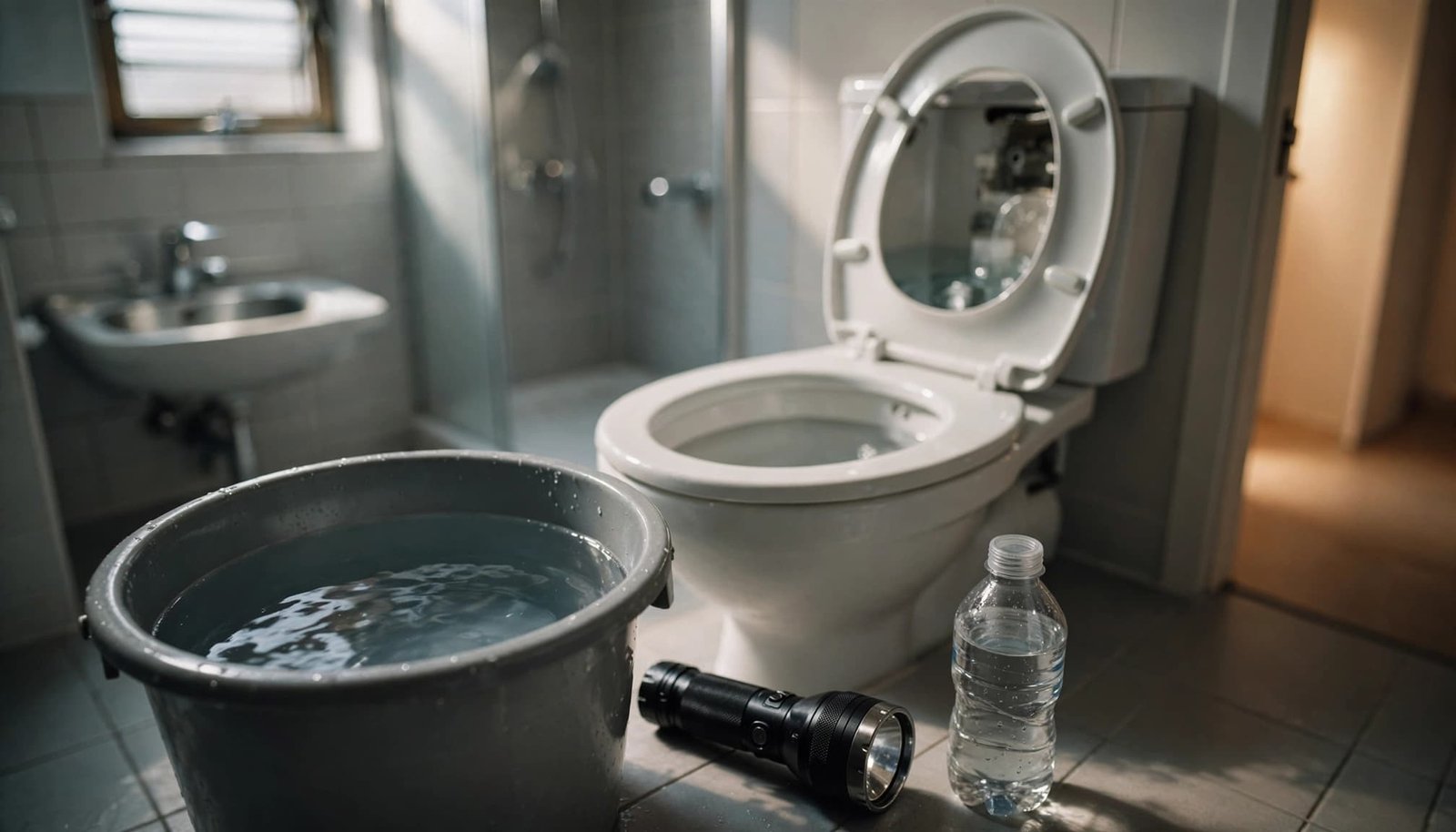
If management confirms sewer service is working, you can manually refill a conventional tank to its normal water line. Use stored flushing water, and avoid toilet mechanisms and spills.
This approach doesn’t apply to tankless flushometer toilets, which depend on pressurized supply. Powered or specialized toilets may have different requirements.
Reserve drinking water for people, pets, food preparation, and medication. The toilet doesn’t need your finest bottled vintage.
Drains may work, but check for backups
A water-supply outage doesn’t automatically disable gravity drains. However, some buildings rely on electrically powered sewage ejectors or other equipment.
Don’t flush or pour water down drains if management reports a sewer problem. Stop immediately if sewage rises, several fixtures back up, or wastewater appears elsewhere, signs of a sewage backup.
Manual flushing replaces the toilet’s missing supply water. It can’t fix a blocked drain or a failed sewage pump.
Keep buckets covered and away from children and pets. If safe toilet use is unavailable, ask management where residents can access functioning bathrooms. That matters more as the outage stretches beyond a brief repair.
Keep Drinking Water and Hygiene Manageable
Start with a compact reserve
Store at least one gallon of water per person per day for three days. Two people need six gallons, plus extra for pets, medical needs, or hot weather.
That baseline won’t support normal showers or unlimited toilet flushing. Keep potable water separate from water reserved for cleaning and sanitation.
Use food-safe containers for drinking water, or include bottled water in your reserve. Store it somewhere accessible that can safely support its weight.
If you have advance notice of a shutdown, fill clean containers before service stops. Treat water collected in an ordinary bathtub as non-potable unless you’ve prepared and stored it safely for drinking.
Choose low-water meals and safe hygiene
Ready-to-eat meals, nut butter, canned food, and shelf-stable milk reduce cooking and cleanup demands. Keep a manual can opener nearby; dinner shouldn’t depend on an electrical loophole.
Use safe water for brushing teeth and food preparation. Hand sanitizer containing at least 60% alcohol helps when soap and water aren’t available, but it doesn’t replace washing visibly dirty hands.
An outage doesn’t automatically mean there’s a boil water advisory. Check official notices. Under the CDC’s drinking-water advisory guidance, follow the instructions for the advisory issued.
Boiling addresses many germs, but it doesn’t make chemically contaminated water safe. A do-not-drink or do-not-use notice requires different precautions.
Report the Outage and Ask for Specific Help
Create a useful written record
Call the emergency maintenance number or property management, then send a written maintenance complaint. Include when the outage began, whether hot and cold water are affected, which fixtures you checked, any leaks, and whether urgent repairs may be needed.
Ask for the known cause, current repair estimate, next update time, and arrangements for drinking water and bathrooms. Ask whether the building owner has been notified.
For shared plumbing, ask whether an authorized professional, such as a licensed plumber, will handle the work. Don’t hire an emergency plumber expecting reimbursement without authorization, unless immediate action is needed for safety.
Keep messages, photographs, complaint numbers, and receipts. For an apartment water outage, a short factual timeline is more useful than twenty increasingly spicy texts.
In New York City, apartment tenants can use NYC 311’s water complaint service for no water, low pressure, and temperature problems. Elsewhere, contact your local code enforcement or housing-code agency, health department, or municipal reporting service.
Clarify accommodation and reimbursement before spending
Landlord duties, repair deadlines, and tenant rights depend on location and circumstances. There isn’t one universal countdown after which management automatically owes everyone a hotel.
Ask in writing whether management will provide alternative accommodation or reimburse necessary expenses. Request the approved amount, booking method, and reimbursement process.
A useful message is: “My apartment has had no running water since [time]. What bathroom access and temporary accommodation are available, and which expenses will you approve?”
Don’t assume renters insurance covers the stay either. Coverage depends on your policy and the cause of the outage.
If sanitation remains unavailable or health needs make staying unsafe, arrange a safe place to go. Don’t delay leaving solely because reimbursement is unresolved. Contact a local tenant adviser about your options.
When Water Returns, Restart Carefully
Restored pressure doesn’t automatically mean the water is ready for drinking. First, check whether a boil water advisory or other advisory remains active, and read the utility’s restart instructions.
Seattle Utilities’ water-outage guidance explains that restored flow can stir up pipe rust and sediment. Discolored water needs attention before you make coffee or start laundry.
Follow local directions for flushing cold-water lines. There isn’t a universal flushing duration for every building. Avoid drawing discolored water into hot-water equipment or water-fed appliances.
Milky water can contain tiny air bubbles, while colored water can contain sediment. However, appearance alone doesn’t establish safety. Seattle’s cloudy and discolored water guidance recommends waiting until discoloration clears before drinking.
Also, listen for running water when every tap is closed. Check accessible areas for leaks, especially after outages involving frozen pipes.
Once management confirms normal service and any advisory is lifted, follow instructions for ice makers, filters, and other affected appliances. Discard ice made with unsafe water. Report persistent discoloration, unusual odors, or pressure problems.
Frequently Asked Questions
Can I hire an emergency plumber and charge the landlord?
Don’t assume you can. Your tenant rights and repair-and-deduct rules vary by location, and may require notice, spending limits, or other steps. Shared apartment plumbing also needs authorization. Get management’s approval or local legal guidance before committing to a bill you expect someone else to pay.
Does hot water have one universal legal temperature?
No single temperature rule applies everywhere. New York City, for example, requires hot water at least 120 degrees Fahrenheit year-round under its residential hot-water requirements. Check your own jurisdiction’s rules rather than treating NYC’s standard as nationwide.
Can I use water from the water heater?
Don’t assume it’s safe drinking water or attempt to drain shared equipment. Stored hot water also doesn’t guarantee faucet flow because delivery normally depends on supply pressure. Ask management before touching heater valves, and never run equipment contrary to its operating instructions.
A Dry Tap Needs a Clear Plan
An apartment water outage leaves some systems usable while others need water, pressure, or working sewage equipment. Protect your drinking-water reserve, pause water-fed appliances, and get clear instructions from management.
When service returns, check advisories and watch for leaks before restarting everything. A faucet that flows again is good news; safe, dependable service is the finish line.