If your carbon monoxide alarm sounds during a blackout, get everyone outside into fresh air and call 911. Don’t wait for symptoms, look for the source, or assume the power failure caused a false alarm.
CO has no smell or color, and backup cooking or heating equipment can create dangerous exposure. Your first job is getting out safely, even if you feel fine.
Once you’re outside, call for help, report possible exposure, and stay out until responders clear the building.
When a carbon monoxide alarm sounds, leave first
A loud, repeating CO warning needs an emergency response. The U.S. Consumer Product Safety Commission’s CPSC safety guidance tells residents to move outside immediately and call 911.
Get everyone into outdoor air
Wake sleeping occupants and help children or anyone who needs assistance. Bring pets if they’re immediately accessible, but don’t delay evacuation to search rooms or gather belongings.
Take your phone and flashlight if they’re within reach. Leave through a safe exit, and use stairs rather than elevators during an outage.
Don’t stop to open windows, shut down a generator, or find the offending appliance. Those jobs can expose you longer. A balcony or interior hallway isn’t a dependable substitute for getting outside.
Call emergency services and stay out
From a safe outdoor location, call 911 in the United States, or your local emergency number elsewhere. Give your address, apartment number, alarm information, and any symptoms.
Tell the dispatcher whether generators, fireplaces, gas appliances, or temporary heaters have been operating. Report anyone still inside and their exact location.
Don’t re-enter until emergency responders say it’s safe. An alarm that stops sounding doesn’t give you permission to return. If you feel dizzy or confused, don’t drive yourself to medical care.
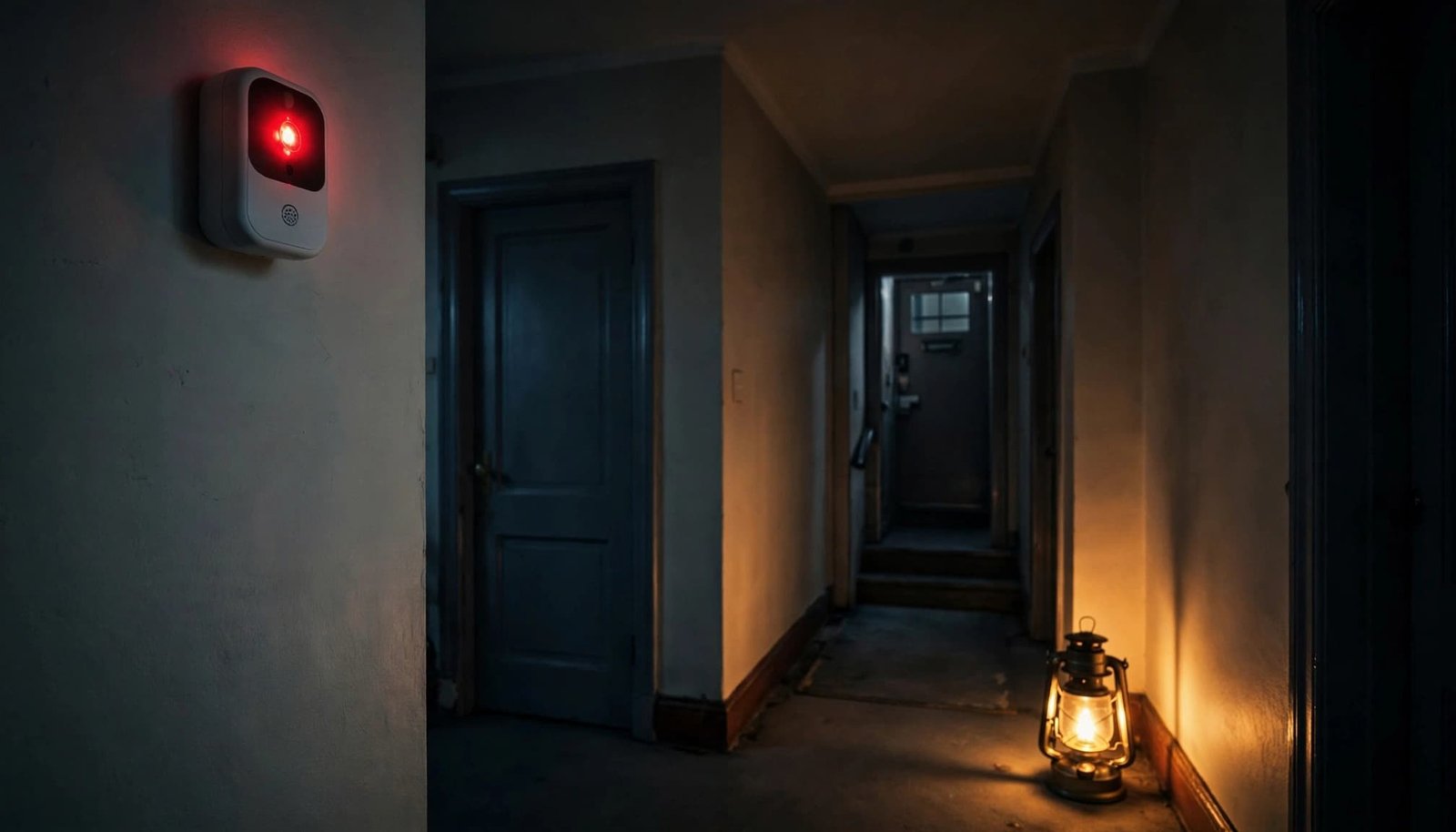
A full alarm and a maintenance chirp need different responses
An outage can reveal a weak backup battery. But that possibility doesn’t explain every sound, so don’t assume it’s the cause.
Recognize the emergency warning without waiting
Many carbon monoxide alarms use four repeating beeps. A smoke alarm commonly uses three, while combination units may add spoken warnings. UL describes these distinctions in its alarm codes and signal guidance.
Don’t stay indoors counting beeps during a possible emergency. Devices differ, and an unfamiliar warning deserves caution. Treat a full, repeating alarm or spoken CO warning as a signal to evacuate.
Symptoms require evacuation even if the sound seems like a low-battery chirp.
Troubleshoot only a clearly identified service signal
An isolated chirp with long pauses can indicate a low battery, fault, or end-of-life warning. Troubleshoot only when you’ve confidently identified a service signal and there are no signs of an emergency.
Check the exact model’s instructions. Don’t assume every unit uses the same chirp code, and don’t remove batteries just to restore peace.
Renters should leave hardwired connections and uncertain interconnected systems to building staff. If you can’t identify the signal promptly, leave and seek help rather than guessing.
CO exposure can interfere with your ability to escape
Carbon monoxide poisoning can cause symptoms such as headache, dizziness, weakness, nausea, vomiting, sleepiness, and confusion. Chest pain, collapse, or trouble breathing also require urgent medical attention.
Confusion is a warning, not a reason to investigate
Exposure can affect judgment and coordination. Someone may struggle with simple decisions, feel unusually sleepy, or dismiss a headache as stress.
Because those effects can slow evacuation, leave before trying to prove that anything is wrong. Tell emergency responders if multiple people developed similar symptoms or someone became difficult to wake.
Children, pregnant people, older adults, and people with heart or breathing conditions need particular attention. However, anyone can suffer serious poisoning.
Don’t use a reading as permission to stay
A display reports CO concentration in parts per million (ppm), but health effects also depend on exposure time and individual health. There isn’t one household reading that cancels an alarm or suspected exposure.
The EPA’s explanation of carbon monoxide’s health effects describes these varying risks.
A household alarm isn’t a medical test or a tool for searching contaminated rooms. Report any displayed reading in ppm and tell responders about symptoms, but don’t stay inside to collect measurements.
Why a blackout can increase CO risk
The loss of electricity doesn’t produce CO. Fuel combustion does. During outages, improvised cooking, backup heat, generators, and other fuel-burning appliances can create opportunities for exhaust to enter living spaces.
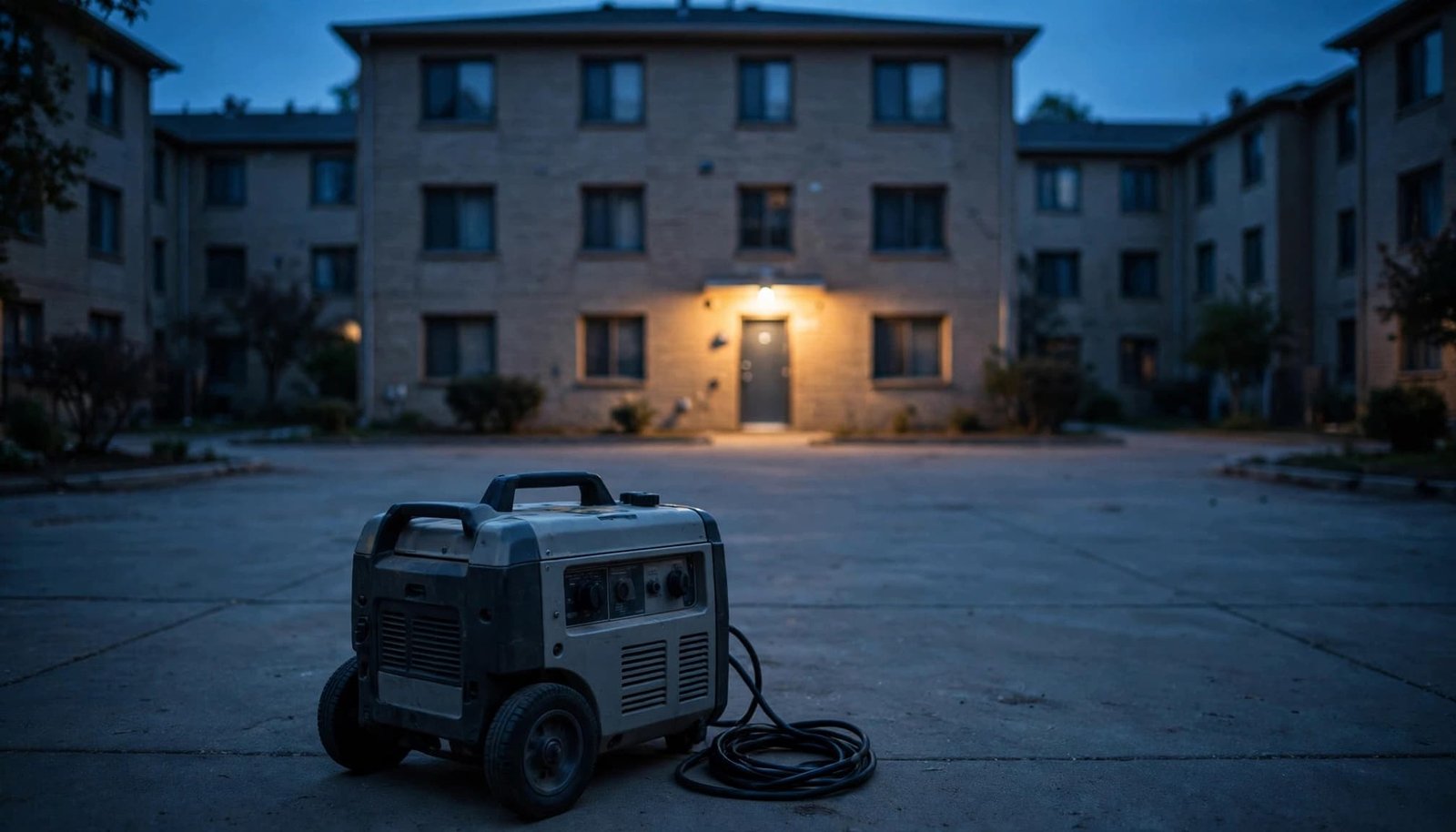
Generators belong outdoors with substantial clearance
Operate fuel-burning generators outdoors, at least 20 feet from doors, windows, vents, and attached garages, with exhaust directed away from buildings.
Never run one in an apartment, hallway, basement, garage, crawl space, carport, or on a balcony. Opening a garage door doesn’t solve the exhaust problem.
The CDC’s outage carbon monoxide precautions warn against using generators and other fuel-burning equipment indoors or near building openings.
Most apartment residents lack a suitable generator location. A battery power station produces no combustion exhaust during normal operation, although it still needs safe charging and placement.
Never connect a generator to a household wall outlet. That can backfeed electricity into utility lines and endanger repair crews.
Backup cooking and heating can create exposure
Don’t use a fuel-burning appliance like a gas stove or oven to heat your home. Keep camping stoves, charcoal grills, and outdoor heaters outside, and never improvise indoor use.
A cracked window doesn’t make unsafe equipment safe. Also, a powerless range hood may no longer remove cooking exhaust.
A properly installed fireplace still needs a clear flue and correct operation. Have fuel-burning appliances and chimneys maintained, and stop using suspect equipment until a qualified professional checks it.
Apartment residents need a building-wide response
You don’t need to own a gas appliance for CO to enter your apartment. Exhaust can come from elsewhere in the building or outside near an opening.
After calling emergency services, notify the property manager’s emergency line. Give your unit number and describe the warning without claiming you’ve identified the source.
Warn nearby residents if you can do so while leaving safely. Don’t knock on every door, enter another unit, or search shared mechanical spaces.
If you can’t use stairs, tell the dispatcher immediately. Provide your floor, unit number, mobility needs, and current location, then follow their directions and your building’s evacuation plan.
Don’t enter a dark stairwell with smoke or another obvious hazard. Report blocked exits rather than trying to force a route through danger.
A CO alarm and a combustible gas leak involve different hazards. An ordinary CO alarm doesn’t necessarily detect combustible gas. For gas safety, if you suspect a leak, leave without operating switches or electrical equipment, then call for help from outside.
Place smoke and carbon monoxide alarms where they’ll protect you during an outage
CPSC recommends battery-operated carbon monoxide detector units or alarms with battery backup on every level and outside each separate sleeping area. Follow the manufacturer’s installation instructions and local requirements.
In a small apartment, floor area alone doesn’t determine coverage. Bedroom arrangements and separate sleeping areas matter. Combination smoke and carbon monoxide alarms can cover both hazards, but follow the device instructions and local requirements.
Placement height and clearance from appliances vary by model. Don’t mount a detector directly above a fuel-burning appliance unless its instructions permit it. Keep it away from excluded locations, such as damp areas or ventilation drafts.
Test alarms monthly according to their instructions. Check replacement dates and keep specified spare batteries available. Replace each expired carbon monoxide detector promptly.
A hardwired detector needs functioning backup power to protect you when electricity fails. A status light alone doesn’t prove its battery or sensor works.
For renters, ask management who handles alarm maintenance and how to request urgent replacement. Save that contact somewhere accessible without Wi-Fi.
Choose backup protection for smoke and carbon monoxide alarms that doesn’t depend on Wi-Fi
When replacing an alarm, choose a listed carbon monoxide detector with dependable backup power, a clear service-life date, and an alert loud enough to wake occupants. An impressive app screenshot won’t help much when the router has gone on strike.
Check both safety standards for a combination alarm
A CO-only detector doesn’t replace required smoke alarms. Combo alarms detect both hazards, but still must meet installation requirements for both smoke and carbon monoxide.
UL identifies UL 2034 for CO alarms and UL 217 for smoke alarms. Its detector testing and certification guidance explains that combination units must satisfy both.
Check the exact model’s certification information rather than relying on a broad claim about the brand.
Compare sealed batteries and interconnection
Some alarms have a sealed battery rated for 10 years. For example, X-Sense describes its SC07-W combination model as having a sealed, non-replaceable 10-year battery.
That feature reduces routine battery changes, but you still need monthly tests and replacement at end of life. Follow the unit’s expiry date and any earlier fault warnings.
Product listings may use terms like “10 year battery,” “wireless interconnected,” or “detector combo.” Check the model specifications to confirm what each feature means and whether interconnection works without internet service.
Interconnected alarms can spread a warning beyond the room where CO is detected and add another layer to your home safety system. Verify compatible models and battery backup before buying.
Also, consider occupants who need hearing-accessible warning equipment. A phone notification shouldn’t be your only alert.
After responders clear the home, fix the cause
Return only when emergency responders authorize it. Follow their instructions about appliance shutdown, ventilation, medical evaluation, and temporary relocation.
Don’t restart a suspected fuel-burning appliance, such as a furnace, fireplace, heater, or generator, until a qualified professional has checked it and corrected the source.
Restored electricity doesn’t repair a faulty appliance or make an unsafe generator location acceptable.
Renters should document the incident and request any needed inspections through management. Note which alarm sounded, when it happened, and what equipment was operating.
Once the immediate hazard is resolved, test affected smoke and CO alarms as directed. Report failed tests, continued fault chirps, or electrical damage.
Finally, adjust your outage kit to reduce the need for combustion indoors. Battery lighting, ready-to-eat food, and charged power banks are sensible small-space substitutes.
Frequently Asked Questions
What should I do if my carbon monoxide alarm sounds during a blackout?
Get everyone outside into fresh air and call 911 or your local emergency number. Stay out until emergency responders say it’s safe to return.
What if the alarm stops after I leave?
Do not re-enter just because the alarm has stopped sounding. Wait for emergency responders to clear the building.
Should I open windows before evacuating?
No. Leave immediately rather than spending time opening windows, shutting down equipment, or searching for the source.
Can a power outage cause carbon monoxide?
The loss of electricity itself doesn’t produce carbon monoxide; fuel-burning equipment does. Generators, backup heaters, and cooking appliances can create exposure if used unsafely during an outage.
Keep the next blackout safer
A sounding CO alarm puts evacuation first. Get outside, call emergency services, and stay out until responders authorize your return.
Reliable backup-powered alarms and safer outage equipment reduce the chance of another emergency. Keep fuel-burning generators well away from building openings, and leave appliance faults to qualified professionals.
During a blackout, a quiet apartment can wait. Your safety can’t.