When a power outage at night wipes out every familiar glow in your home, the dark can feel far louder than it should. A few calm moves protect your family, preserve food, and keep a minor blackout from turning into a burnt dinner, dead phone, or unsafe generator setup.
Start with light, safety, and a quick reality check. The rest can wait five minutes.
Handle the first five minutes without making things worse
Resist the urge to wander through the house searching for candles. Darkness makes stairs, cords, pets, and coffee tables surprisingly ambitious opponents.
Use LED lanterns and flashlights, not candles
Keep a flashlight, headlamp, or battery-powered lantern by every bed, with spare batteries in the same spot. Candles can tip, ignite curtains, or become a forgotten flame when everyone’s distracted.
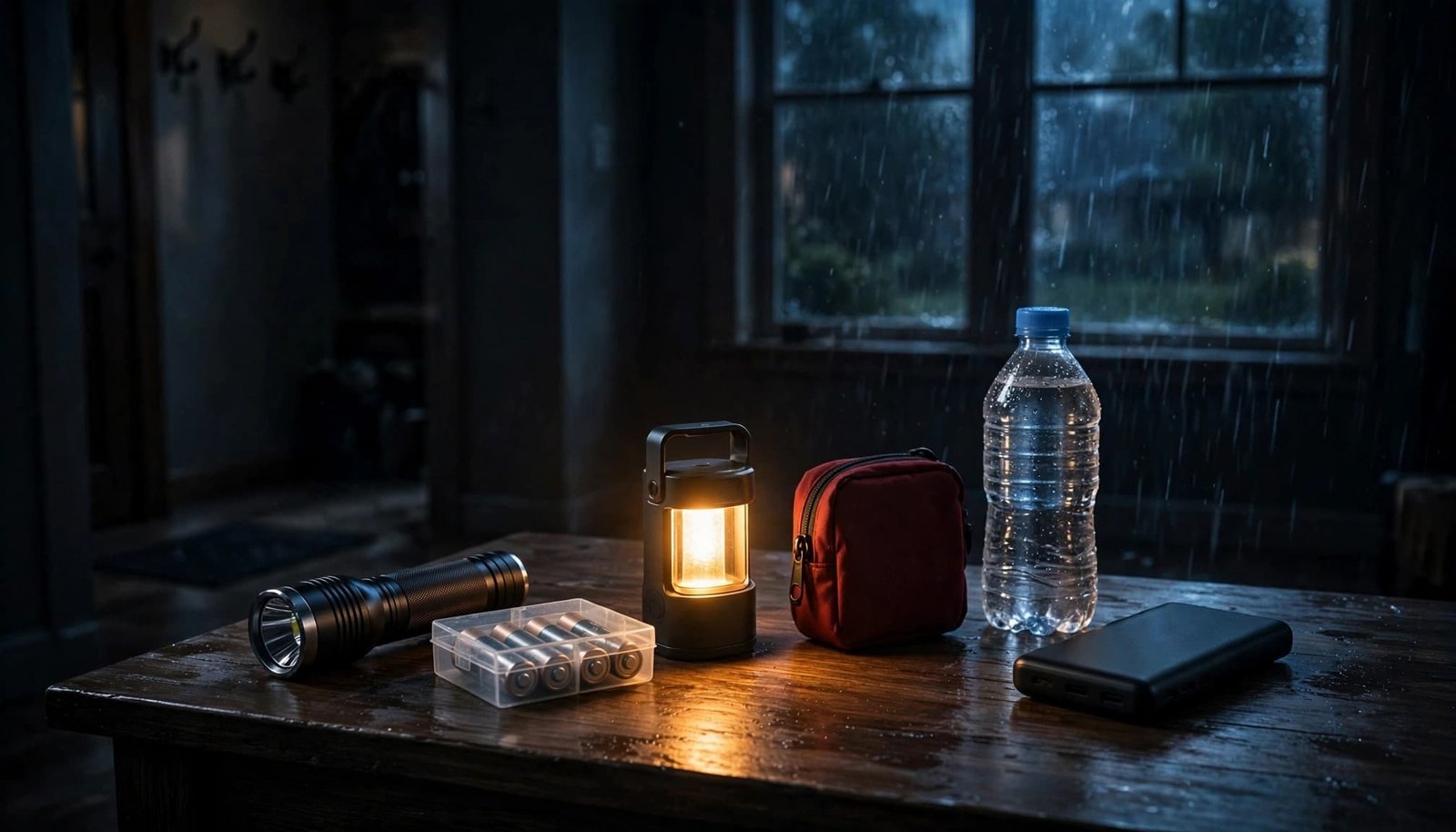
Turn on only the light you need. A lantern in the main room and a flashlight for trips to the bathroom are usually enough. Save phone battery for alerts, maps, and calls instead of using its flashlight for an hour.
Check people, pets, and urgent equipment
First, check on children, older adults, guests, and anyone who uses medical devices and equipment. If a device is essential, follow the backup plan provided by the doctor, care team, or device manufacturer. Call emergency services if a person’s health is in immediate danger.
Keep pets close before opening exterior doors. A frightened cat can disappear into the night with Olympic-level speed.
If smoke or carbon monoxide alarms chirp after the power fails, don’t ignore them. Battery-backup alarms may be warning of a low battery, but a smoke smell, gas odor, or burning plastic needs immediate attention.
Electricity should not smell like toasted plastic. Leave the area and report sparks, buzzing outlets, smoke, or a burning odor right away.
Find out whether the outage is only your home
A tripped breaker needs a different response than neighborhood-wide power outages. Check safely before calling the utility company.
Look for signs beyond your front door
From a window, see whether nearby homes, streetlights, or the building hallway have power. Avoid going outside during a storm unless there is an urgent reason. In an apartment, emergency lighting may still work even when individual units are dark.
Severe weather and storms, fallen trees, motor vehicle accidents, animals, and equipment failures can all interrupt service. Nighttime doesn’t create a special breed of outage. It simply makes the same problems harder to see.
Inspect the breaker panel carefully
If other homes still have lights, use a flashlight to check your circuit breaker panel. Look for a breaker sitting between ON and OFF, then switch it fully OFF before turning it back ON once.
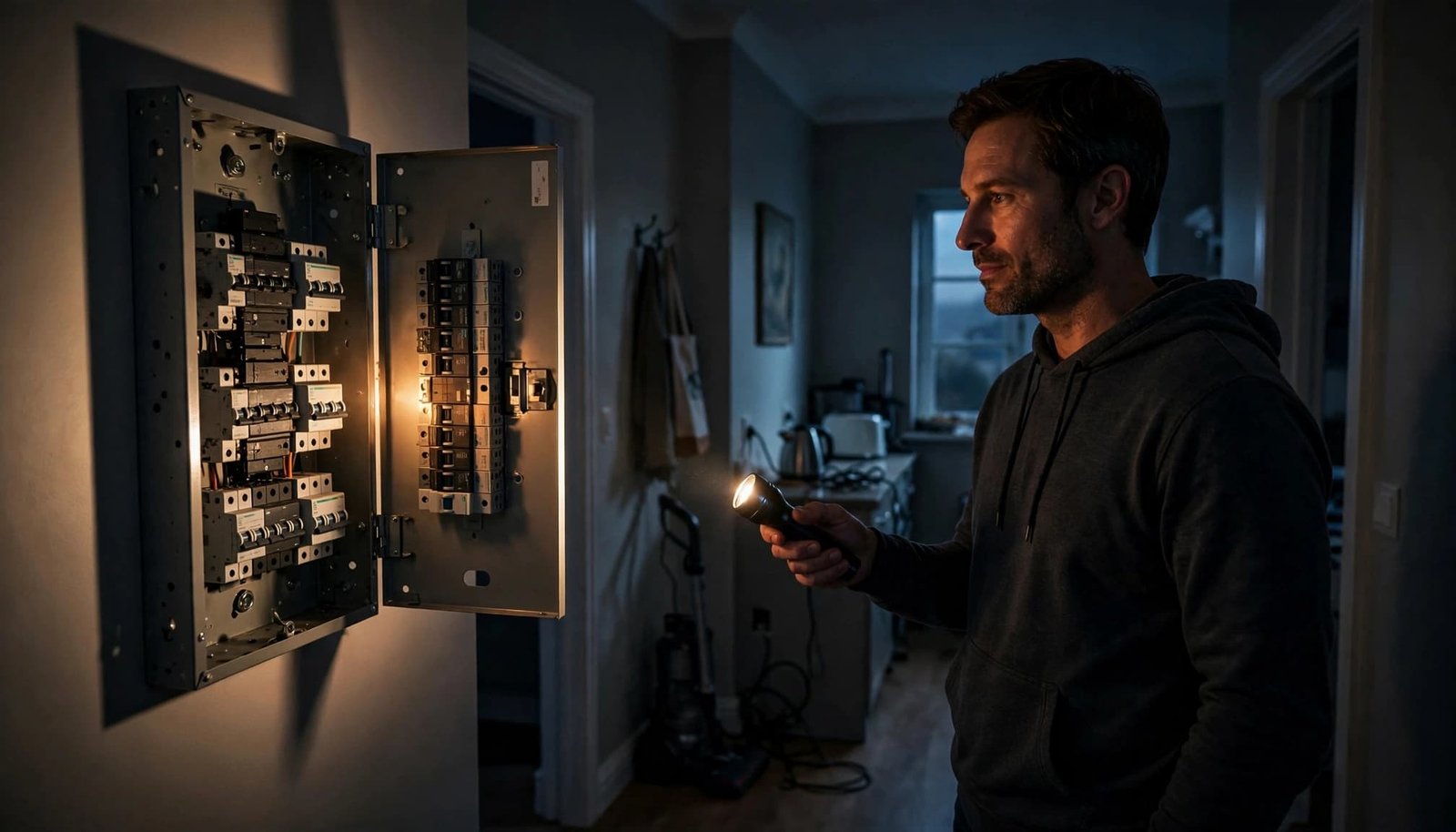
Don’t keep resetting a breaker that trips again. Unplug a recently used appliance if you suspect an overload, then contact an electrician or landlord if the issue continues. Never touch exposed wires, a wet panel, or a damaged outlet.
Report the outage and watch for hazards outside
Once you know the power loss isn’t limited to one circuit, report it through your utility’s outage line, website, or app. Your address may not appear on the utility outage map immediately because systems can take time to refresh. The estimated time of restoration can change as crews locate damage and assess conditions. Severe damage can also affect power grid reliability, causing updates to shift.
Treat downed lines as energized
Stay at least 35 feet away from downed power lines, damaged poles, and anything touching a line, including fences, puddles, vehicles, and tree branches. Call 911 or the utility’s emergency number to report them.
Never drive over a fallen line. If a line lands on your vehicle, stay inside if it is safe to do so and call emergency services. The ground around the vehicle may carry electricity.
Keep cars and grills out of enclosed spaces
Do not run a vehicle in a garage to charge phones or warm up. Exhaust can build up even with the door open. Likewise, never use a grill, camp stove, oven, or charcoal indoors for cooking or heat.
For broader safety guidance, including what to keep in an emergency kit, review Ready.gov’s power outage advice.
Protect food, water, and medication
For food safety and storage during power outages, keep refrigerator and freezer doors closed and start the clock. Decide what you need before opening one. Repeated checks release cold air and turn a manageable problem into an expensive science experiment.
Follow the four-hour refrigerator rule
An unopened refrigerator generally keeps food cold for about four hours. The FDA advises that refrigerated perishables are usually safe for four hours or less if the door stayed closed. After that, discard meat, poultry, fish, eggs, leftovers, and other perishables that warmed above 40 F.
Use a cooler with ice for items you need to save. Don’t taste or smell food to test its safety. Bacteria do not leave a calling card.
The FDA’s food safety guidance for power outages includes detailed discard advice for refrigerated and frozen foods.
Give the freezer more time, but not unlimited trust
A full, unopened freezer can hold a safe temperature for about 48 hours. A half-full freezer lasts about 24 hours. Group frozen foods together if you must open it, and use ice packs or dry ice only with proper handling and ventilation.
Food that still has ice crystals or measures 40 F or below can often be refrozen or cooked. When timing is uncertain, discard it. Groceries are replaceable. Food poisoning is a terrible souvenir from a blackout.
Medications need separate attention. Some drugs require refrigeration but have short room-temperature allowances. Check the pharmacy label, ask your pharmacist, or follow the manufacturer’s instructions before disposing of refrigerated medication.
Use backup power without inviting carbon monoxide inside
A portable power station and a fuel-burning generator are different backup power solutions. One stores electricity, while the other creates exhaust, heat, noise, and a strict outdoor-only rule.
Run fuel-burning generators outdoors only
Portable generator safety starts with placing fuel-burning equipment outdoors. Gas-powered generators, propane models, and diesel generators must remain at least 20 feet from doors, windows, vents, and attached garages. Never use one in a garage, basement, crawl space, hallway, carport, or apartment balcony. Keep it dry according to the manufacturer’s instructions.
Carbon monoxide has no color or smell. Headache, dizziness, weakness, nausea, chest pain, and confusion can signal carbon monoxide poisoning. Get everyone into fresh air and seek urgent medical help if symptoms occur near a generator.
The CDC’s generator safety guidance also recommends battery-powered or battery-backup carbon monoxide detectors on every level of the home.
Never plug a generator into a wall outlet. That backfeeding shortcut can energize utility lines and harm repair crews. Use outdoor-rated extension cords for individual appliances, or have a qualified electrician install a transfer switch or interlock system.
Match a portable power station to small essentials
A battery-powered portable power station produces no combustion exhaust, so it can support modest indoor essentials as an emergency power supply. Phones, LED lamps, a router, and a laptop are sensible loads. Models from brands such as OUPES and VTOMAN vary widely in battery capacity, output, weight, and charging options.
Check watt-hours, continuous wattage, surge wattage, outlet types, and recharge methods, including wall outlets, vehicles, and solar panels. Verify the manufacturer’s charging requirements before connecting any source. Read each appliance label before plugging it in. Electric heaters, hair dryers, kettles, and air conditioners drain stored power with the enthusiasm of a raccoon at an open trash can.
Keep the station dry and ventilated, and stop using it if it becomes unusually hot or damaged.
Manage comfort, communication, and building access
Power outages at night can affect more than lights. Water pressure, elevators, electronic locks, garage doors, and cell service may also falter.
Stretch your phone battery
Switch on Low Power Mode or Battery Saver, and check official utility alerts for the estimated time of restoration without refreshing constantly. Lower the screen brightness, close background apps, and send short texts instead of lengthy calls when networks are busy. Choose one primary phone for alerts and check-ins, then keep others as reserves.
Keep portable chargers with the correct cables, inspect them periodically, and conserve phone battery for alerts and check-ins. Used according to its instructions, a battery backup system can keep a router, modem, or essential low-wattage device running for a limited time. Paper copies of emergency contacts, medication details, and meeting locations still work when your phone becomes a glossy pocket brick.
Plan around temperature and access
During cold weather, add layers and blankets instead of relying on unsafe indoor heaters. In hot weather, close curtains during sunny periods, drink water, and locate nearby cooling centers if the outage lasts.
Renters should keep property management’s emergency number on paper. Ask in advance which backup power solutions are permitted and how hallway lighting, elevators, garage doors, and water systems will be handled. Check on people who may be vulnerable to heat, cold, or access barriers. If conditions become unsafe, go to a designated shelter or stay with someone who has safe power.
Reset your home carefully when power returns
The return of electricity can bring a little chaos. Appliances restart, Wi-Fi wakes up groggy, and some smart devices decide 3 a.m. is party time.
Reconnect sensitive electronics gradually
Unplug sensitive electronics during the outage if you can do so safely. Once power is stable, reconnect devices one at a time. Use surge protectors for computers, televisions, and networking gear.
Check your smoke and carbon monoxide alarms after power returns. Also inspect cords and outlets before use. Keep away from wet areas, floodwater, or equipment with visible damage.
Tame smart bulbs and automations
Smart home devices, including bulbs, plugs, speakers, and security equipment, may return to their default power-on state after an outage. That can mean every bedroom light snaps on at once, which is not the midnight welcome anyone ordered.
Open each device’s app after restoration and review settings such as “power-on behavior,” “restore previous state,” schedules, and automations. Disable routines that switch lights on after a power interruption. A small uninterruptible power supply can also keep a router or hub running through brief outages, although it won’t power a whole home.
Key Takeaways
- Use flashlights and LED lanterns instead of candles, and keep paths clear before moving through the house.
- Check neighbors and the breaker panel safely, then report a wider outage through your utility’s official channel.
- Keep refrigerator and freezer doors closed. Use the conservative four-hour rule for refrigerated perishables.
- Fuel-burning generators stay outdoors, at least 20 feet from openings. Never backfeed through a wall outlet.
- Battery power stations work best for phones, lights, routers, and other modest loads, not every appliance in the house.
- After power returns, reconnect equipment slowly and review smart-home settings before the lights stage an encore.
Frequently Asked Questions
Should I call 911 for every power outage?
No. Contact 911 for immediate danger, such as downed power lines, fire, a medical emergency, or a person showing possible carbon monoxide poisoning. Report standard outages to the utility company or property manager.
Can I open the refrigerator once to get food?
You can, but every opening shortens the cold-storage window. Decide what you need first, open the door once, and close it promptly. Move essential items to an ice-filled cooler if the outage will last.
Can a portable power station run my medical device?
It may, but never assume. Check the device’s wattage, startup requirements, battery runtime, and manufacturer guidance. Ask the medical provider or equipment supplier about an outage plan before you depend on a battery station.
A calm plan beats a frantic flashlight hunt
A power outage at night feels less intimidating when the response is already familiar: light the room safely, check for hazards, protect food, preserve phone power, and use backup equipment correctly.
Keep the emergency preparedness kit where everyone can reach it. Stock it with lighting, batteries, medications, charging cables, and non-perishable food and water. Before the next outage, review safe, appropriately sized backup power solutions so preparedness turns the next blackout into an inconvenience instead of a midnight scramble.