A blackout can turn a full refrigerator into an expensive question mark within a few hours. The safest move during the outage is also the simplest: keep the refrigerator doors shut.
Use a thermometer to keep the refrigerator temperature at 40 F (4 C) or below, the safe temperature for perishable food. A short timeline and a plan for longer outages can protect your groceries without risking illness.
Key Takeaways
- Keep refrigerator and freezer doors closed during an outage. An unopened refrigerator generally stays cold for about four hours, while a full freezer can hold its temperature for about 48 hours.
- Use an appliance thermometer and keep perishable food at 40 F (4 C) or below. Discard refrigerated perishables that have been above 40 F for four hours or more, even if they look and smell normal.
- If the outage may last longer than four hours, move cold food to an insulated cooler with ice and a thermometer. Keep raw meat separate from ready-to-eat foods and prevent meltwater from spreading contamination.
- Use dry ice and generators carefully, following ventilation and carbon-monoxide precautions. When power returns, discard high-risk food that became too warm, clean contaminated surfaces, and never taste food to test its safety.
What to do in a refrigerator power outage
Start the clock when the electricity goes out, not when you first notice it. Then stop opening the refrigerator to check on food. Every time you open the refrigerator doors, you release cold air and shorten the safe window.
The FDA’s power outage food safety guidance says an unopened refrigerator generally keeps food cold for about four hours. A full freezer can hold its temperature for about 48 hours, while a half-full freezer usually holds for about 24 hours.
Close doors and make one plan
Assign one person to monitor the outage and check utility updates. Everyone else should treat the refrigerator and freezer as closed storage until power returns or you move food to a cooler.
If you need one item, take out everything needed at once. Don’t stand in front of the open refrigerator deciding what to eat. Choose shelf-stable food, canned goods, peanut butter, or fruit instead.
The refrigerator’s four-hour window assumes the door stays closed. Frequent checking can waste the cold air you’re trying to save.
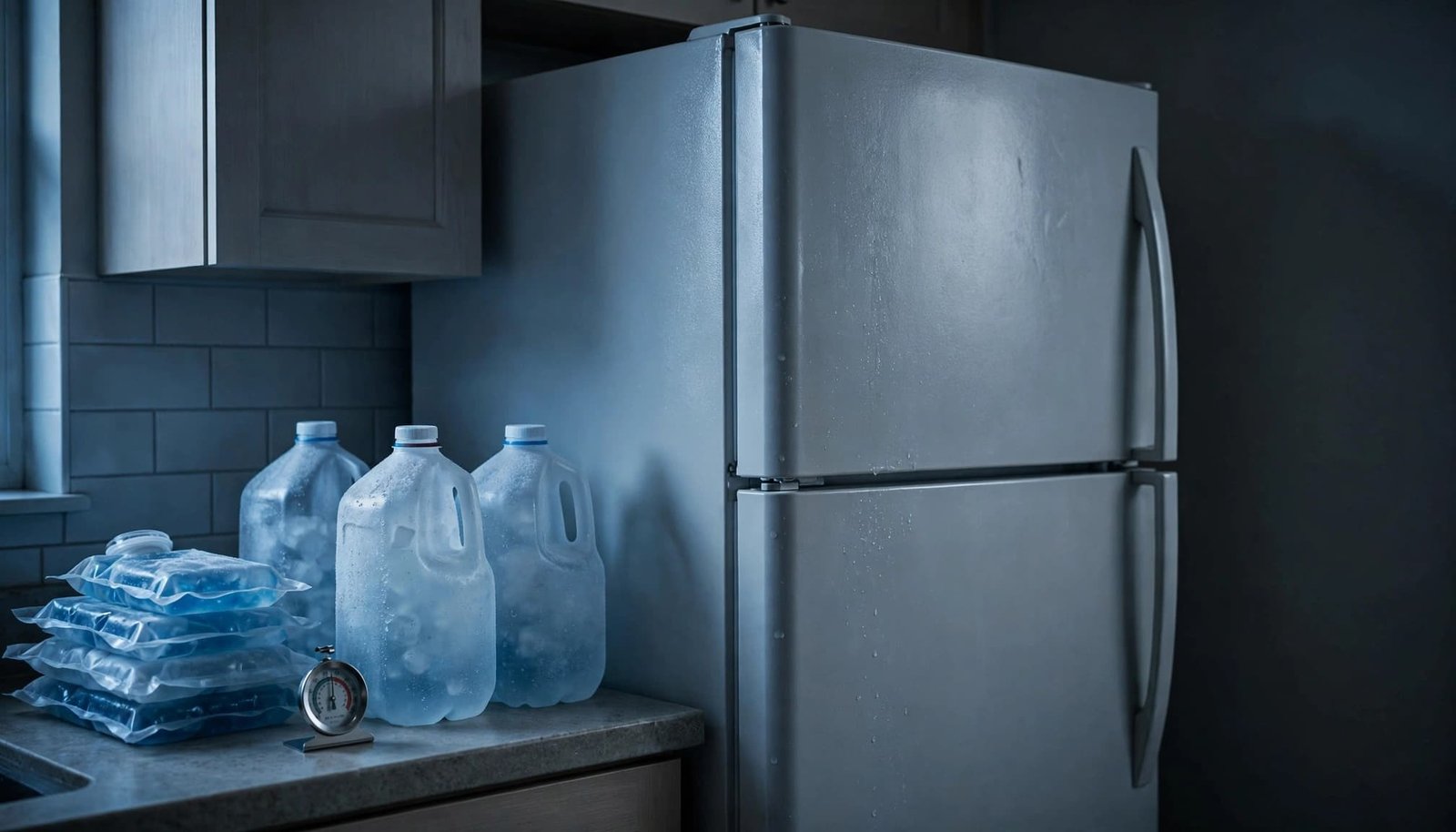
Use an appliance thermometer, not guesswork
An appliance thermometer measures the refrigerator’s air temperature, which removes much of the uncertainty. Keep one in the refrigerator and another in the freezer before storm season starts. A maximum-reading model is especially useful after an outage because it shows how warm the refrigerator became.
When the power returns, check the refrigerator first. If it stayed at 40 F (4 C) or below, the food is generally safe. If you don’t know how warm it became, follow the outage time and discard rules rather than relying on smell or appearance.
Know the 40 F line and the time limits
Bacteria grow quickly in the temperature danger zone, between 40 F and 140 F. Refrigeration slows that growth, but it can’t reverse it once food has sat warm too long.
The basic food safety rules are straightforward:
- Discard refrigerated perishable food if it has been above 40 F for four hours or more during the outage.
- Food left at room temperature has a shorter limit, two hours.
- When the air is above 90 F (32 C), perishable food should sit out no longer than one hour.
These limits apply even if food looks or smells normal, since appearance and odor aren’t reliable safety tests. Never taste food to decide whether it is safe.
Food that usually needs to go
After a refrigerator has been without power for more than four hours, raw meat, poultry and fish, and shellfish should go in the trash. The same rule applies to dairy products, including milk, yogurt, cream, soft cheeses, and eggs, as well as cooked rice, cut fruit, cooked vegetables, and leftovers.
Deli meats, opened refrigerated dips, refrigerated prepared meals, and opened canned foods also belong in the discard group if they became too warm. When in doubt, protect your household rather than trying to save a few dollars.
Foods with more staying power
Butter, hard cheeses such as cheddar or Parmesan, whole uncut fruits, and many condiments are less perishable. Ketchup, mustard, pickles, jam, and vinegar-based dressings usually tolerate a temperature rise better than milk or leftovers.
Still, use common sense. A container that leaked, has an unusual odor, or sat in dirty water should go in the trash. The FDA’s food storage safety advice is a useful reference when you need a conservative answer.
Stretch cold storage with ice and smart packing
If a power outage is likely to last longer than four hours, move the most expensive perishable food items into a cooler packed with ice. Put a thermometer inside the cooler and keep it at 40 F or below.
Keep food sealed in leakproof bags or containers. Meltwater can carry bacteria from raw meat packaging onto ready-to-eat foods, so separate them inside the cooler.
Freeze water jugs before trouble starts
Frozen water jugs create thermal mass in a refrigerator or freezer. They help the appliance stay cold longer, and the water is useful after it melts if you filled the containers with safe drinking water.
Leave space at the top of each jug before freezing because water expands. Several smaller containers are easier to lift and arrange than one heavy block. Frozen gel packs also work well, particularly for a compact cooler.
Group foods tightly in the freezer. Dense, packed food loses cold more slowly than scattered items. If you have room, add frozen jugs around the edges without blocking the door seal.
Choose a cooler carefully
Use an insulated ice chest with enough ice to surround the food. Avoid repeatedly draining ice water if it is still helping maintain the temperature. Instead, monitor the internal temperature and add ice when necessary.
Put refrigerated food into the cooler before the four-hour mark. A cooler is not a place to rescue food that has already warmed for hours. It is a way to preserve cold food before it crosses the 40 F threshold.
Use dry ice and backup power safely
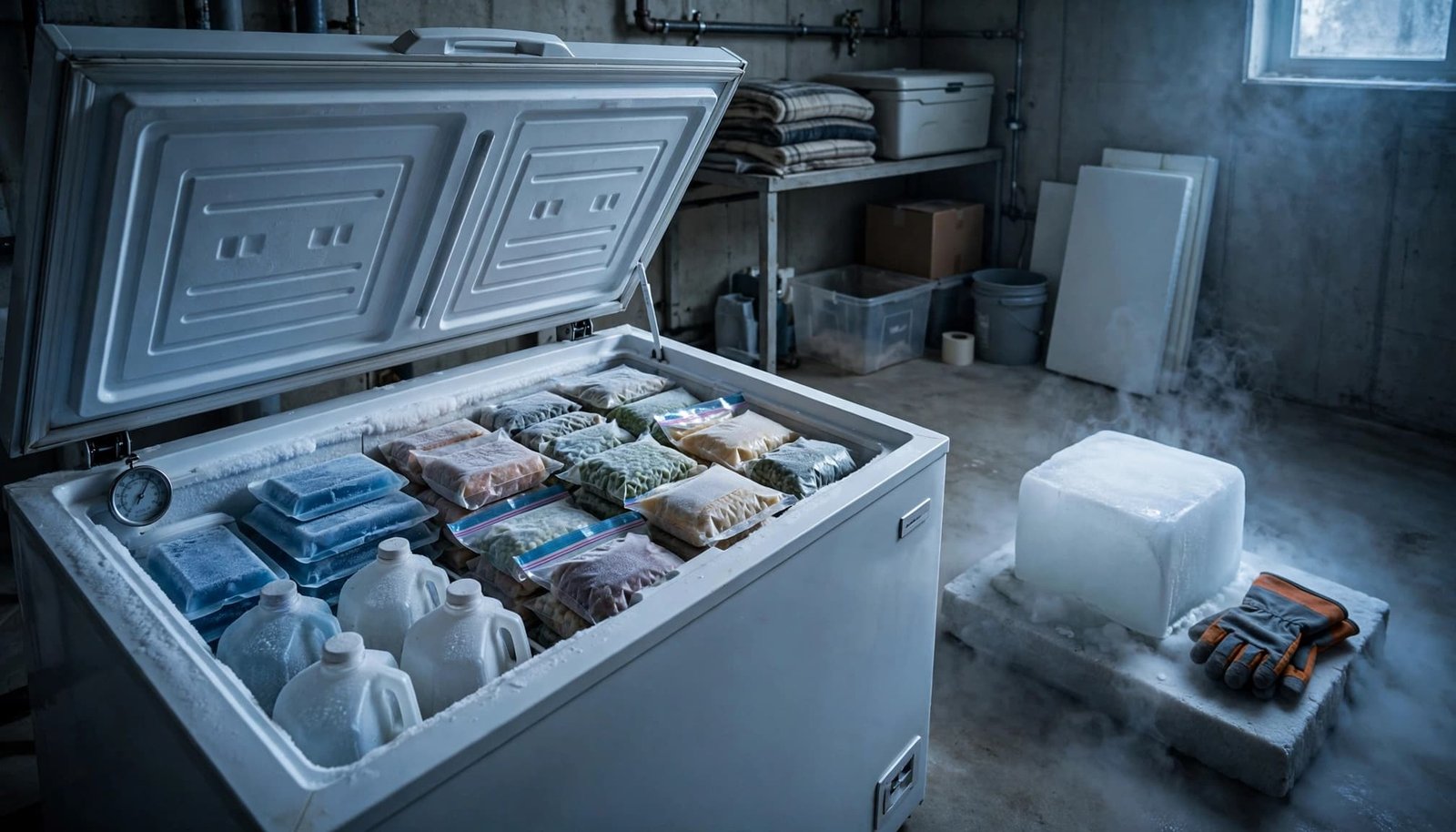
Dry ice can buy meaningful time during a long power outage, especially for a well-stocked chest freezer. FDA guidance states that 50 pounds of dry ice can keep an 18-cubic-foot freezer cold for about two days.
Call local grocery stores, ice suppliers, or disaster-response centers early. Dry ice can sell out quickly when a major storm affects many homes.
Cold-storage safety precautions
Dry ice is frozen carbon dioxide and can cause severe cold burns. Wear insulated gloves or use tongs. Mishandling can damage the freezer or allow carbon dioxide to build up. Do not touch it with bare hands, and do not place it directly against food.
Wrap it in paper or cardboard and place it on a tray or shelf in the freezer. Keep the space ventilated because carbon dioxide gas can build up in enclosed areas. Never seal dry ice in an airtight container.
Run generators outdoors only
A backup generator may keep a refrigerator running, but carbon-monoxide safety comes first. Follow these safety precautions: keep fuel-burning generators outdoors, at least 20 feet from doors, windows, and vents. Never use one indoors, including in a garage, apartment hallway, basement, carport, or balcony. Check a chest freezer’s running and startup wattage before relying on the generator.
The CDC’s power outage safety guidance warns that generator fumes can cause carbon-monoxide poisoning. Use working carbon-monoxide alarms in your home.
A portable battery power station creates no exhaust, so it is safer indoors when used according to its instructions. Check the refrigerator’s running and startup wattage first. Compare that need with the station’s continuous output, surge capacity, battery size, and recharge options before depending on it.
Decide what to keep when power returns
Once power restoration occurs, resist the urge to celebrate with a refrigerator cleanout meal. Use a food thermometer to verify each item’s internal temperature, inspect packages, and work through the food systematically.
Frozen food that still contains ice crystals or measures 40 F or below can be cooked or refrozen. Quality may decline after refreezing, but the food is safe under that standard. Review the official frozen food outage chart for item-by-item food safety guidance.
Start with the highest-risk foods
Discard food in this order when the refrigerator was warm too long:
- Raw meat, poultry and fish, shellfish, eggs, milk, and leftovers should go first.
- Refrigerated ready-to-eat foods, deli meats, soft cheeses, and opened dips should follow.
- Evaluate lower-risk foods such as butter, hard cheeses, fresh produce, and condiments separately.
Take a photo of the spoiled food and save grocery receipts if you plan to ask about insurance coverage. Some renters and homeowners policies may cover food loss after a covered event, although deductibles often determine whether filing makes sense.
Clean before restocking
Remove spoiled food, then wash refrigerator shelves, bins, handles, and counters with hot soapy water. Rinse and sanitize surfaces according to the product directions. Let everything dry before restocking.
If flood waters entered your home, discard food and packaging that touched the flood waters, including canned goods with damaged seams or labels. Food-contact surfaces need thorough cleaning and sanitizing before use. The FDA’s power outage and flood food guidance covers both hazards.
Watch for signs of foodborne illness
Foodborne illness can begin hours or days after someone eats unsafe food. Common symptoms include diarrhea, stomach cramps, nausea, vomiting, and fever, according to the CDC’s food poisoning symptom guide.
Seek medical care promptly for bloody diarrhea, a fever above 102 F, frequent vomiting that prevents drinking, or signs of dehydration. Get help if symptoms last more than a few days. Young children, older adults, pregnant people, and those with weakened immune systems face greater risk.
Don’t assume one family member’s mild symptoms mean the food was safe for everyone. Keep any suspected food sealed if public health officials or a clinician asks about it, and store it away from other food.
Frequently Asked Questions
How long will a refrigerator stay cold without power?
An unopened refrigerator generally keeps food cold for about four hours. Opening the door repeatedly releases cold air and can shorten that safe window.
What temperature is safe for refrigerated food?
Keep the refrigerator at 40 F (4 C) or below. Discard refrigerated perishable food that has been above 40 F for four hours or more, even if it looks or smells normal.
What should I do if the outage will last longer than four hours?
Move the most important perishable foods into an insulated cooler packed with ice before they warm past 40 F. Use a thermometer, keep food sealed, and separate raw meat from ready-to-eat foods.
Can I refreeze food after a power outage?
Frozen food that still contains ice crystals or measures 40 F or below can generally be cooked or refrozen. Refreezing may reduce quality, so inspect packages and use official food safety guidance for specific items.
Is it safe to run a generator indoors to power a refrigerator?
No. Run fuel-burning generators outdoors at least 20 feet from doors, windows, and vents, and never use them in a garage, basement, hallway, carport, or balcony because of carbon-monoxide risk.
A simple plan makes the next outage easier
A plan for future outages is less stressful when you have appliance thermometers, coolers, frozen water jugs, and a clear door-closed rule. Know the 40 F safety line, and check temperatures as conditions change.
Keep the refrigerator shut for up to four hours, use ice to extend cold storage, and discard high-risk food when time or temperature makes safety uncertain. A few prepared supplies cost far less than replacing a refrigerator full of groceries or recovering from foodborne illness.