A blackout can turn a working faucet into a decorative chrome mystery faster than most households expect. Your water storage blackout plan should cover drinking, cooking, infant formula or medications, pets, hygiene, and toilet flushing. Keep clean water for drinking and cooking separate from water reserved for flushing and cleaning. A faucet may fail when the household’s normal water supply stops, especially with an electric well pump.
The right amount depends on your household, water source, climate, and likely outage length. This emergency preparedness plan starts with a practical reserve, but stored water doesn’t create a continuous water supply or guarantee a utility replacement. Homes that rely on electric pumping may also need backup power.
Key Takeaways
- For emergency preparedness, start water storage with at least one gallon per person per day for three days. Children, pets, medical needs, hot weather, and longer outages may require more.
- Plan beyond the three-day minimum when possible. A longer outage can interrupt your water supply.
- Keep drinking water reserved for drinking, cooking, preparing formula, and taking medication. Label water reserved for toilet flushing, cleaning, and washing as non potable water, meaning it isn’t intended for consumption.
- Renters and city-water households can rely on stored containers first. Homes with electric well pumps need a power-free plan or backup power.
- Water from a household tank may help during an outage, but don’t assume it’s safe to drink without checking its condition and local guidance.
- Keep a generator outdoors, at least 20 feet from doors, windows, and attached garages.
Water Storage Blackout Basics: Start With the Minimum
The CDC recommends keeping one gallon of water per person per day for three days. The CDC’s emergency water supply guidance treats that as a starting point when normal household service is interrupted, not a finish line decorated with a victory ribbon.
That initial water storage covers drinking, cooking, and limited personal needs. It isn’t a complete sanitation calculation, so start with the baseline and add for household needs rather than replacing it with a lower number. Homes with private wells also need a non-electric option, such as manual pumps.
A three-day supply helps with a short power outage. A longer disruption can interrupt municipal water systems, reduce pressure, affect water treatment facilities, and delay grocery deliveries. Regional storms, extreme weather events, and repeated power disruptions can stretch that planning horizon further.
Count every person, pet, and special need
Include everyone who sleeps at your home, even if they usually need little water. Infants may need water for formula, while children may need more during active days. Older adults, people who are ill, and nursing parents may need more. Medication or medical-device needs, special diets, and hot weather can also increase your reserve.
Pets need their own reserve. Set aside their usual drinking water rather than assuming they’ll appreciate a sudden change in taste or source. Keep medication instructions with your water plan if someone relies on water for pills, medical devices, or special diets.
Three days is the floor, not the ceiling
A three-day reserve is a useful first planning horizon, especially for apartments with limited storage. A seven-day supply gives you more breathing room after a major storm. A two-week target suits remote homes, places with repeated power disruptions, or households relying on an electric well.
A water reserve buys time. It doesn’t restore a failed pump, repair a broken main, make questionable water safe, or guarantee a continuous water supply during a prolonged disruption.
Calculate Your Household Water Reserve
Use this simple water storage calculation for your initial potable reserve:
Number of people x number of days x one gallon of water per person per day = minimum potable reserve
A family of four planning for seven days needs:
4 people x 7 days x 1 gallon = 28 gallons
Those 28 gallons form the baseline for people, not the household’s entire water supply. Add water for pets, medical needs, infant formula, and hot weather. Longer outages may require extending the calculation for a continuous water supply. A household with two medium dogs might keep their normal weekly drinking amount in additional containers.
| Household | Three-day baseline | Seven-day baseline |
|---|---|---|
| One person | 3 gallons | 7 gallons |
| Two people | 6 gallons | 14 gallons |
| Four people | 12 gallons | 28 gallons |
| Six people | 18 gallons | 42 gallons |
Note: Children, pets, and people with medical needs may require household-specific adjustments.
The math becomes much friendlier when you spread water around the home instead of relying on water storage tanks alone. A larger tank doesn’t replace the per-person calculation and may be difficult to move or access.
Set a drinking-water target first
Protect your cleanest drinking water for consumption, cooking, baby formula, and medication. Commercially bottled water is easy to manage because it arrives sealed and dated. Store-bought containers also spare you a late-night debate about whether that old jug once held sports drink.
Keep part of the supply in smaller grab-and-go containers. If your home becomes unsafe, a 1-gallon jug is easier to carry than a giant container with the personality of a sleepy walrus.
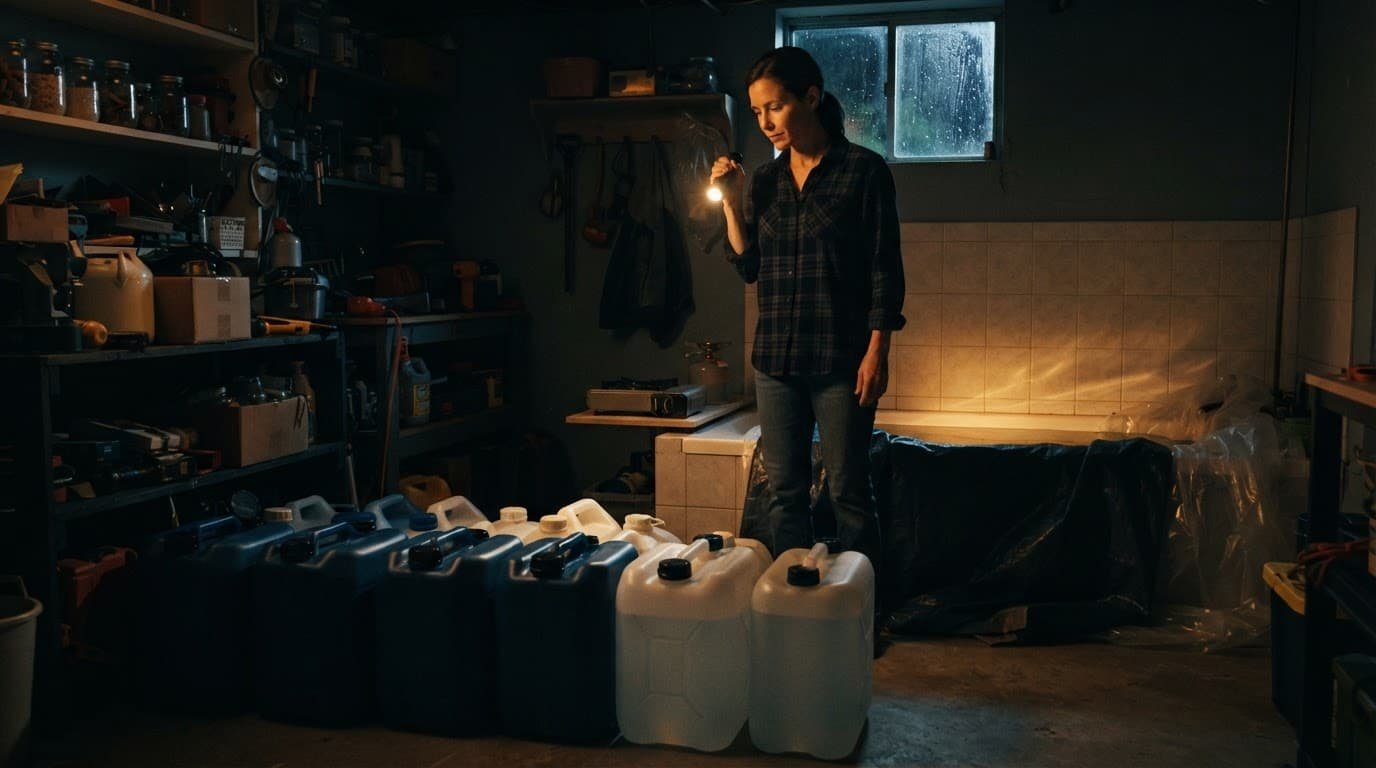
Add non-potable water for sanitation
Toilet flushing can burn through water quickly. Store non potable water in separate, clearly marked containers. Reserve it for flushing, cleaning, and washing, not drinking or cooking. Water collected before an outage in clean buckets or tubs can work for flushing and cleaning, provided it has not been contaminated.
Ready.gov’s water preparedness advice includes both drinking and sanitation needs. That distinction matters because a family can have enough bottled water to drink yet run short on water for basic household use by day two.
Choose Containers You Can Lift and Rotate
A perfect emergency supply is useless if it leaks, grows dusty behind holiday decorations, or requires a forklift and a minor miracle to move. Choose containers for safe water storage that fit your space and the strength of people who may need to carry them.
Use food-safe containers in varied sizes
Keep factory-sealed bottles in a cool, dark location. For self-filled containers, use food-grade storage containers with tight lids to protect clean water. Never use old milk jugs, chemical containers, or anything with an unknown history.
The University of Georgia’s storage advice recommends personal-use containers no larger than one or two gallons. Small containers limit waste if one leaks or becomes contaminated, and they are easier for children or older adults to handle.
A useful mix might include several 1-gallon jugs, a few 2-gallon containers, and one larger food-grade tank. These water storage solutions fit different homes, spaces, and lifting abilities, while larger water storage tanks provide extra capacity.
Put water where you can reach it
For safe water storage, keep containers off concrete floors when possible, away from gasoline, paint, cleaning products, and direct sun. Choose an accessible location, and rotate supplies in a hot garage more often to maintain a usable continuous water supply.
Write the fill date on self-filled containers. Check them twice a year, perhaps when clocks change or when you test smoke and carbon monoxide alarms. This is regular maintenance.
Discard damaged containers or water that looks cloudy, smells odd, or shows other signs of contamination. Regular maintenance means replacing questionable supplies and rotating stored water, not trying to rescue it casually.
For renters, a closet shelf, under-bed bins, or a pantry floor can hold a useful reserve without turning the living room into a bottled-water warehouse. Keep containers on stable surfaces, avoid unstable shelves, and don’t exceed the shelf’s safe weight.
Use Household Water Carefully During an Outage
Your home may already hold water in pipes, toilet tanks, and a hot-water tank during a power outage. That household water supply can ease demand on your stored reserve, but each source has different uses and limits. Backup power may restore pumping or pressure, but it doesn’t replace stored drinking water.
Treat the water heater as a conditional reserve
The hot-water tank may hold a substantial reserve, but don’t assume it is automatically safe to drink. None of these household sources should automatically be treated as safe drinking water.
Its condition, plumbing materials, and history of regular maintenance matter, as does the status of local water systems. It’s only a conditional potable source when the system is suitable and officials haven’t issued contamination guidance.
If the local water supply is under a boil-water notice or contamination warning, follow that guidance. If safety is uncertain, reserve questionable household water for flushing or cleaning until you have reliable instructions. Never drink toilet-bowl water or water that looks, smells, or tastes unusual.
Fill clean containers before trouble arrives
When a storm is forecast, fill clean tubs, buckets, and spare containers before power fails. Cover them to keep out dust and curious paws. Unless prepared and stored safely for drinking, treat this water as non-potable.
A bathtub liner can create a larger protected reserve, but only if it is clean and filled before the outage. Filling tubs early can extend household capability, but it doesn’t guarantee a continuous water supply.
If authorities say tap water needs treatment, follow their local instructions instead of improvising. The CDC explains that an emergency water supply may need to be bottled, boiled, or treated, depending on the problem.
Keep a Private Well Working Without Grid Power
A private well can hold plenty of water underground, but that source won’t provide household service when the well pump and controls lack backup power. Its water systems depend on electricity to run the pump and build pressure.
Match backup power to your actual pump
Before choosing equipment, identify the well pump’s voltage, running wattage, starting load, pressure-switch requirements, and panel configuration. Generators, batteries, and solar power systems are backup power sources with different limits, so each option must meet both starting and running demands.
A generator or battery setup can provide backup power, but sizing alone isn’t enough. Compare backup power sources with the pump’s actual demands. A generator that runs lights and a refrigerator may still fail to start the well pump.
A licensed electrician can assess whether your home needs a correctly sized generator inlet, transfer switch, or interlock arrangement. The arrangement must remain isolated from the electrical grid and protect utility workers.
For a short outage, water storage solutions, such as water storage tanks, may cost less than new electrical infrastructure. For repeated outages, backup power may make sense.
Consider manual pumps and gravity-fed storage
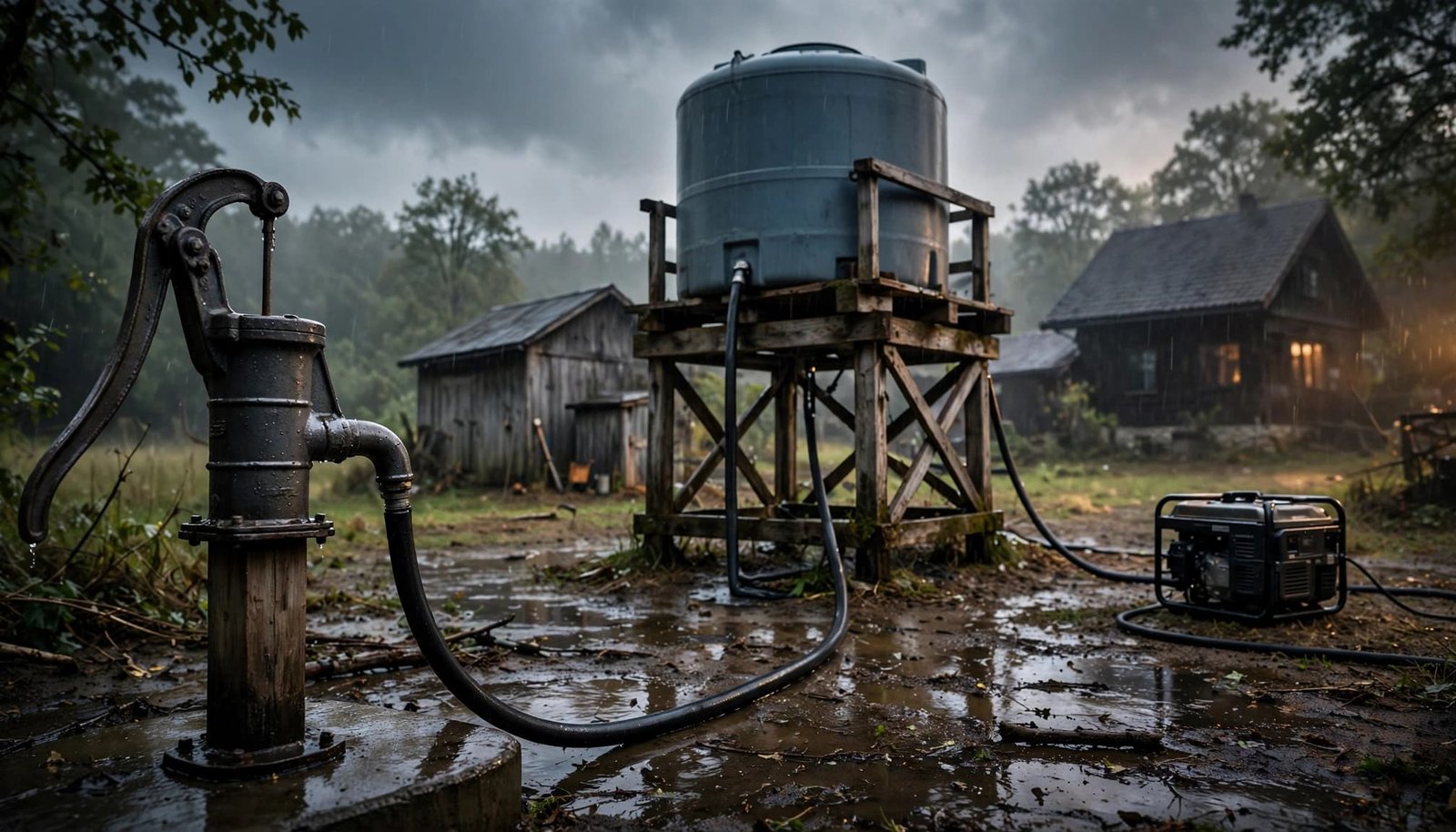
Some deep wells can accept a dedicated manual hand pump. Manual pumps can provide water when electrical equipment is unavailable, but well depth and local rules determine whether the option fits.
Bison Pumps and Simple Pump are examples of brands homeowners may investigate, not endorsements. Manual pumps must match the well casing, static water level, existing pump, and local installation rules.
Installing manual pumps may require a licensed professional, permits, or changes to the well seal. Confirm these requirements before altering the casing.
Schedule regular maintenance by inspecting the pump, tank, pressure controls, and plumbing. Manual pumps also need inspection for corrosion, seals, and reliable operation.
For longer outages, backup generators can let a properly sized powered well pump support a continuous water supply. Equipment failure, fuel limits, freezing, or contamination can still interrupt that continuous water supply.
Generators, batteries, and manual equipment need regular maintenance, too. Gravity fed systems use elevation to create pressure, while these water systems move stored water without grid power.
Elevated tanks need secure structural support, protected plumbing, and freeze protection. Neither a manual pump nor a gravity-fed arrangement makes source water potable, so use a safe source and appropriate treatment before drinking.
Compared with a powered well pump, manual pumps depend less on fuel or batteries. They can be practical alternatives, but neither option automatically provides safe drinking water.
Generator Safety Comes Before Water Pressure
During a power outage, a generator can provide backup power for pumping. It can’t guarantee a continuous water supply, and carbon monoxide poisoning, electrocution, and backfeeding aren’t reasonable trade-offs.
Keep exhaust far from the house
All backup power sources need proper placement, ventilation, and electrical isolation. Use fuel-burning backup generators outdoors and at least 20 feet from windows, doors, vents, and attached garages. Keep them dry according to the manufacturer’s directions, and never run one in a garage, basement, crawl space, hallway, or apartment balcony.
Ready.gov’s power outage safety rules also call for battery-powered or battery-backup carbon monoxide detectors on every level of the home. If anyone develops headache, dizziness, weakness, nausea, chest pain, or confusion near a generator, move to fresh air and seek urgent help.
Never backfeed through a wall outlet
Don’t plug a generator into a household wall outlet to power the home. That dangerous shortcut can energize utility lines and connected water systems, putting workers at risk of fire or electrocution.
Use backup power within the generator’s rated limits. Run individual appliances with heavy-duty outdoor-rated extension cords, or use a professionally installed transfer switch or interlock system. Keep fuel cool and away from ignition sources. Regular maintenance includes generator testing, cord inspection, fuel management, and carbon monoxide detector checks. Refuel only after the generator has cooled down, because spilled gasoline has terrible manners around hot engines.
FAQ: Blackout Water Storage Questions
Can I drink water from my toilet tank?
Only consider water from the tank behind the toilet if it’s clean and free of chemical cleaners, tablets, dyes, or contamination. Treat it as a last-resort water supply, and never use water from the toilet bowl for drinking or cooking.
How much water should renters store?
Renters should aim for the same one-gallon-per-person-per-day baseline as homeowners, and our guide to preparing for a power outage without a generator covers the rest of the kit. Choose smaller containers that are easier to store and carry during an evacuation. Keep water near a flashlight, medications, shelf-stable food, a manual can opener, and charged power banks.
Will a solar generator run my well pump?
It may, but the unit must meet the pump’s starting watts and running watts. Compare both figures with the available backup power, since backup power sources vary in capacity. Have a qualified electrician review the pump specifications, household water systems, and connections before relying on it. Test the unit, inspect its cables, and follow the manufacturer’s schedule for regular maintenance.
Are manual pumps practical for a private well?
Manual pumps can work, but compatibility depends on the well casing, water level, installation rules, and treatment needs. Confirm the setup with a qualified well professional before relying on it.
A Water Plan That Holds Up When the Lights Don’t
A home blackout plan starts with water storage, so choose a three-day minimum and calculate potable and non-potable water separately.
Extend the reserve to seven days or two weeks for climate, medical needs, pets, remote locations, or well dependence. Use safe containers, treatment, and rotation as your baseline.
Match water systems and water storage solutions to your home, from city service to private wells or apartments. Neither stored reserves nor powered systems guarantee a continuous water supply in every outage; match backup power and backup power sources to your equipment, including manual pumps.
Finish your emergency preparedness plan with regular maintenance for containers, treatment supplies, pumps, and generators.
Pingback: Refrigerator Power Outage: Food Safety Guide