Your cat won’t care why the lights went out, but your aquarium’s air pump certainly will. Good pet blackout prep protects daily necessities first: drinking water, familiar food, safe temperatures, medication, and a way out.
For renters, emergency preparedness also means planning around elevators, limited storage, and shared hallways. Start with your pet’s actual needs, then build a compact plan that works without a backyard or a fuel-burning generator.
Key Takeaways for Apartment Pet Owners
- Store seven to ten days of familiar food and at least seven days of drinking water, with extra for spills and cleaning.
- Prioritize a tested battery backup for essential animal equipment, and check its runtime before an outage.
- Arrange a pet-friendly destination and transport plan before heat, cold, or building access becomes unsafe.
Build Your Pet Blackout Prep Kit
Keep your pet emergency kit and household reserves in one accessible bin, with a lighter evacuation bag near the exit. Neither belongs behind the seasonal decorations.
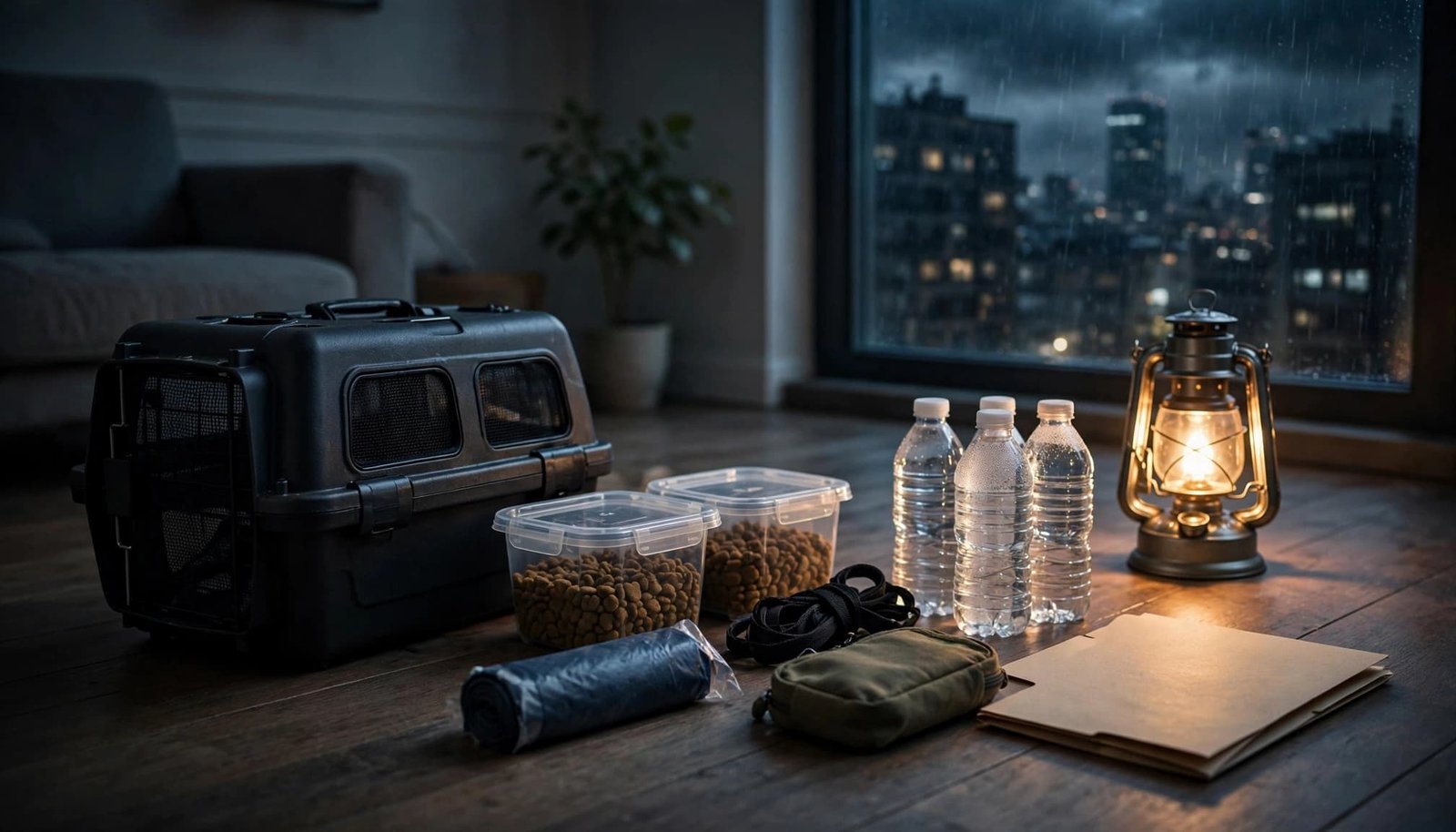
Food, water, and bathroom supplies
A practical home target is seven to ten days of your pet’s usual food. Sudden diet changes can cause stomach trouble, which is poor timing when the elevator is also on strike.
Store at least seven days of drinking water. Measure normal daily consumption beforehand, then add a reserve for heat, spills, and washing the water bowl. Ask your veterinarian about animals with medical conditions.
Use sealed containers, rotate supplies before expiration, and include bowls and a manual can opener when needed. Pack sanitation supplies such as waste bags, litter, a scoop, absorbent pads, and trash bags. Automatic feeders and fountains also need a manual backup.
Medication, carriers, and records
Ask your veterinarian about keeping a two-week medication reserve. Record doses, refill contacts, and storage requirements, especially for refrigerated medicine.
Include a pet first aid kit, leash or harness, familiar bedding, and pet carriers sized for each animal. Practice carrier entry with treats before emergencies make it urgent.
The AVMA’s pet disaster guidance recommends accessible medical records and proof of ownership. Keep waterproof paper copies, offline phone copies, current vaccination records, and a photo showing you with your pet.
Handle the First Ten Minutes Safely
Start with light and containment before checking restoration estimates.
- When a power outage starts, turn on a battery lantern or headlamp. Avoid candles near tails, cages, bedding, and crowded furniture.
- Secure cats and other escape-prone animals before opening the apartment door. Leash dogs for hallway trips.
- For pet safety, check animal equipment immediately, including aquarium pumps, enclosure heaters, and prescribed medical devices.
- Check room and enclosure temperatures, contact management, and activate tested backup power only for equipment it can safely support.
Also check smoke and carbon monoxide alarms. If an alarm sounds or you find smoke, a gas odor, or electrical damage, follow emergency instructions and leave unsafe conditions.
Write down when the outage began. Keep a phone reserve for veterinary calls, alerts, and transport arrangements rather than endless outage-map refreshing.
Keep Dogs and Cats Comfortable
Most healthy dogs and cats can tolerate a brief disruption. However, heat, cold, age, illness, and breathing problems can turn inconvenience into danger.
Watch temperature, not the thermostat screen
Use a battery-powered thermometer to monitor room conditions and support temperature regulation, since a blank thermostat tells you little. In summer, close sun-facing curtains and provide fresh water and cooler resting spots.
A fan can support airflow, but it doesn’t replace air conditioning or prevent heatstroke. Heavy panting, weakness, vomiting, or collapse require urgent veterinary help.
During winter, offer dry bedding and a smaller, draft-reduced room. Keep exits and ventilation clear. These safe apartment heating methods help retain warmth without combustion equipment.
Never run a portable generator on an apartment balcony or indoors. Don’t use a stove, grill, or fuel-burning heater for warmth.
Keep routines familiar
Maintain feeding, medication, and bathroom schedules where possible. A familiar blanket or safe chew can serve as calming aids while hallway alarms and unfamiliar noises disturb the peace.
Let cats hide in an accessible, secure room instead of pulling them out repeatedly. Dogs benefit from calm company and brief, safe toilet trips.
For severe storm anxiety, arrange a veterinarian-approved plan for anxiety medication beforehand. Follow veterinary instructions exactly, and don’t substitute human sedatives or improvise doses.
Protect Fish, Reptiles, and Birds
These pets need species-specific plans because their equipment and air quality can matter more than their food supply.
Aquarium fish need oxygen and stable water
When pumps stop, aeration decreases and biological filtration can suffer. Warmer water also holds less dissolved oxygen, so a summer outage deserves prompt attention.
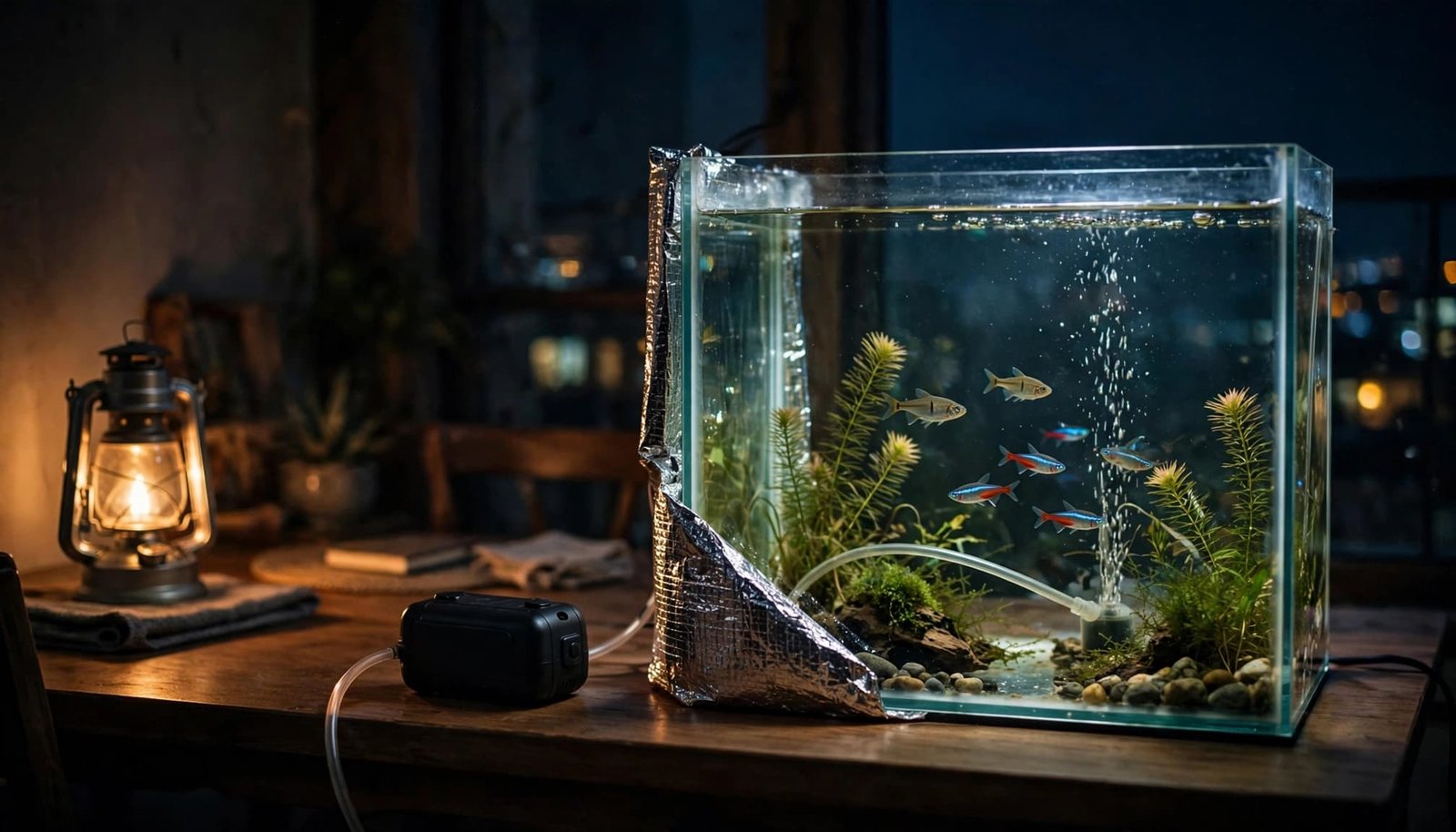
Keep a tested battery backup air pump, compatible tubing, an air stone, and spare batteries. Some pumps activate automatically; others require manual switching.
An air pump supports aquarium oxygen but doesn’t replace filtration or heating. Monitor temperature, avoid overfeeding, and test ammonia and nitrite during prolonged failures. Don’t pour hot water into the tank to chase a falling temperature.
Reptiles need measured heat
Write down your reptile’s required temperature range and ask an exotics veterinarian which equipment needs priority power.
Insulation around parts of a reptile enclosure can slow heat loss, but ventilation must remain open. Use a battery thermometer and maintain the animal’s ability to move away from warmth.
Avoid direct contact with chemical hand warmers or hot-water containers. These can cause burns or uneven heating. If temperatures leave the species’ safe range, use your prearranged relocation plan.
For small mammals, ask an appropriate veterinarian about species-specific temperature needs.
Birds need clean air
Birds are especially vulnerable to airborne toxins. Overheated nonstick cookware and combustion equipment can release toxic fumes.
Keep birds away from smoke, scented candles, aerosols, and cooking fumes. Place the cage in a draft-free room with familiar surroundings.
A partial cage cover can reduce disturbance, but never seal ventilation. Ask an avian veterinarian about temperature limits and warning signs for your species.
Size Backup Power for Essential Pet Equipment
For renters, a battery-powered air pump or portable power station is usually more practical than a portable generator. Use a battery station indoors, and never use fuel-burning equipment inside or on a balcony. Choose equipment by its requirements, not by how reassuring the box looks.
Watts describe power demand; watt-hours describe stored energy. Read equipment labels and, where possible, measure consumption with a plug-in power meter.
Add the watts of devices that must operate together. Then calculate:
Required battery capacity = total watts × desired hours ÷ usable-energy fraction.
For planning, an 80% usable-energy assumption allows for some conversion losses. Actual performance varies with temperature, battery condition, inverter consumption, and equipment cycling.
These are calculated energy requirements, not guaranteed product runtimes:
| Total continuous load | Desired runtime | Capacity at 80% usable energy |
|---|---|---|
| 5 watts | 24 hours | 150 watt-hours |
| 20 watts | 24 hours | 600 watt-hours |
| 100 watts | 24 hours | 3,000 watt-hours |
Heating consumes battery capacity quickly. Prioritize essential loads and test your complete battery backup setup rather than trusting a headline runtime.
Check continuous output, motor startup demand, outlet compatibility, and any waveform requirements. Also check whether low-power aquarium equipment triggers automatic shutoff.
Follow indoor power station safety precautions: keep vents clear, equipment dry, cables away from chewing pets, and chargers on suitable surfaces. Never wrap the battery station in insulation.
A battery can support an enclosure while the room stays manageable. It can’t promise a safe apartment temperature throughout a prolonged outage.
Plan Evacuation Around Apartment Access
Choose somewhere your pets can actually stay during severe weather or natural disasters. A nearby warming center, cooling center, emergency shelter, or boarding facility may have restrictions, so check policies before relying on it.
Arrange transport before the elevator stops
Ask management which systems have backup power, including elevators, water pumps, hallway lights, entrance locks, and garage doors. A stand-by generator may not power apartment outlets or every shared system, so don’t assume one working system means the others work.
Practice carrying a loaded carrier safely. If stairs are difficult or your dog is too large to carry, arrange help and an earlier departure trigger.
Review elevator outage planning alongside your building’s procedures. Never assume an elevator is safe immediately after electricity returns.
Choose two destinations and confirm animal limits, species restrictions, and transport options in advance as part of your evacuation plan. Leave before worsening conditions make the trip harder.
Keep identification ready
Check collar identification tags and make sure your microchipping contact details are current. Label carriers with your name, phone number, and urgent medical information.
Pack vaccination records, medication instructions, veterinarian contacts, and a recent photo. Keep duplicate vaccination records with your go-bag or save them offline alongside other veterinary records. The Humane World pet evacuation guidance also stresses planning for your animals rather than leaving them behind.
Arrange a trusted backup caregiver who can access your apartment if you’re away. Share instructions in advance, including where carriers and supplies live.
Set Limits for Long Outages and Check Recovery
A seven-day kit buys time. Disaster preparedness for a multi-week outage means planning for resupply and safe charging access. Animals that depend on heating or life-support equipment usually need a powered destination.
Write departure triggers before a storm: essential equipment stops, temperatures leave your pet’s safe range, medication storage fails, or drinking water runs low. Veterinary emergencies and official evacuation orders require immediate action.
Don’t keep extending an unsafe stay because the utility estimate says “soon.”
For refrigerated pet food, follow package instructions and refrigerator outage food-safety guidance. Ask your veterinarian or pharmacist about refrigerated medication; food-storage rules don’t establish medicine safety.
Once electricity returns, reconnect equipment safely and confirm it works. Check aquarium flow, heaters, enclosure temperatures, automatic feeders, and fountains.
The Red Cross pet recovery guidance recommends watching animals after disasters. Seek veterinary advice for persistent behavior changes or illness.
Finally, recharge batteries, replace used supplies, and update the plan while the awkward parts are still fresh.
Frequently Asked Questions
How much water should I store for my pet?
Store at least seven days of drinking water, then add extra for heat, spills, and cleaning bowls. Measure your pet’s usual daily use, and ask your veterinarian about special needs.
Can I use a portable generator on my apartment balcony?
No. Never run a fuel-burning generator indoors or on a balcony because exhaust can cause carbon monoxide poisoning. Use an appropriately sized battery backup for essential equipment instead.
What should I do if my pet’s enclosure loses power?
Check the enclosure’s temperature and equipment immediately, then use tested backup power only for compatible devices. If conditions leave your pet’s safe range, follow your prearranged relocation plan.
When should I evacuate with my pet?
Leave when essential equipment fails, temperatures become unsafe, medication storage fails, or drinking water runs low. Follow official evacuation orders immediately, and don’t rely on an elevator unless building staff confirm it’s safe.
Give Your Pets Fewer Surprises
Effective pet blackout prep matches supplies and backup power to the animals already sharing your apartment. The strongest protection is a tested plan, with clear limits for staying home.
Put carriers, records, and essential supplies within reach. Then check the equipment and departure route before the next outage gives everyone an unwanted rehearsal.