A dead opener can make an ordinary garage door feel like a giant metal cork. If you searched “open garage door blackout,” the safe answer is usually simple: disconnect the opener, then lift a balanced door by hand.
The important word is balanced. A garage door should not fight you, lurch sideways, or feel impossibly heavy. When it does, stop before a small outage turns into a big repair bill.
Use the steps below only when the door is fully closed and you can work safely inside the garage.
Key Takeaways
- Pull the emergency release only when the garage door is fully closed.
- The red cord disconnects the electric opener from the door. It does not make a damaged door safe to lift.
- Lift from the center, use both hands, and stop if the door feels heavy, sticks, or tilts.
- Never try to repair springs, cables, drums, or tracks during a blackout. Those parts carry serious tension.
- Once power is stable, reconnect the trolley and test the opener with a clear doorway.
A properly working garage door is counterbalanced by its spring system. If it suddenly feels like a cast-iron drawbridge, treat that as a repair issue, not a strength contest.
Why an Electric Garage Door Can Still Open Without Power
The wall button, remote, and electric opener need household power. During a power interruption, an automatic garage door can still be operated manually. Most sectional garage doors move on rollers and tracks, with springs providing counterbalance.
That separation matters. The opener uses a motor and drive mechanism, while torsion springs counterbalance the door’s weight. They don’t supply the lifting power themselves. If the door is in good condition, it should move with controlled effort after you release it.
Keep the Door in the Fully Closed Position First
Never pull the emergency release cord while the door is open or partly open. A disconnected door can fall quickly if its springs, cables, or other components have failed. Make sure the door is closed and stable first, and don’t inspect or adjust high-tension hardware.
Close the door using the opener before the outage begins, if possible. If the power is already out and the door is open, crooked, or uncontrolled, keep people and pets away from the opening. Call a qualified garage door technician if you can’t safely close and control it.
Find the Trolley and Emergency Release Cord
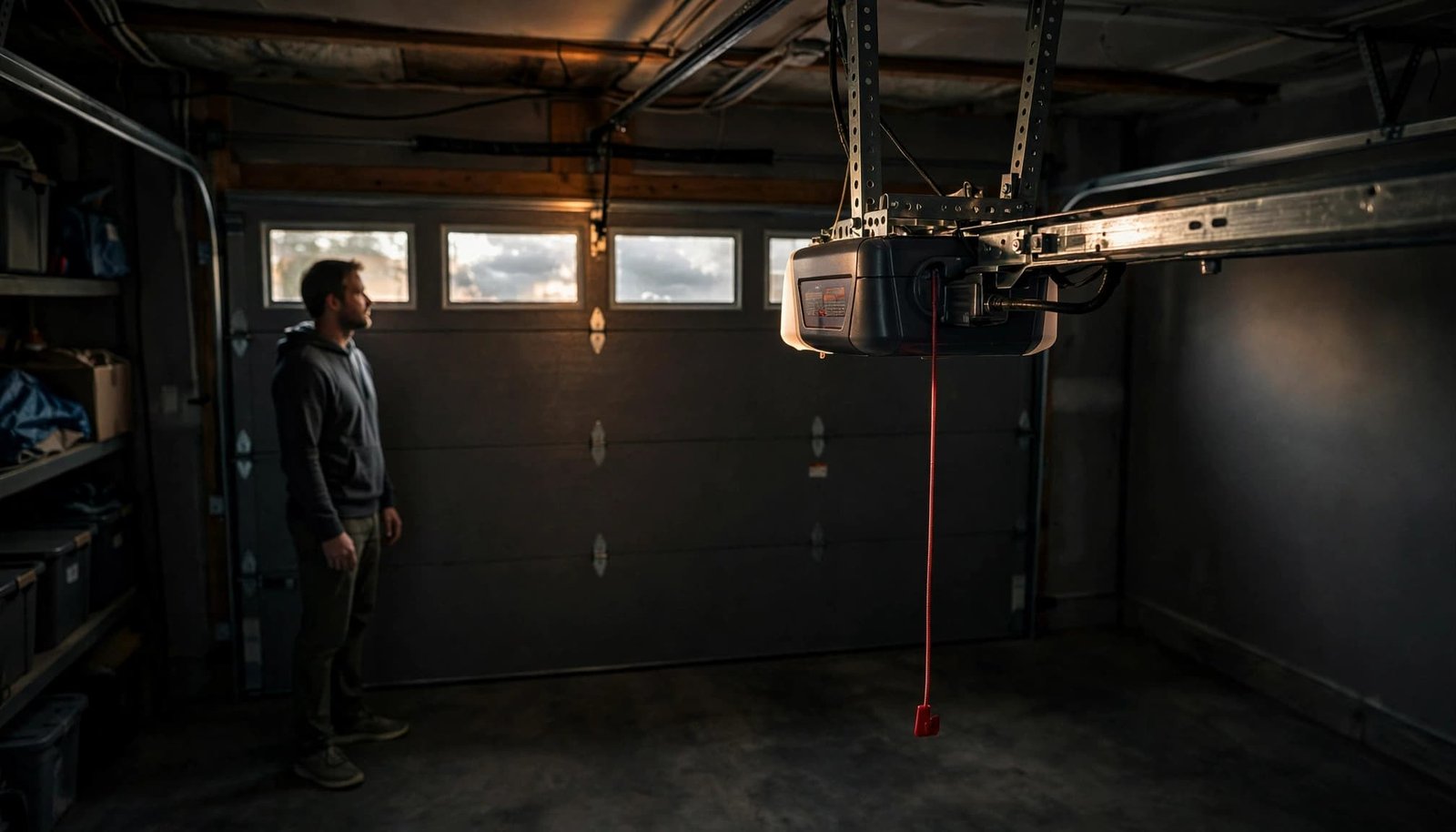
Stand inside the garage and look up at the overhead track that runs from the motor unit toward the top of the door. The trolley carriage travels along this track and connects to the door arm.
Most automatic openers have a red emergency release cord hanging from that trolley carriage. Color and shape can vary, so check your opener’s manufacturer manual before an outage. The cord is a manual release, not a universal repair tool.
“Open Garage Door Blackout” Steps for a Safe Manual Release
Start with a quick sweep of the area. Move bicycles, bins, tools, and vehicles away from the door’s path. Keep children, pets, and anyone not helping out of the garage.
Check the Door and Track Before You Disconnect It
Look at both sides of the door. The panels should sit evenly in the tracks, and the cables should look intact. Don’t touch cables, springs, or metal brackets near the spring system.
Also check that the bottom of the door is on the floor. If the door is crooked, hanging from one side, or stopped partway, leave the release cord alone. Manual operation could make an unstable door move suddenly.
Release the Opener Without Yanking
Safety warning: The door must be fully closed before you pull the release. Keep children and pets clear, and don’t pull the cord if the door is crooked, partially open, or under suspicious tension.
Follow these steps at a steady pace:
- Confirm the garage door is fully closed and the area around it is clear.
- Locate the red emergency release cord beneath the trolley carriage on the overhead rail. Visually check the release cable for obvious damage, but don’t pull it or handle its hardware.
- Pull straight down with a firm, controlled motion. Don’t yank, hang from the cord, or wrap it around your hand.
- Some opener models require the release handle to move back toward the motor unit after the initial pull for manual operation. Check Chamberlain’s manual-release instructions for the model-specific sequence.
- After confirming the door is fully closed and stable, gently lift it only a few inches to confirm it has detached from the opener.
You may hear a click when the trolley disengages. That sound is normal. Stop if you hear a bang or grinding sound, or if the door moves suddenly. If the trolley doesn’t disengage, check the manufacturer’s instructions or request service instead of forcing the mechanism.
How to Manually Lift Door Panels Safely
With the opener disconnected, stand near the center of the door. Use both hands to raise it evenly with slow, controlled manual operation. Keep your feet and fingers away from the bottom edge and panel joints. Don’t pull one side upward first, since that can rack the door in its tracks.
Once open, don’t leave the door partly open or unattended. Keep people clear of the opening, and don’t wedge random objects beneath the panels. If the door won’t remain fully open and balanced, lower it only if you can control it safely, then arrange service.
The manual-opening guidance from Overhead Door also stresses safe release and re-engagement after the outage. Your own owner’s manual takes priority because release systems vary by model.
Stop When the Door Feels Heavy or Unstable
A healthy door shouldn’t require a heroic deadlift. Stop immediately if it feels unusually heavy, drops when released, binds, or moves unevenly.
Scraping sounds, a crooked door, or a jammed panel can indicate a broken spring, damaged cable, roller problem, or track issue. These symptoms require professional inspection by a service technician, not more lifting.
Don’t force the door higher or attempt repairs yourself. Avoid touching springs, cables, tracks, or other high-tension components.
If Your Garage Has No Interior Man Door
A garage without a side door creates a different problem. If you’re locked outside during a blackout, you may have no safe way to reach the interior release cord.
Some doors use an emergency release kit operated with a key. The kit must match the opener and door configuration, and it isn’t standard on every garage door. Don’t pry panels, bend the top section, or insert tools through the weather seal. Contact your landlord, property manager, garage door company, or locksmith for a safe access option.
When the Red Emergency Release Cord Won’t Work
A cord that won’t move may mean the trolley carriage is under tension, the release mechanism is stuck, or the door isn’t fully closed. A stuck release may involve the trolley, drive parts, tracks, or other mechanical components. Pulling harder rarely improves the situation.
Check for Tension at the Trolley
If the door presses against the opener mechanism, the release can resist. Don’t hang from the cord or wrap it around your hand. Verify that the door is closed and isn’t caught on an object.
Look for visible damage to the release cable, but don’t pull, cut, or repair it. A stuck trolley can also happen after the drive mechanism has tried to move against a jammed or obstructed door. If the release doesn’t disengage with a controlled pull, stop and consult the manual. This guide to a garage door that won’t release outlines common release-cord issues, but a technician should handle damaged hardware.
Treat a Heavy Door as a Service Call
Spring failure can leave the opener trying to move a door it can no longer balance. Other warning signs include a loud snap before the failure, a visibly loose cable, a door that rises only a little, or a door that slams shut.
Keep your hands away from torsion springs above the door and extension springs along the tracks. Cables, drums, and brackets can also release stored energy. Don’t adjust, disconnect, cut, or replace these components during a power failure.
Call a service technician if the cord won’t disengage or the door feels unusually heavy. Also call when the door slams shut, rises only slightly, or hangs unevenly. A service technician has the tools and training to secure the door before making repairs.
Secure the Garage During an Extended Outage
Once you’ve moved a vehicle or entered the garage, close the door again if conditions allow. An open garage can expose tools, stored items, and the door leading into your home.
Close and Lock the Door Before You Leave
Lower the door evenly with both hands. Never let it free-fall. If it won’t stay down or appears crooked, keep clear and arrange service. Don’t brace it with improvised household objects.
If your door has a manual slide lock, use it only after the door is fully closed and the opener is disengaged. Remove the lock before restoring automatic operation. Forgetting this small detail can make the opener complain loudly and accomplish nothing.
Plan Ahead With Battery Backup
A compatible home battery backup can operate the door during a blackout, although capacity and features vary by model. Check your opener’s manual for approved options and test the home battery backup according to the manufacturer’s maintenance schedule.
A portable power station may power small devices indoors when used as directed, but it isn’t automatically suitable for a garage door opener. Fuel-burning generators never belong in a garage, even with the main door open. Carbon monoxide is a terrible houseguest and doesn’t need an invitation.
Reconnect the Garage Door Opener After Power Returns
Wait until electrical service is stable after a power interruption before reconnecting the garage door opener. If you unplugged electronics during the outage, reconnect them gradually after power returns. Keep the garage doorway clear for the first test cycle.
Close the Door Before Reattaching the Trolley
Follow these steps before testing the opener:
- Manually lower the door until it rests fully on the floor.
- Make sure any manual slide lock is fully removed.
- Follow the reconnecting instructions for your model.
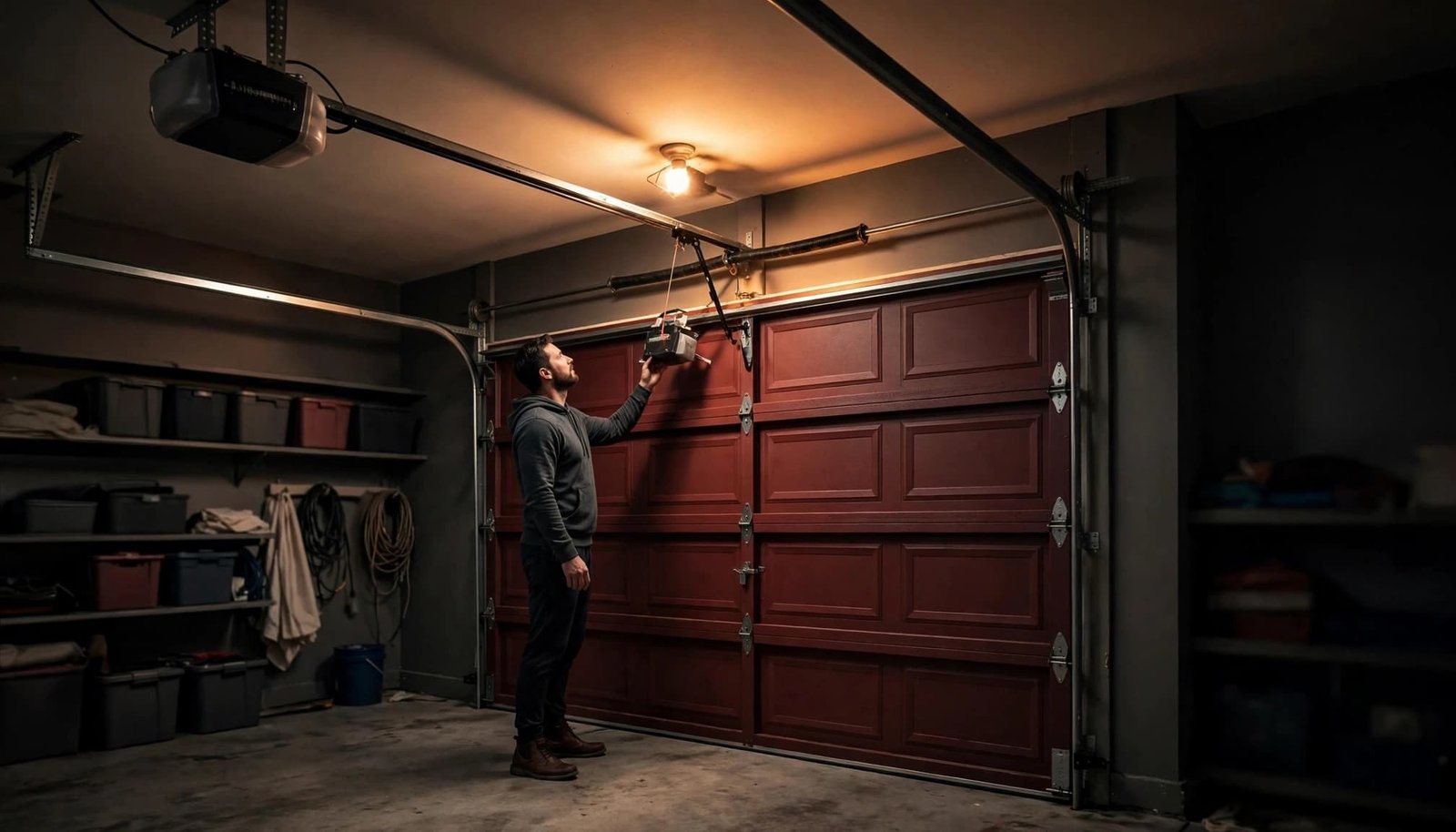
- Depending on the model, move the release mechanism toward the opener or run the opener until the trolley carriage clicks back into place.
Don’t stand directly under the moving rail while reconnecting it. Stay beside the doorway, where you can watch the panels and tracks safely.
Test One Full Cycle With Nothing Under the Door
Make the first test from beside the doorway, with no person, pet, vehicle, or object beneath the door. Use the wall control to raise the door, then close it. Watch the panels, tracks, and drive mechanism for smooth movement throughout the complete cycle.
Stop immediately if the door jerks, reverses unexpectedly, rubs the track, leaves a gap on one side, or makes an abnormal sound. If the carriage won’t reconnect or the cycle isn’t smooth, contact a service technician. Don’t reset force or travel limits to conceal a mechanical fault.
Frequently Asked Questions
Is it safe to pull the emergency release cord when the door is open?
No. Release the opener only when the door is fully closed. An open door can drop after disengagement, especially if its spring system has a fault.
Why does my garage door feel extremely heavy?
The counterbalance system may not be working correctly, or the door may be binding in its tracks. Stop lifting it and arrange a professional inspection.
Can I use the emergency release every time the power goes out?
Yes, if the door is closed, balanced, and functioning normally. Still, check the manufacturer’s instructions because release and reconnection procedures vary.
What should renters do if the garage door is stuck?
Notify the landlord or property manager promptly, especially if the garage is your only entrance. Take photos of visible damage, keep the area clear, and don’t attempt repairs to springs, cables, or electrical equipment.
A Calm Plan Beats a Forced Door
The safest way to handle a blackout is to disconnect the opener only after the door is closed, then move a balanced door with steady control. Never force a garage door that feels heavy, crooked, or stuck.
A quick practice run with your owner’s manual during daylight can make the next outage far less dramatic. Your garage door will still be a large piece of machinery, but it won’t be a mystery.
Pingback: Power Outage Prep for Renters: No Generator Needed