Your apartment lights flicker when the electricity reaching them becomes unstable or briefly interrupted. Before a blackout, that can happen because utility equipment is responding to a fault, a building connection is failing, or sudden voltage fluctuations occur under heavy load.
However, a flickering bulb doesn’t predict an outage by itself. The most useful clue is which lights change together, plus any heat, unusual sounds, or burning smells.
Start with the pattern, then keep your checks limited to things you can observe without opening electrical equipment.
Key Takeaways
- One flickering light usually points toward its bulb, dimmer, fixture, or local wiring.
- Several lights changing together suggest a circuit, building-supply, or utility problem.
- Brief appliance-startup dimming can happen, but repeated or prolonged flicker needs attention.
- Burning smells, sparks, unusual heat, or crackling mean you should stop investigating and get help.
Why Apartment Lights Flicker Before Power Fails
A light changes brightness when its power supply changes. During a utility fault, protective equipment within the electrical system may briefly interrupt and restore electricity before a longer outage. Inside a building, a deteriorating connection can also cause power fluctuations before it fails completely.
Meanwhile, an LED’s internal electronics may react visibly to fluctuations that another bulb barely shows. Your kitchen light can become an enthusiastic messenger, but it can’t identify the fault for you.
Use this pattern guide to narrow your report.
| What you notice | Possible source | Your next step |
|---|---|---|
| One bulb flickers | Bulb, socket, or dimmer | Try the safe bulb checks below |
| Several lights in one area flicker | Local circuit or wiring | Report the affected area |
| Lights brighten in some rooms and dim in others | Possible neutral fault | Request urgent professional help |
| Multiple apartments or nearby homes flicker | Building feed or utility supply | Notify management and the utility |
The pattern narrows the possibilities; it doesn’t prove a diagnosis. Also, electrical circuits don’t always follow room boundaries.
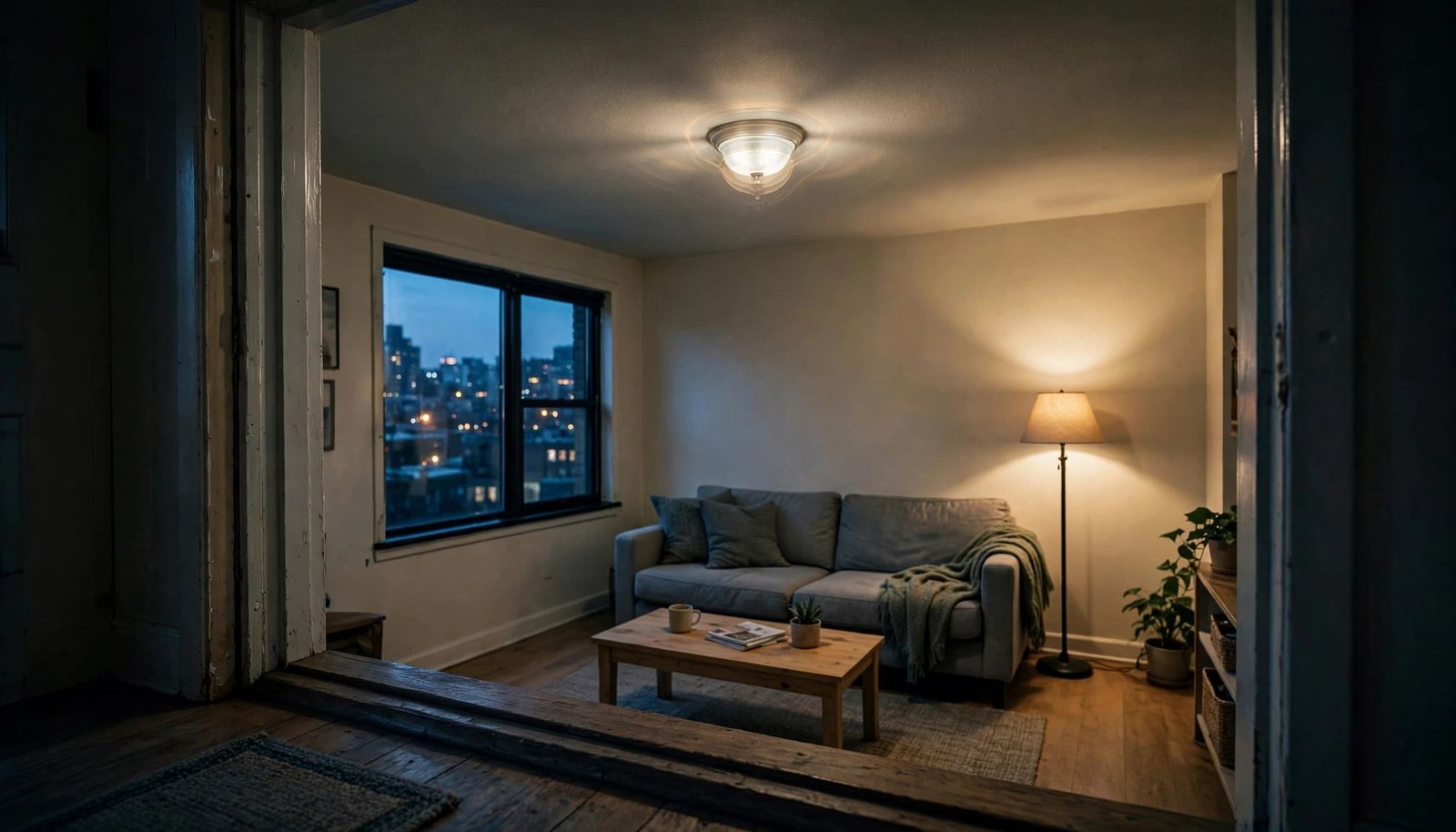
Start With Bulb and Dimmer Checks
Only try these checks when there’s no damage, unusual heat, buzzing, or burning smell. Leave inaccessible fixtures to maintenance rather than balancing on furniture.
1. Tighten a loose bulb safely
A loose bulb can make intermittent contact with its socket. Turn the light off and let the bulb cool before gently tightening it. For a plug-in lamp, unplug it first.
Don’t force the bulb or put fingers or tools into the socket. If tightening doesn’t help, try a known-good bulb of the correct type and permitted wattage.
For a lamp, also look for a damaged cord or a plug that sits loosely in the outlet. Stop using damaged equipment. Flicker that continues with a replacement bulb needs maintenance, not increasingly determined twisting.
2. Match LED bulbs to the dimmer
An LED bulb must be dimmable, and the dimmer must support that bulb type. An older incandescent-only dimmer switch can cause flicker, especially at low settings.
If brightness becomes steady when you raise the dimmer, compatibility may be involved. Give maintenance the bulb model and dimmer details without removing the switch plate.
Poor-quality LED electronics can also cause flicker. A Reddit commenter blames mixing incandescent, CFL, and LED bulbs, but mixed types on one circuit alone don’t establish a fault. Compatibility matters most when bulbs share a dimmer.
Watch for Appliance-Related Flicker
Notice whether the flicker coincides with equipment starting. However, don’t repeatedly cycle appliances to reproduce it. Your air conditioner doesn’t need an audition.
3. Notice brief startup dips
Air conditioners, washers, and other motor-driven appliances can draw extra current as they start. That demand can produce a brief voltage dip, leading to dimming lights momentarily.
One quick dip followed by steady lighting can occur during normal operation. However, pronounced dimming, repeated flicker, or a new pattern deserves attention.
These are better described as high-demand appliances, rather than automatically calling them high-voltage appliances. Their startup current is what matters here.
4. Reduce excessive circuit demand
If lights flicker while several appliances run together, an overloaded circuit may be struggling under the load. Older apartments with old wiring may also have too few circuits for today’s appliance demand.
Stop using unnecessary appliances on the affected branch line when you can do so safely. Never move a heater or air conditioner onto a power strip to work around the problem.
Persistent flicker doesn’t prove an overload; a loose connection can produce similar symptoms. Guidance on persistent flickering recommends professional attention when it affects multiple rooms or continues after bulb and dimmer checks.
Recognize Neutral and Supply Problems
Widespread flicker deserves more attention than one temperamental bulb. Brightening as well as dimming is especially important to report.
5. Treat a suspected loose neutral urgently
The neutral wire provides a return path for current. In older buildings, outdated wires or a loose or corroded neutral can disrupt that path. In certain shared electrical arrangements, some lights may brighten while others dim.
You can’t confirm a neutral problem by watching lights. Tell emergency maintenance what happened and request an urgent electrical assessment.
An electrician may use an outlet tester to identify an open neutral. An affected outlet with normally functioning neighboring outlets can help locate a wiring fault. However, a normal tester result doesn’t rule out an intermittent connection. Leave live testing and repairs to a professional electrician or building maintenance.
6. Compare your apartment with neighboring areas
If several apartments or nearby homes flicker together, contact management and the utility. The problem could involve shared building equipment or the incoming supply.
Ask a neighbor by phone or look through a safe window. Don’t enter electrical rooms or operate shared breakers at the main panel. Also, emergency hallway lights can stay on during an outage, so they aren’t conclusive evidence.
A Reddit commenter reports that many utilities offer free equipment checks for suspected service-neutral faults. That isn’t a universal fee policy or a promise of free repairs to building-owned wiring.
Know When to Stop and Get Help
Buzzing, crackling, popping, a burning-plastic smell, or unusual heat can indicate a failing connection or arcing. Arcing can ignite nearby material, creating an imminent electrical fire hazard.
The NFPA’s electrical safety guidance identifies flickering lights, burning odors, and outlet sparks as warning signs. Don’t touch a suspect outlet to find out how hot it is.
If you see smoke, active sparks, or fire, leave the affected area and call 911 from safety. Follow your building’s emergency procedures, and never use an elevator to escape a fire.
For persistent buzzing or flicker without immediate danger, stop using the affected equipment and request an urgent electrical inspection through emergency maintenance.
A light that returns to normal hasn’t proved the connection is safe. Intermittent faults can disappear between episodes.
Never open a fixture, outlet, or panel cover to expose electrical wiring. OSHA’s electrical arc warnings explain why exposure to energized equipment can cause severe burns, even at ordinary building voltages.
Report the Pattern, Then Prepare for Darkness
A useful maintenance report describes observations rather than announcing a diagnosis. Include your unit number, when flickering began, which rooms were affected, and whether an appliance had started.
Also mention brightening, sounds, smells, breaker trips, or neighbors experiencing the same problem. A short video can document intermittent flicker if you can record it from a safe position.
Call the landlord or emergency maintenance line for fixed wiring, fixtures, or shared-building problems. Contact the utility when surrounding homes are affected or an incoming-supply fault is suspected. You may need both.
If one room subsequently loses power, our room-specific outage safety checks cover that narrower situation. Don’t repeatedly reset a tripped circuit breaker to force unreliable power back on.
Meanwhile, put a battery light within reach. Keep the route to your door clear, and use a flashlight rather than candles.
If electricity fails, follow our apartment blackout safety steps before investigating further. Once conditions are safe, our guide to what to unplug during an outage helps you protect sensitive electronics.
For renter-friendly storage, one reachable pouch can hold a flashlight, charged power bank, cable, and written emergency contacts. Keep it inside your apartment, clear of exits.
Frequently Asked Questions
Why are lights flickering in only one bedroom?
Start with the bulb and any dimmer, provided there are no danger signs. If several bedroom lights flicker together, report a possible circuit or wiring problem. One room can share wiring with another, so note nearby symptoms too.
Can flickering lights start a fire?
A loose bulb or incompatible dimmer doesn’t mean a fire is imminent. However, flicker caused by arcing or a failing electrical connection can involve fire risk. Burning smells, heat, crackling, and sparks require urgent action.
What voltage readings are concerning?
Charles Stone gives 115 to 125 volts as a troubleshooting range for a nominal 120-volt circuit and describes readings above 125 as severe. However, 125 volts isn’t a universal danger threshold. Duration, measurement location, and supply conditions matter. Leave voltmeter testing and interpretation to an electrician.
Does flickering always mean a blackout is coming?
No. Bulb faults, dimmer incompatibility, and appliance startup can cause flickering without an outage. However, repeated building-wide flicker can precede a supply interruption. Prepare your battery lighting while reporting the pattern.
Focus on the Pattern, Leave Wiring Alone
When apartment lights flicker, your safest advantage is a clear description. One troublesome bulb calls for different attention than several rooms brightening and dimming together.
Keep checks simple, report persistent symptoms, and stop immediately for electrical danger signs. A reachable flashlight and a precise maintenance report are more useful than opening anything behind the wall.