Keep your insulin cool, never freeze it, and use the storage limits for your exact product and container. Unopened insulin generally needs 36°F to 46°F (2°C to 8°C), but many products have a room-temperature allowance.
During an apartment outage, your insulin doesn’t automatically become unusable when the refrigerator stops humming. Temperature, exposure time, and whether you have a vial or pen determine your next move.
Start with the label-specific limits below, then protect the cold storage you already have.
Key takeaways
- Keep your refrigerator closed. Its roughly four-hour cold-holding estimate isn’t a guarantee for insulin.
- Use your insulin’s product-specific temperature limit and discard date. Vials and pens with the same brand name can differ.
- Never use frozen insulin. If storage conditions become uncertain, contact your pharmacist or diabetes care team before changing treatment.
Which insulin storage limits apply during an outage?
Separate refrigerated storage from room-temperature use
For unopened insulin that requires refrigeration, the usual target is 36°F to 46°F (2°C to 8°C). Keeping it within that range generally preserves it until the package expiration date.
However, moving insulin outside refrigeration can start a shorter storage window. Don’t assume an unopened package keeps its original expiration date after extended room-temperature storage.
Your apartment’s heat matters, too. A shaded bedroom and a sun-baked kitchen may offer very different conditions. “Room temperature” is a measured range, not a reassuring description of wherever you happen to be standing.
Treat the FDA’s emergency guidance as general guidance
The FDA’s emergency insulin guidance gives a general allowance of 59°F to 86°F (15°C to 30°C) for up to 28 days for manufacturer-supplied vials or cartridges.
That isn’t a universal instruction for every insulin presentation. Some labels allow longer periods; certain pens require disposal sooner.
Likewise, 77°F isn’t a universal ceiling. It applies to some products, including the Novolin vials below, while other labels allow temperatures below 86°F.
A remaining storage window doesn’t cancel the labeled ceiling. Ten days left on the calendar won’t make an overheated apartment suitable storage.
Room-temperature insulin limits by product and form
This table covers the listed in-use products; limits for opened insulin can differ between vials and insulin pens, even within the same brand.
| In-use insulin and container | Room-temperature ceiling | Discard after |
|---|---|---|
| Humulin 70/30 vial | Below 86°F (30°C) | 31 days |
| Humulin 70/30 pen | Below 86°F (30°C) | 10 days |
| Humalog Mix 75/25 vial | Below 86°F (30°C) | 28 days |
| Humalog Mix 75/25 KwikPen | Below 86°F (30°C) | 10 days |
| Novolin R vial | Up to 77°F (25°C) | 42 days |
| Novolin R FlexPen | Up to 86°F (30°C) | 28 days |
| Novolin 70/30 vial | Up to 77°F (25°C) | 6 weeks (42 days) |
| Novolin 70/30 FlexPen | Up to 86°F (30°C) | 28 days |
The container makes a substantial difference. For example, the Humalog Mix 75/25 prescribing information distinguishes the vial’s 28-day allowance from the KwikPen’s 10-day limit.
Your in-use pen may also have a “do not refrigerate” instruction. Returning everything to the refrigerator isn’t automatically the right recovery step.
These limits don’t cover every insulin, concentration, cartridge, or pump reservoir. If yours isn’t listed, your pharmacist can interpret its instructions without guesswork.
What to do when your refrigerator loses power
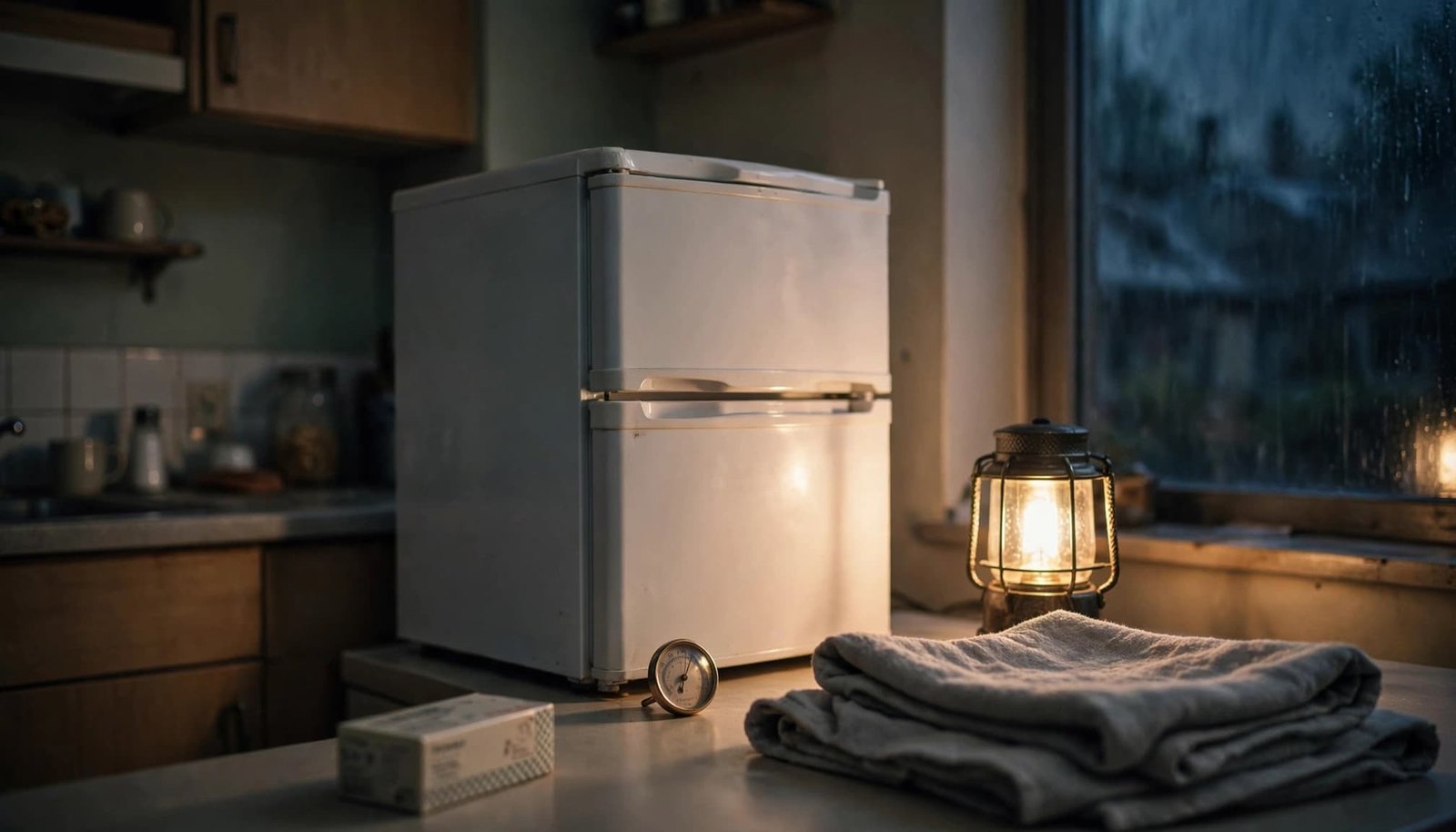
Keep cold air inside
A closed refrigerator generally keeps its contents cold for about four hours. That estimate starts when electricity stops, not when you discover the outage.
Keep the fridge door shut while you assess the situation. Repeated inspections spend the cold air you’re trying to save.
If you need something, gather everything in one opening. Meanwhile, use shelf-stable food rather than sending the entire household on separate refrigerator expeditions.
Our refrigerator outage food-safety guide covers groceries separately. Food-discard rules don’t establish whether your insulin remains usable.
Let temperature guide the next move
The four-hour estimate isn’t a promise that insulin remains between 36°F and 46°F throughout an outage. Your refrigerator’s initial chill, contents, surroundings, and door openings affect conditions.
Use available temperature readings alongside your insulin’s storage instructions. If the apartment is getting hot or restoration looks distant, arrange alternative cooling early.
A friend’s powered refrigerator may be more useful than an elaborate homemade experiment. However, transport still needs temperature control.
A freezer’s 24-hour or 48-hour food-holding estimate doesn’t make it a safe insulin-storage location.
Don’t move insulin into a freezer, even wrapped in a towel. The risk of freezing remains.
How to keep insulin cool without working refrigeration
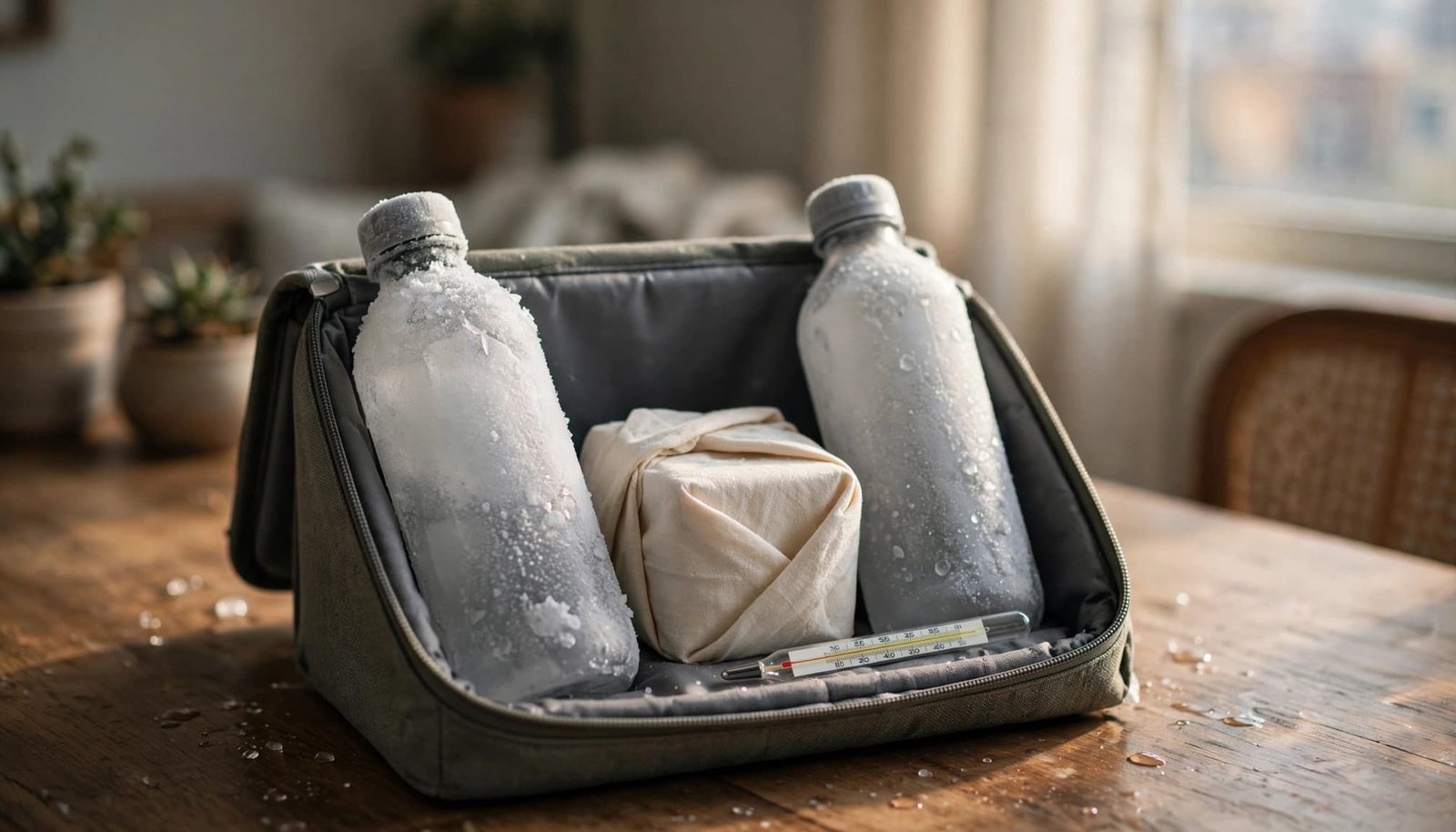
Use a cooler as a monitored backup
A cooler with ice or frozen gel packs can help protect refrigerated medicine during an outage. However, owning an insulated bag doesn’t mean you’ve created a refrigerator.
For unopened insulin that must remain refrigerated, your target is still 36°F to 46°F. Cooling below that range can also create problems, especially if insulin freezes.
Avoid direct contact between insulin and ice. Use temperature readings to assess conditions rather than judging the bag by touch. If you use ice packs or frozen water bottles in an insulated box, separate them from the medicine with a barrier and monitor temperatures to prevent freezing.
Don’t assign a guaranteed runtime to an ordinary cooler. Its performance changes with insulation, outdoor heat, opening frequency, and the amount of cold material inside. Evaporative cooling, including a terracotta pot, can’t reliably maintain or verify the required temperature range.
Protect medicine from leaks and contamination
Keep your insulin clean, dry, and separate from leaking food packages. A shared cooler containing raw chicken is a poor place for an unprotected medication package.
Keep cooling supplies ready before moving insulin. Leaving medicine on a warm counter while you hunt for ice defeats the exercise.
If you can’t maintain the required conditions, arrange access to reliable refrigeration or contact your pharmacist about replacement options. When you travel to a powered refrigerator, protect the medicine from heat and freezing during transit. During a prolonged outage, a safe destination can be more dependable than repeatedly improvising.
For small-apartment storage, keep the empty cooler accessible rather than buried behind holiday decorations. Emergency equipment shouldn’t require an archaeological dig.
Plan backup power for a small apartment
Give batteries a realistic job
A battery power station may support a refrigerator or mini fridge, but check its actual operating range first. Confirm the battery can handle its running demand and startup surge.
Don’t assume a phone power bank can run a household refrigerator. Likewise, a battery’s advertised capacity doesn’t promise days of cooling.
Check whether powered medical equipment, such as a pump, needs its own battery or charging plan.
If you use battery equipment, keep it dry and leave its ventilation openings clear. Our indoor power-station safety guide covers placement and operating precautions.
Never run a fuel-burning generator inside your apartment, hallway, garage, or on a balcony. Carbon monoxide can enter nearby homes even when you consider the equipment “outside.”
Keep your backup kit reachable
You don’t need a second pantry devoted to outage supplies. A compact, renter-friendly storage bin can hold a flashlight, charging cables, paper contacts, and spare batteries.
Keep water and bulky cooling equipment separately on sturdy shelves. Leave walking routes clear, especially between your bed and the exit.
Good small-space organization also means keeping medical supplies reachable without blocking battery ventilation or building exits. Meanwhile, save property management’s emergency number somewhere accessible without internet service.
For scheduled interruptions, our planned apartment outage guide helps you prepare before refrigeration stops.
What to do if insulin freezes or storage fails
Don’t use insulin that has frozen. Thawing it doesn’t make it acceptable to use again.
If you know your insulin exceeded its labeled conditions, contact your pharmacist or diabetes care team promptly. Explain the product, container, estimated exposure, and whether you have another supply available.
Don’t independently change your dose to compensate for uncertain insulin storage. Also, don’t substitute a different insulin simply because its packaging looks familiar.
The American Diabetes Association’s disaster insulin-switching guidance addresses emergency substitutions, but involve a clinician before changing products.
Monitor your glucose according to your diabetes care plan. If readings rise unexpectedly, seek medical advice rather than assuming storage is the only possible cause.
Vomiting, abdominal pain, rapid breathing, confusion, or persistent high glucose with ketones need urgent medical assessment. Don’t let an uncertain utility repair estimate delay care.
Frequently asked questions
What if my insulin was unrefrigerated overnight?
“Overnight” alone doesn’t establish whether your insulin remains usable. The relevant details are its product, container, temperature exposure, and existing storage deadline.
An overnight outage and an overnight stay on a hot windowsill are different situations. Apply the appropriate limits rather than discarding insulin solely because the refrigerator lost power.
If the exposure is uncertain, your pharmacist can help you decide whether you need a replacement.
Can I keep insulin in a closed refrigerator for a few hours?
Yes, keeping the fridge door closed is a sensible first step during a short outage. However, its roughly four-hour cold-holding estimate doesn’t guarantee the required storage range.
Use temperature information when available, and prepare alternative cooling if the interruption continues. You don’t need to move insulin immediately simply because the refrigerator’s light went out.
How can I keep unopened insulin refrigerated for several days?
Reliable powered refrigeration is the strongest option when your insulin must remain between 36°F and 46°F. That may mean relocating it to a suitable refrigerator elsewhere.
A cooler can provide temporary cooling, but it needs temperature monitoring and replenishment. An insulated bag alone doesn’t establish that the medication stayed within range for several days.
Keep the plan simple and temperature-based
Safe insulin storage during an outage depends on your exact product, its container, and its temperature history. Keep the refrigerator closed first, then arrange controlled cooling before conditions become unsuitable.
Your most useful backup is a clear plan, supported by temperature information and access to your pharmacy or diabetes care team. A small apartment can accommodate that without becoming a warehouse of emergency gadgets.