The lights go out just as you’re about to shower. Will you still have hot water during a power outage? A storage tank or gas water heater may leave hot water if it works without electricity. Delivery still depends on pressure.
A warm supply won’t help if the building’s pumps stop. Start with your water heater type, then consider how water reaches your floor.
Key Takeaways
- Electric tanks retain stored heat but can’t heat replacement water.
- Some standing-pilot gas heaters keep working; electronic ignition and powered vents need electricity.
- Apartment booster pumps can stop water flow even when hot water remains available.
Which Water Heaters Work During a Power Outage?
Your water heater’s fuel matters, but its electrical needs matter too. Here’s the practical split for renters, assuming water pressure remains available.
| Heater type | Makes new hot water? | What remains available? |
|---|---|---|
| Electric water heater, including heat-pump models | No | Stored hot water, potentially for hours |
| Gas water heater with a standing pilot and no powered components | Yes | Continued heating while gas service operates |
| Gas water heater with electronic ignition or a power vent | No | Stored water until used or cooled |
| Tankless water heater, gas or electric | No | No reserve tank; only residual warmth in pipes |
A standing pilot doesn’t guarantee operation if another component needs power. Some models use electronic ignition and need electricity to light or relight.
On an accessible heater, a power cord, electrical controls, or vent fan indicates electrical dependence. Leave locked mechanical rooms and heater covers alone.
How Long Will Hot Water Stay Hot Without Power?
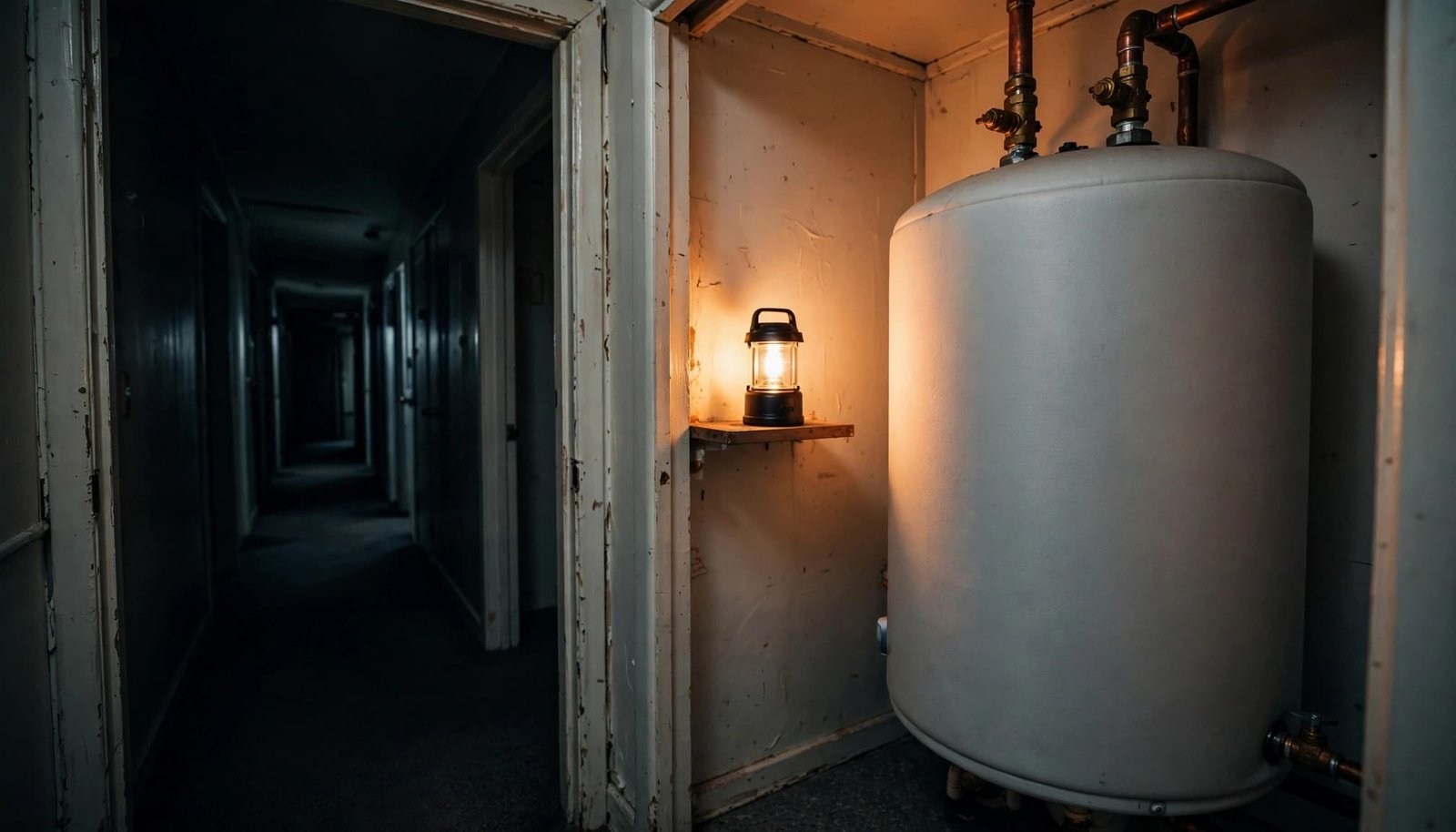
The commonly quoted 1 to 2 hours isn’t a countdown to cold water. A tank’s insulation, starting temperature, surroundings, and water use determine how long hot water stays available.
One Reddit commenter reported a drop from 140°F to 128°F over 24 hours, roughly half a degree per hour. That anecdote describes a well-insulated, unused tank, not a typical expectation.
The key difference is cooling versus consumption. Stored water may retain heat for a day, but each use draws from that reserve immediately.
In a shared building, neighbors also draw from the reserve. Limit use, skip laundry and dishwashing, and test a small amount before a brief shower.
Will Apartment Water Still Run Without Electricity?
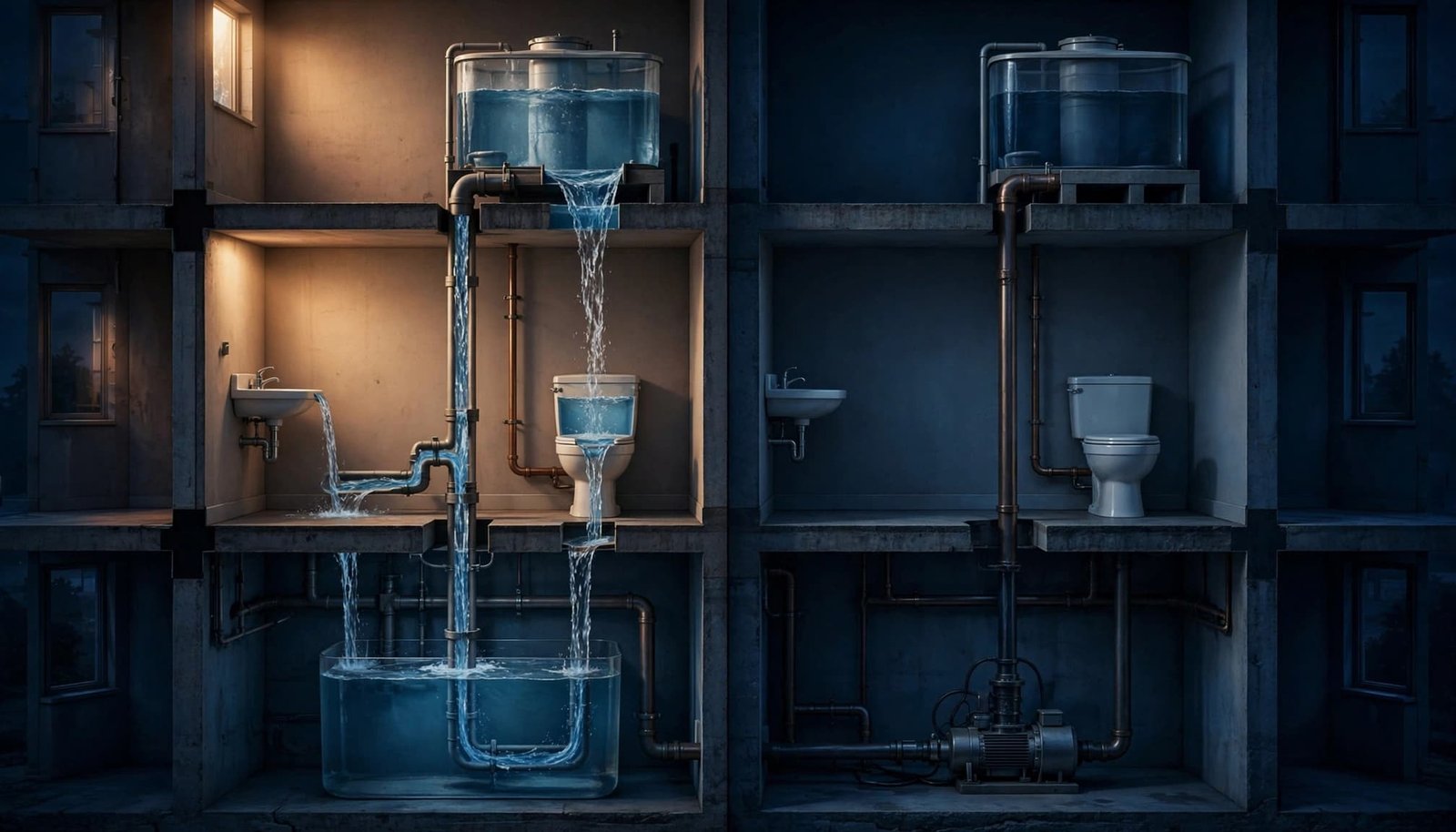
City Pressure, Booster Pumps, and Wells
Apartments on city water usually retain a water supply while municipal pressure holds, so cold water may keep running. Building booster pumps may stop at once, especially on upper floors. Central systems that provide hot water may also rely on circulation pumps.
A quoted 6 to 12 hours of continued flow is only a rough estimate, not a guarantee. Building storage, backup power, floor, demand, and system type affect how long water runs.
Private-well pumps stop without power, as do ordinary electric sump systems. A nominal 10-to-50-gallon well pressure tank doesn’t provide that entire volume as usable water.
If both taps weaken, follow our apartment water outage guidance.
Will Your Toilet Flush Without Power?
A conventional gravity toilet can usually flush once from its tank. Even a gravity toilet needs refill water and working drains for repeated use.
Pressure-dependent systems may allow only one or two flushes, or stop immediately. Flushometer units need pressure. A powered sewage ejector can fail even when faucets work. Stop flushing if wastewater backs up or management reports a sewage problem.
What Should You Do Now and After Power Returns?
Preserve Water Before Troubleshooting
Briefly compare hot and cold flow, then report what you find to management. Cold water with no hot water points to a heating issue; no flow from either tap suggests a water supply problem.
Stop water-fed appliances if pressure disappears. Keep drinking water separate from flushing supplies, and follow local drinking-water advisories after pressure loss.
For compact storage, use food-safe containers on a sturdy low shelf. Our emergency water storage plan starts with one gallon per person daily for three days, plus extra for household needs.
During freezing weather, report shrinking flow or leaks promptly. Don’t thaw pipes with a flame.
Restart Safely Without Adjusting the Thermostat
Electric elements usually resume automatically when electricity returns. A tripped high-limit safety switch may need a manual reset by maintenance. Don’t reset a water heater or energize it if it may be empty; leave thermostat settings to maintenance.
Prolonged lukewarm stagnation can encourage Legionella growth. After an extended shutdown, building maintenance should manage reheating and any required flushing, then confirm the thermostat setting before normal use.
The CDC’s building hot-water guidance recommends storage above 140°F with scald protection. Test restored shower water cautiously because hot water can burn.
Frequently Asked Questions
Can You Shower During an Apartment Blackout?
Yes, if you still have pressure, usable hot water, safe drainage, and no water-use restriction. Keep it brief and use battery lighting. A functioning faucet doesn’t prove shared sewage pumps are operating.
Can a Generator Keep Your Water Heater Running?
Only a properly sized, safely connected system can. Capacity must cover heater running watts and pump or motor startup surges; electric elements mainly impose a large steady load.
Leave shared equipment to qualified personnel. Ready.gov’s generator safety guidance requires outdoor operation at least 20 feet from openings. Never operate a fuel-burning generator inside, in a hallway, or on an apartment balcony.
Keep the Heat You Already Have
Whether stored heat in the tank is usable depends on both the heater and the building’s water supply.
Keep taps closed and maintain a separate drinking-water reserve. Stored heat doesn’t guarantee access to hot water.